Spain is not just about the sea, mountains and historic villages; it is also a land of volcanoes. Over a hundred craters scattered across the islands, coastlines and inland plains form a surprising geological map that many are unaware of. Some are still active, others have been dormant for thousands of years, but all have shaped landscapes that we can now explore almost without realising we are walking on ancient fire.
This is a tour of some of them, a route to be surprised by the unexpected and, along the way, to discover places where nature has written its history in lava.
Our islands, where the earth is still alive
To speak of volcanoes in Spain is inevitably to think of the Canary Islands, where everything seems to remind us that the islands’ origins lie deep within the Earth. The islands are the most obvious manifestation of volcanic activity in Spain, with over forty volcanoes and nearly twenty documented eruptions since the 15th century.
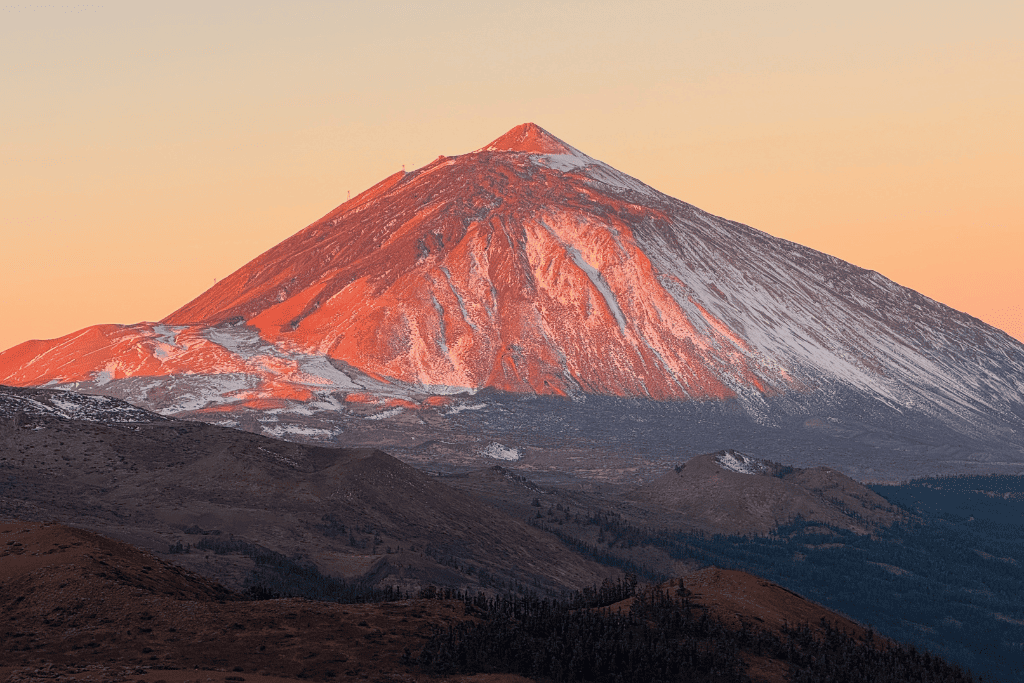
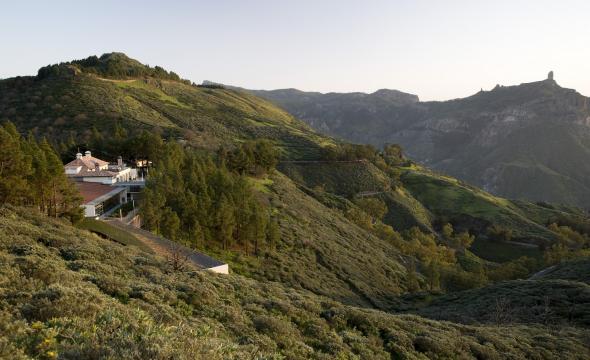
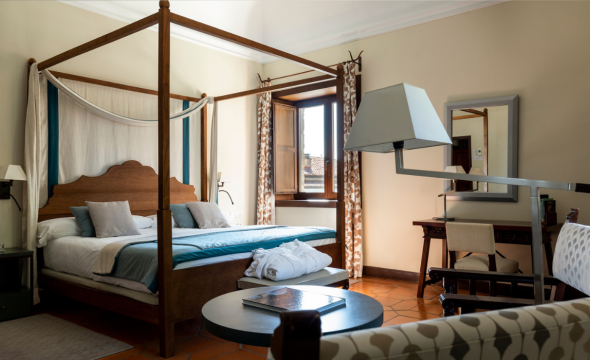
In Teide National Park, the landscape functions like a vast geological laboratory. The Las Cañadas caldera and the Teide–Pico Viejo massif (3,715 m) present an almost lunar landscape, where lava flows and volcanic cones coexist with vegetation that has learned to endure. Nearby, the Parador de Las Cañadas del Teide offers the chance to spend the night amidst this silent spectacle, as the day fades and the stars take over.
On another of the islands, Lanzarote, you’ll find Timanfaya National Park. Here, the 18th-century eruptions, which lasted as long as six years, buried a quarter of the island. Today, more than 25 volcanic cones and a subsoil that still reaches temperatures of up to 600 °C make the walk an almost hypnotic experience.
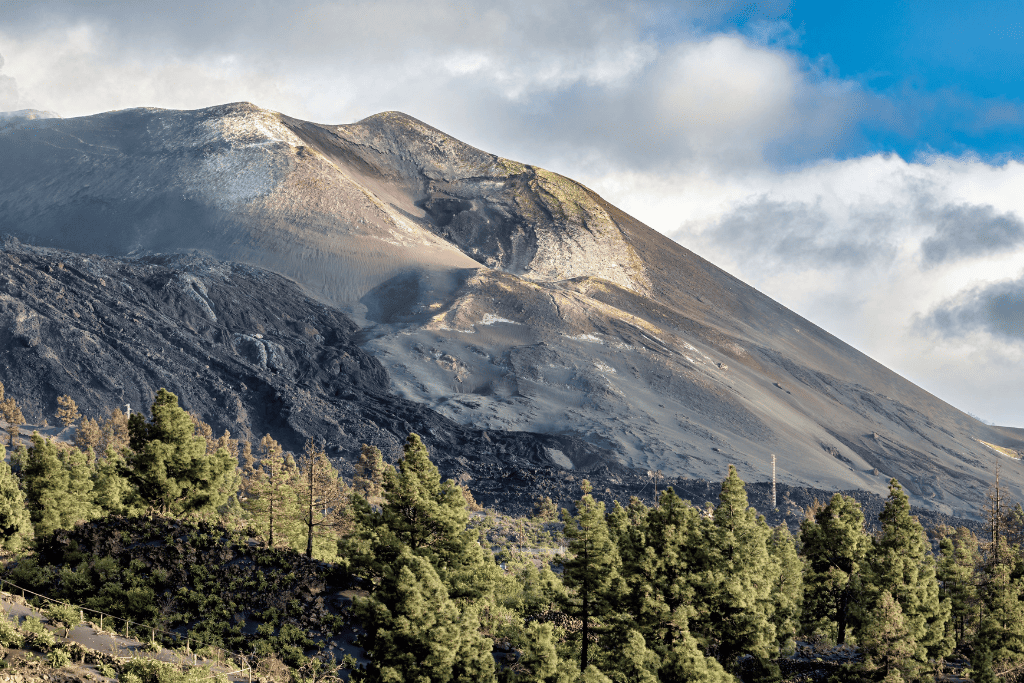
Then there is the island of La Palma, which serves as a reminder that volcanic activity is not just a thing of the past. The Cumbre Vieja ridge and the area around the Teneguía Volcano tell a recent story of eruptions, including that of 2021. Here the landscape has changed, and is still reinventing itself. There is a Volcano Route where you can walk through this recent history and where you will be taught a lesson in resilience that is also felt in the tranquillity of the nearby Parador de La Palma.
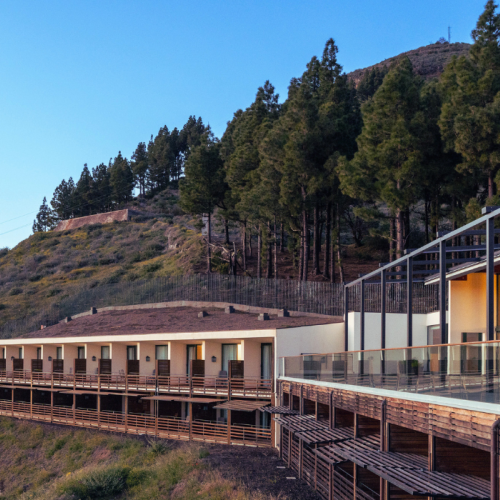
And finally, off the island of El Hierro, beneath the sea, the Tagoro Volcano reminds us that not all volcanoes are visible and that they continue to shape the landscape in silence. At the Parador de El Hierro, you can stay between a volcanic mountain and the ocean, in the midst of a vast black-sand beach where the main activity is diving.
The volcano that became a forest
Far from the arid scenery of some volcanic areas, in Girona greenery reigns supreme. The Garrotxa Volcanic Zone Natural Park is one of the most unusual volcanic landscapes on the peninsula, with over forty cones covered in lush forests.
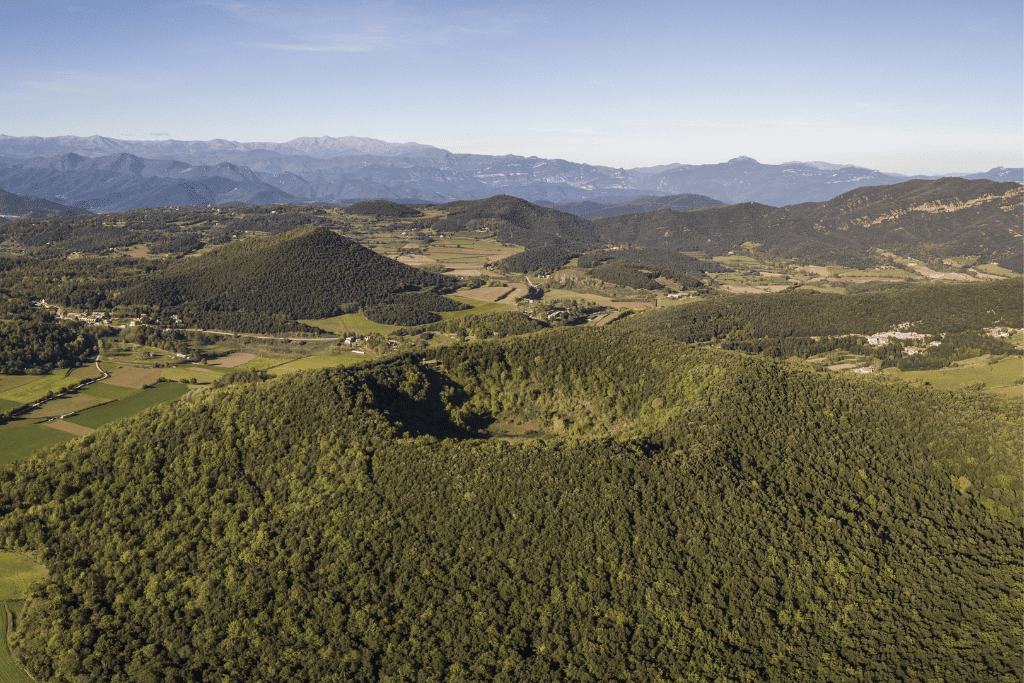
Volcanoes such as the Santa Margarida Volcano, with its crater transformed into a meadow, or the Croscat Volcano, which reveals its layers of volcanic earth, can be explored on foot, along gentle paths and through beech forests growing on ancient lava flows. After the walk, the change of scenery comes naturally as you descend towards the coast. The Parador de Aiguablava then appears as the perfect counterpoint, moving from volcanic origins to the Mediterranean in just a few kilometres, bringing the day to a close with a fresh perspective.
The volcanic desert by the sea
In Almería, the Cabo de Gata-Níjar Natural Park offers one of the country’s most unexpected sights, with cliffs, hidden coves and volcanic formations that were formed beneath the sea millions of years ago.
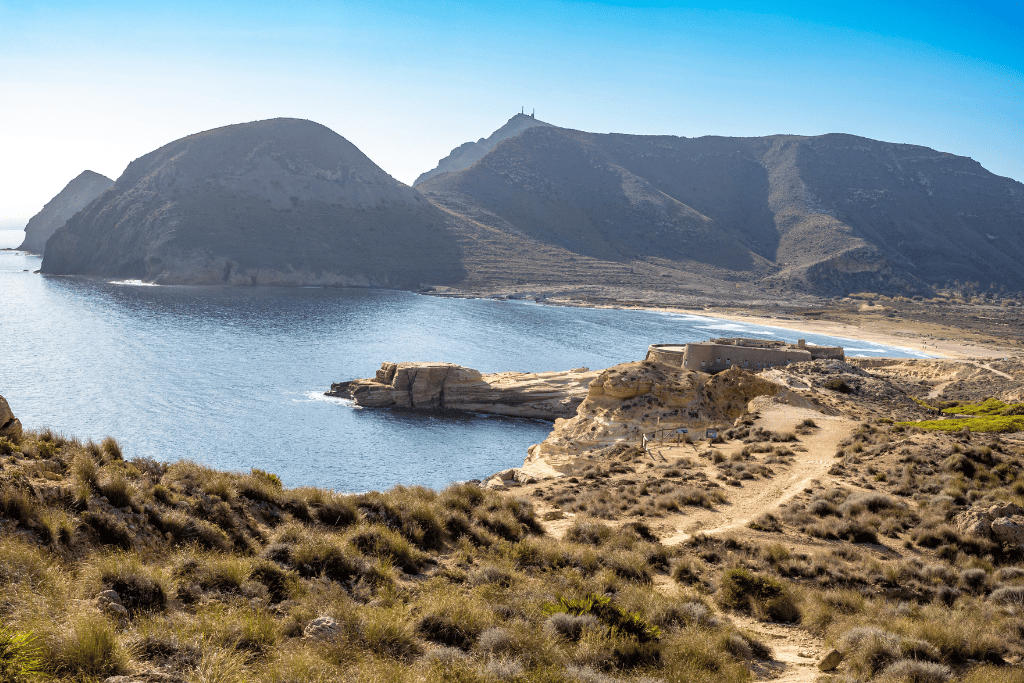
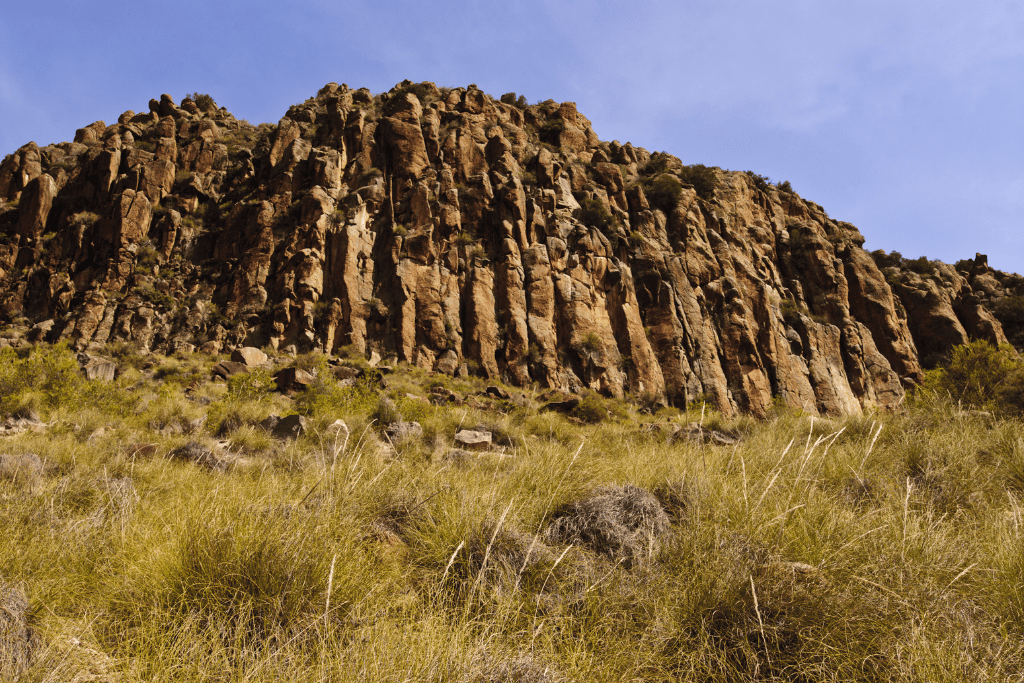
Landforms such as the Rodalquilar caldera, the Los Frailes domes and Mónsul beach – an ancient lava flow – tell a story that began beneath the sea aeons ago. Today, that past has left us with one of the most arid and luminous landscapes in Europe.
From the Parador de Mojácar, exploring the area feels like a series of small adventures, taking in coves, footpaths and sunsets that soften the harshness of the terrain.
The unexpected volcano
It may come as a surprise, but right in the heart of the Iberian peninsula lies one of Spain’s largest volcanic concentrations: the Campo de Calatrava, in Ciudad Real. With over 500 volcanic structures, this area is one of the most significant in the peninsular interior.
Here there are no large, perfect cones, but rather lagoons, craters and gentle hills that break up the flatness of La Mancha. It is a more understated landscape, yet equally fascinating, where volcanic activity left its mark in the form of ‘maars’ (craters formed by the interaction of magma with water) that today serve as a refuge for life. The Parador de Almagro serves as a haven, located just 20 minutes from these volcanic formations.
Volcanic Mediterranean
In the region of Murcia, the Campo de Cartagena holds the remains of ancient eruptions around the Mar Menor. Islands such as Isla Grosa and eroded cones like El Carmolí bear witness to this volcanic past.
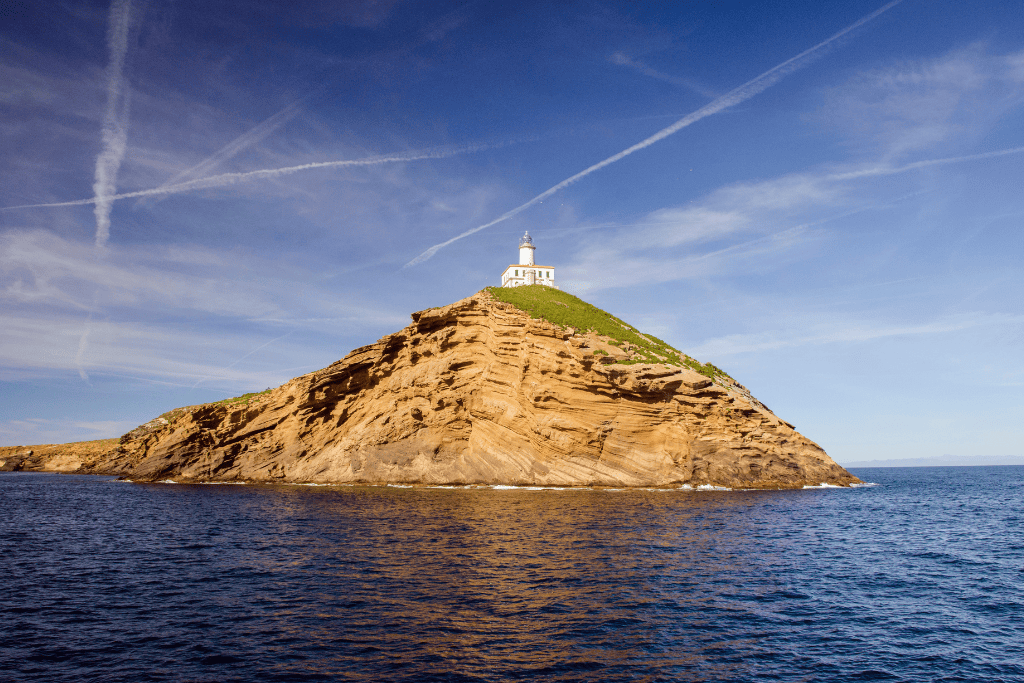
Further north, in Castellón, the Columbretes Islands emerge as a small volcanic archipelago in the middle of the sea where Illa Grossa, an ancient crater and the most significant of them all, is the only one that is inhabitable.
The exposed vent
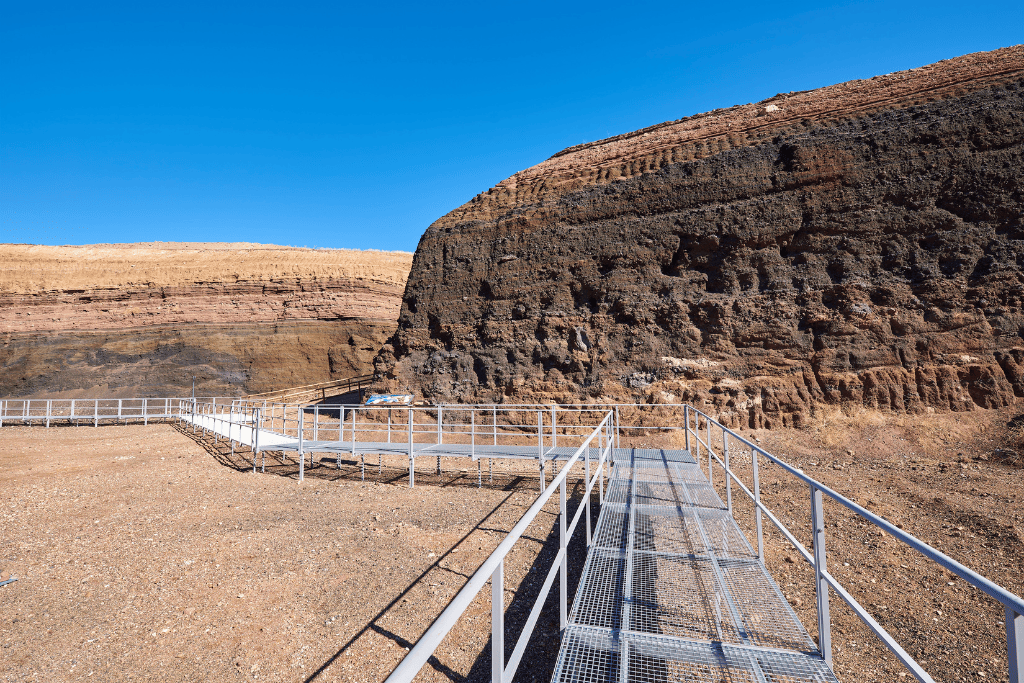
In Albacete, the Cancarix, a geological rarity, offers something unusual: the chance to see the exposed vent of a volcano. Climbing to its summit is, quite literally, peering into the heart of the Earth. And after such a fascinating discovery, there is nothing better than resting and enjoying the cuisine on offer at the Parador de Albacete.
Because sometimes, amidst lava flows, trails and impossible horizons, that place appears which comforts and restores you to face a new day full of energy.