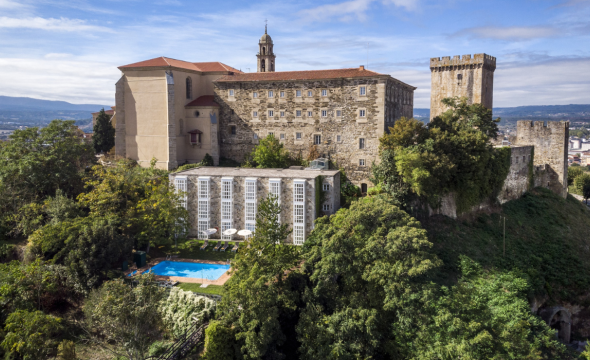
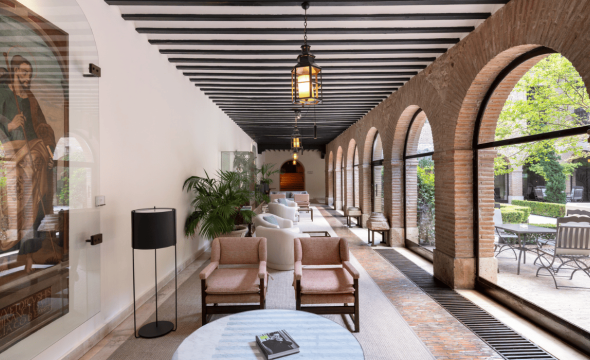
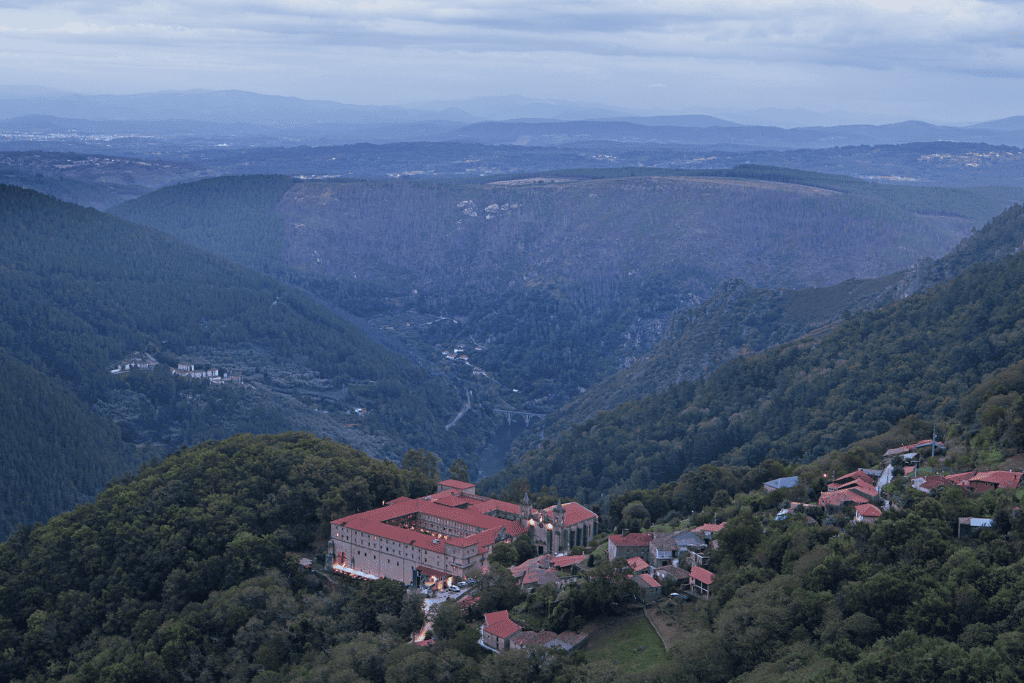
In the very heart of the Ribeira Sacra, enveloped by oak and chestnut forests, lies the Parador de Santo Estevo—a former Benedictine monastery that retains intact its power to evoke absolute silence. Amidst stone cloisters where prayer, study, and contemplation coexisted for centuries, one finds rooms steeped in history. Yet none tells its story better than Room 210, known as the Abad Franquila Room.
The Room of the First Abbot
Perched on the monastery's highest level, Room 210 bears the name of Franquila, the first abbot of Santo Estevo. It was he who revived the monastery when King Ordoño II entrusted him with its restoration in the year 921. That impulse marked the dawn of a golden age, transforming this corner of the Ribeira Sacra into one of the great spiritual centers of the northwestern Iberian Peninsula.
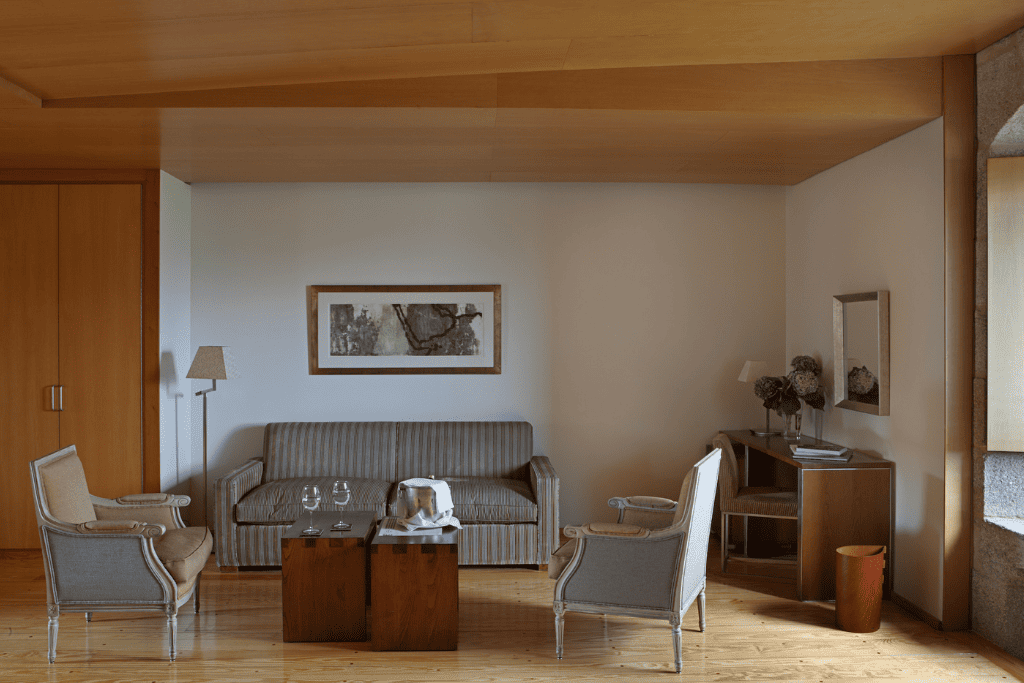
Today, more than a millennium later, the room bearing his name remains the most singular in the Parador. Its privileged position makes it a true vantage point over the Ribeira Sacra landscape. From its three large windows, the eye wanders across the Sil Canyon and the forest surrounding the ancient monastery—a backdrop that shifts in color with every passing season.
The room—the largest in the Parador—features an independent entrance lounge, a grand bedroom, and a spectacular bathroom with a whirlpool tub, designed to extend the sense of well-being that permeates the entire monastery. Every detail invites quiet rest, while the contrast between the building’s centuries-old stonework and the contemporary interior design imbues the space with a unique character.
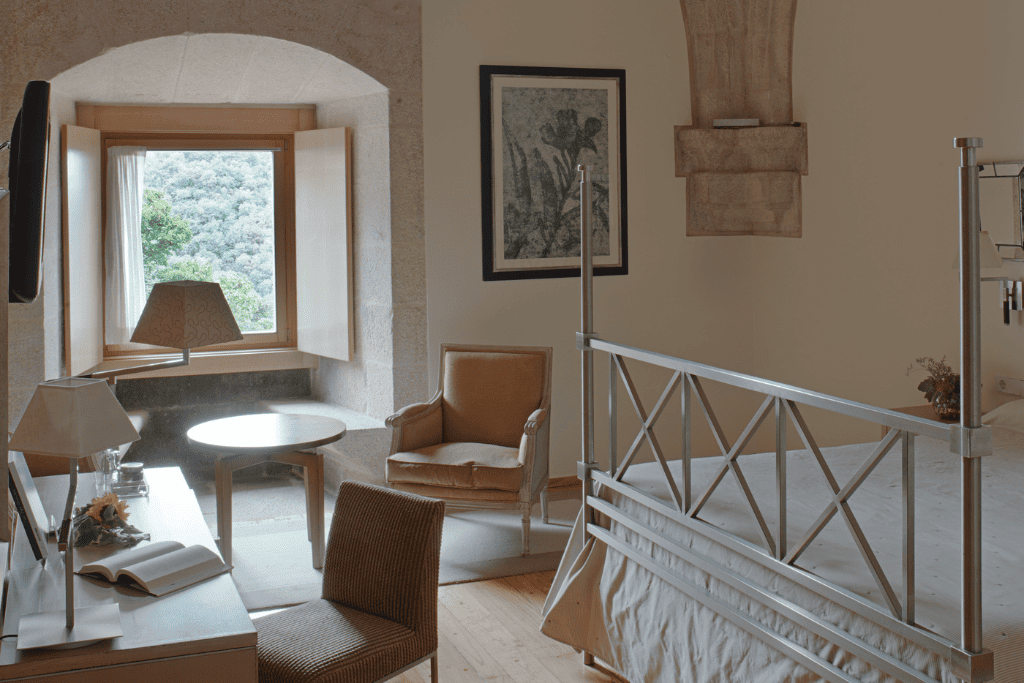
The Abad Franquila Room is far more than the Parador’s finest suite; it is an exclusive balcony overlooking the Ribeira Sacra. A place where history peers through the window, and the landscape becomes an integral part of the journey.
A Monastery Between Legend and Nature
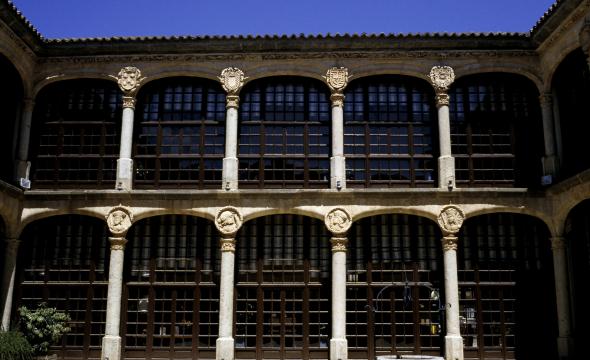
The allure of the Parador de Santo Estevo extends far beyond a single room. Regarded as one of Galicia’s most significant monastic complexes, the building encompasses centuries of history in a journey through the Romanesque, Gothic, and Renaissance eras. Its three cloisters, each distinct from the next, reflect the architectural evolution of the monastery and turn a stroll through its galleries into a voyage across nearly a thousand years of history.
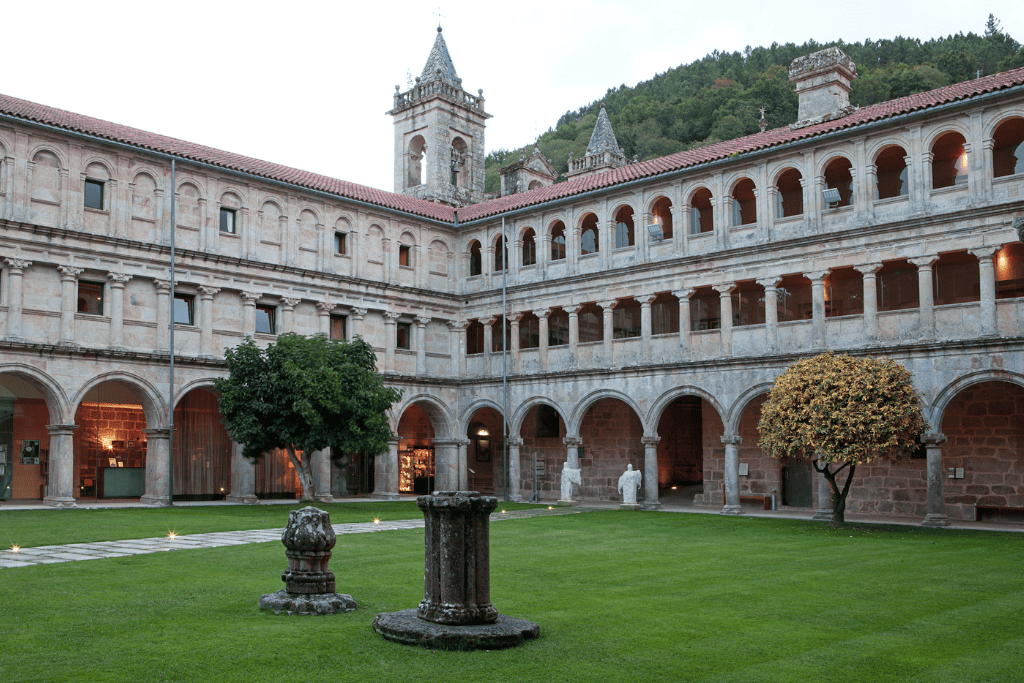
Within its walls, one of the Ribeira Sacra’s most captivating legends endures: that of the Nine Holy Bishops, who chose this monastery as their place of retreat and whose episcopal rings fueled the devotion of pilgrims for centuries. This tradition gained renewed prominence in 2020, when four of those ancient rings were discovered hidden within the church’s reliquaries.
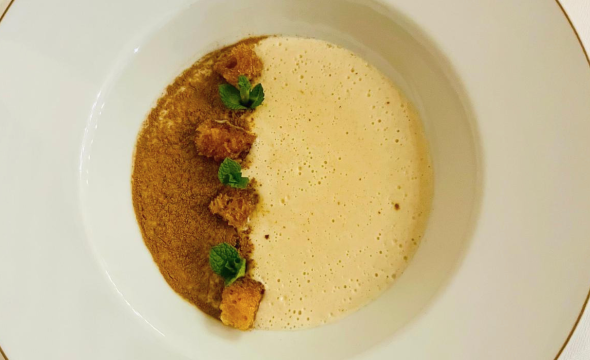
Today, the ancient monastery has found a new way to welcome travelers. The former monks’ cells are now bright, comfortable guest rooms; the medieval wine cellars house a spa dedicated to relaxation; and the Dos Abades restaurant, set within the former stables, invites guests to discover Galician gastronomy beneath an impressive stone vault.
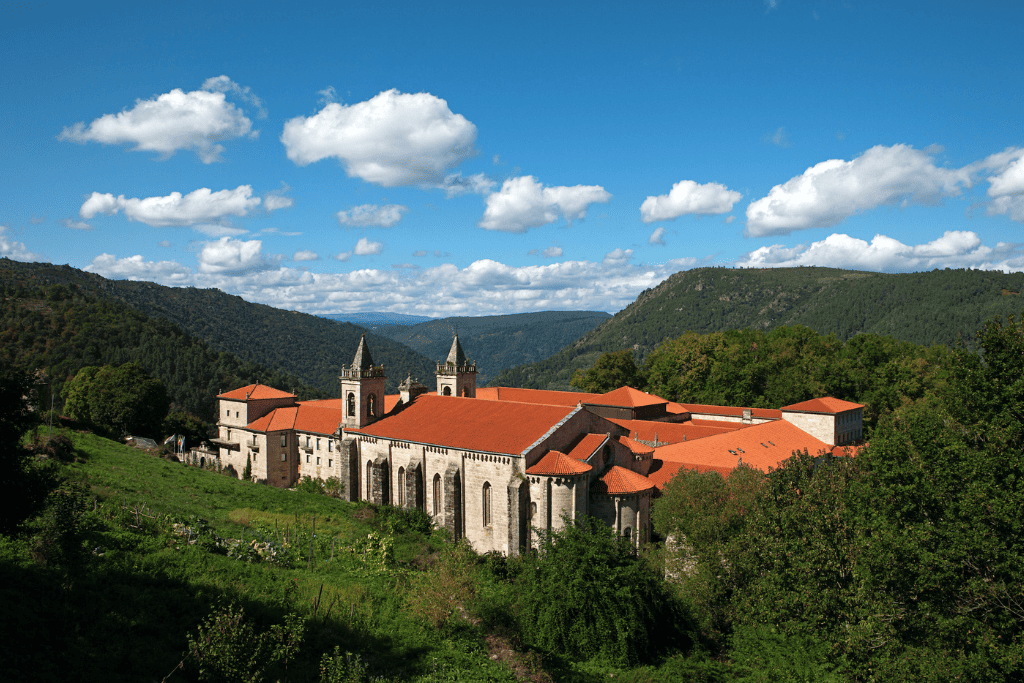
Yet Santo Estevo is also the ultimate gateway to discovering the Ribeira Sacra. Hiking routes set out from here through ancient forests, river cruises navigate the Sil Canyon, and visitors can explore wineries practicing the region’s heroic viticulture. It is a landscape where nature, heritage, and tradition form a singular whole.
The Abad Franquila Room captures this essence better than any other. Not merely for its views or its generous size, but because it embodies the spirit of a place where history is contemplated from the window and rest takes on a deeper meaning. A haven from which to discover the Ribeira Sacra with the very same serenity that, over a thousand years ago, filled the first abbot of Santo Estevo.