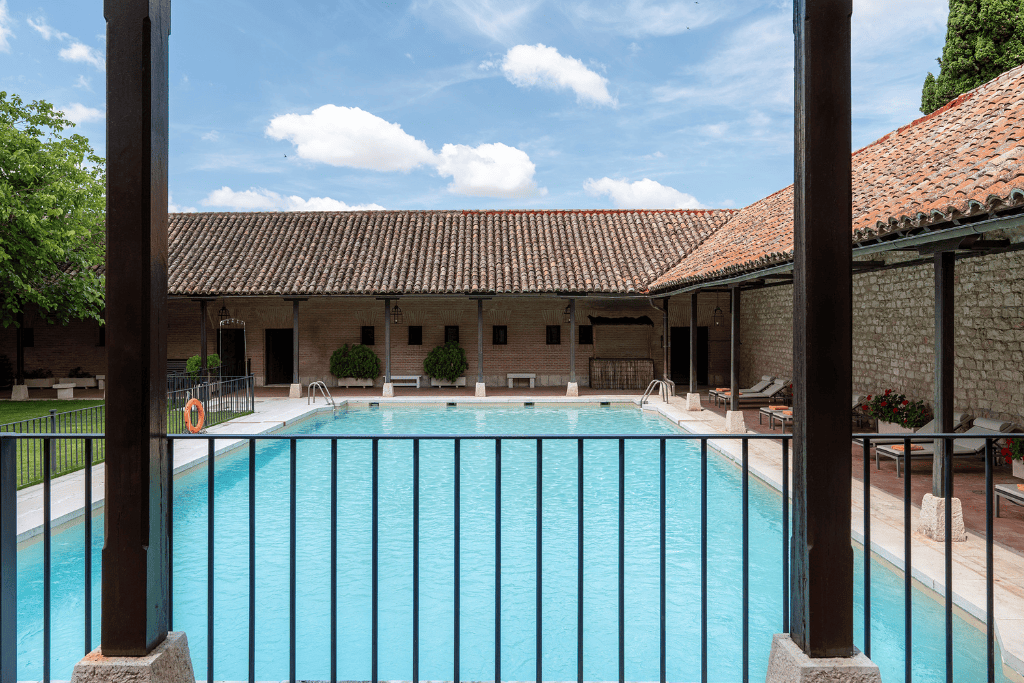
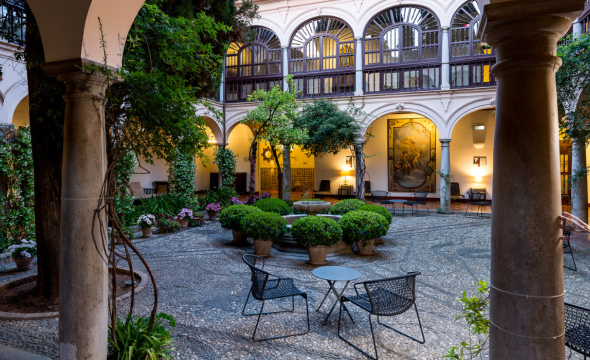
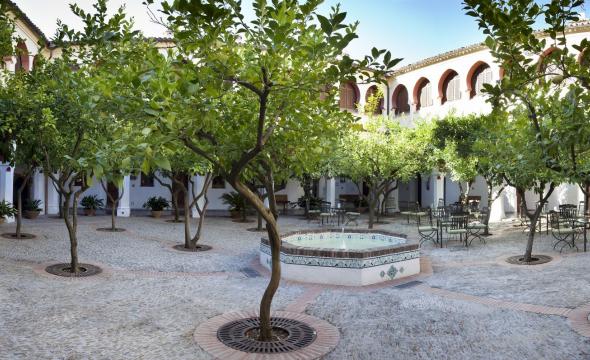
At Paradores, art can be enjoyed in all its forms and spaces, including spectacular terraces where you can cool off while immersing yourself in the history of centuries-old buildings. The Parador de Chinchón is one such place, a beautiful gem in the form of a monastery located in the heart of the town's historic centre. The old building is a monument in itself, but inside it houses a truly unique space: its cloisters are home to one of the most beautiful terraces in the entire network.
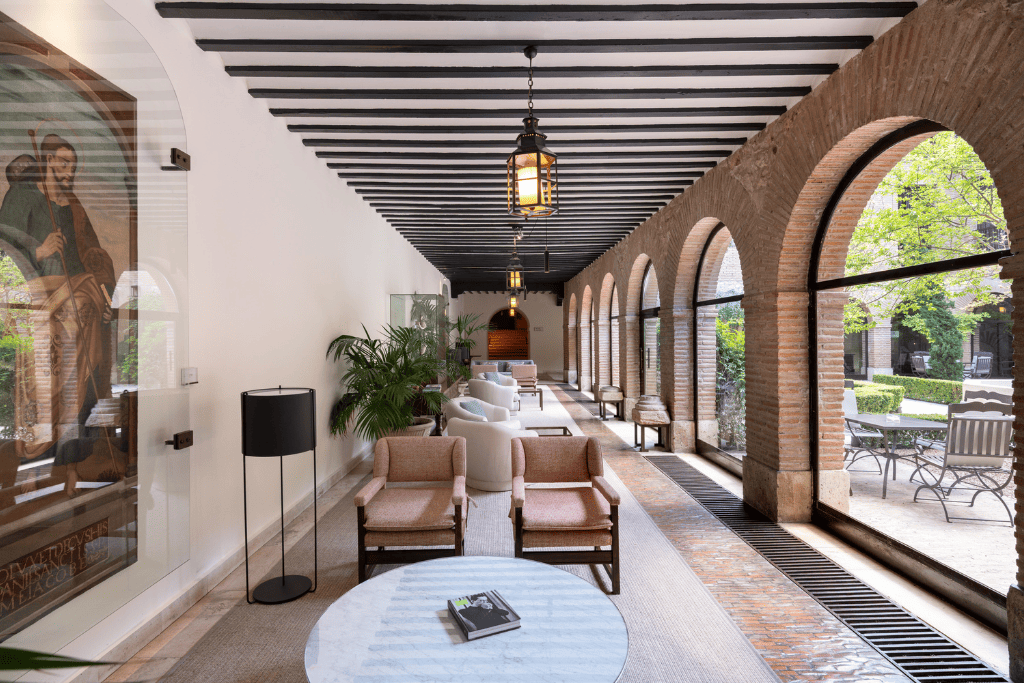
The building that now houses the Parador de Chinchón dates back to the 15th century, when the first lords of Chinchón founded the monastery of Nuestra Señora del Paraíso outside the town walls. Centuries later, in 1626, the community of this convent moved to the centre of the town, building the Baroque monastery of Nuestra Señora del Rosario, which houses the current Parador. The building has had several uses throughout its history in addition to its monastic function, such as the establishment of the regional courts in 1842 and its subsequent use as a prison until the 1950s. It is built in the Madrid Baroque style, with masonry and brickwork.
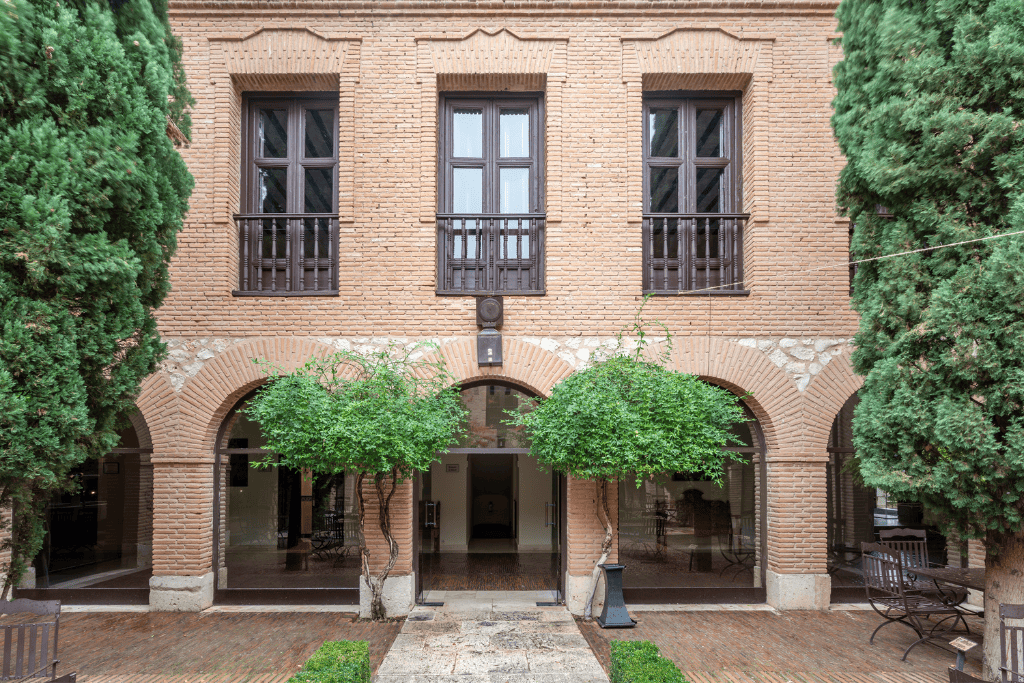
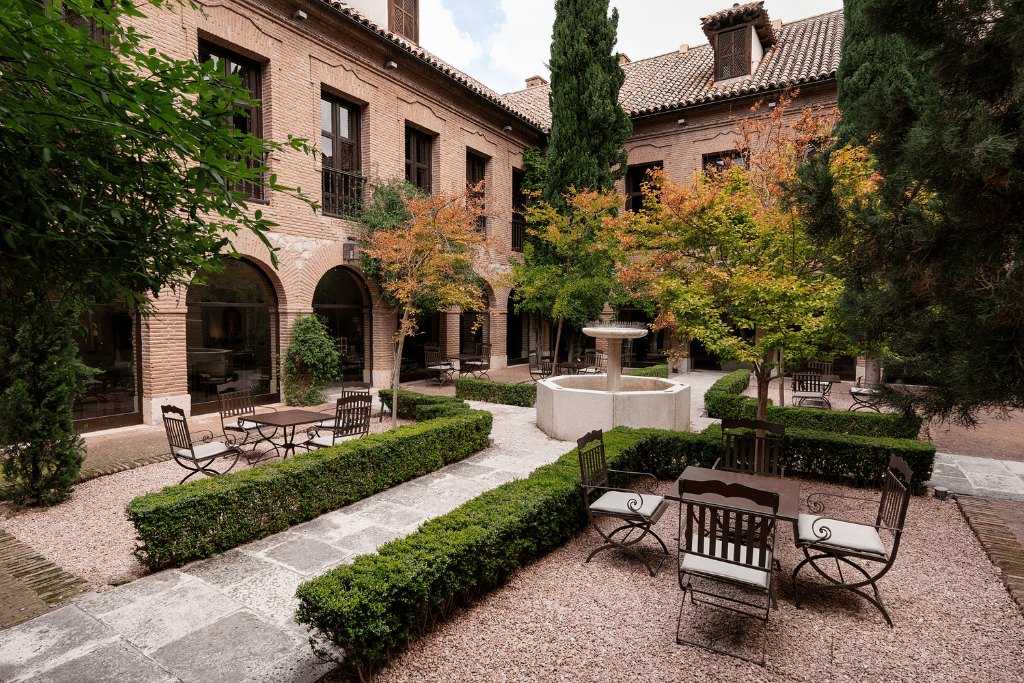
However, if there is one feature that stands out above all others, it is undoubtedly the elegant coffered cloister, which houses the Parador terrace. Flanked by numerous sculptures and works that make up a small collection of Baroque religious art, this space is the lynchpin of the entire monumental complex and is topped by a beautiful central courtyard where the imposing building coexists with a landscaped area.
But this is not the only secret that the Parador holds, as during the years of the War of Spanish Succession (1700-1714), this building was one of the accommodations chosen by Archduke Charles of Austria, pretender to the Spanish throne, who ended up being named Emperor of Germany, abandoning his Spanish adventure and enabling the coronation of the Bourbon pretender, Philip of Anjou, as King Philip V.