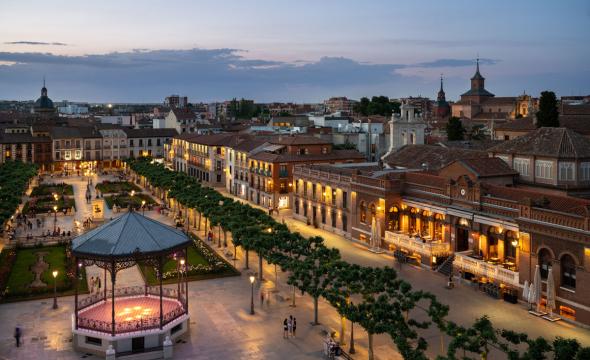
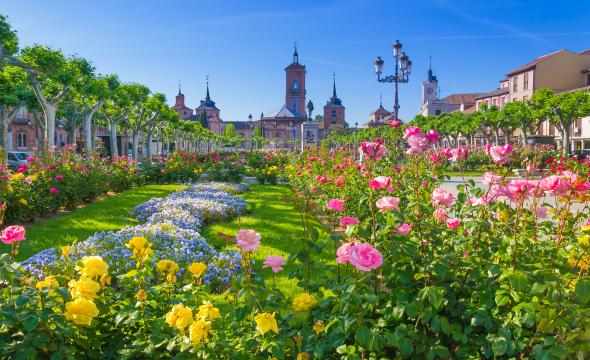
Alcañiz, the most Mediterranean city in Aragon, lies in the heart of Lower Aragon, irrigated by the Guadalope River and marked since time immemorial by its strategic location. Over the centuries, it was a key location, the site of decisive engagements and the scene of events that shaped the future of the Kingdom of Aragon.
During the Middle Ages, Alcañiz hosted key meetings of the Cortes (parliamentary assemblies), such as those that led to the historic Concordia de Alcañiz of 1412, a precursor to the Compromise of Caspe and the election of Ferdinand I as king. Later, the Renaissance brought with it a golden age that can still be seen in its main square, the Town Hall and the fish market, while its religious, civil and military heritage continues to tell the story of an intense and diverse past.
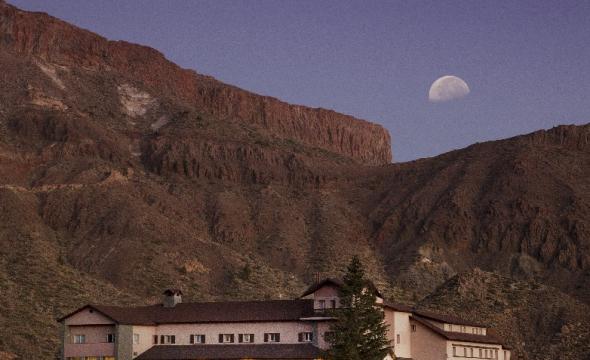
But if there is one outline that defines the city's profile, it is that of Calatravo Castle, standing on the hill of Pui Pinos and now a Parador hotel. From there, dominating the terrain, one can understand why Alcañiz was a coveted location for centuries.
Alfonso I the Battler, the conquering king
In this frontier landscape, Alfonso I the Battler, one of the most important monarchs in Aragonese history, takes centre stage. A warrior king par excellence, he consolidated and expanded the Kingdom of Aragon through military campaigns that led him to conquer Zaragoza in 1118 and to lead daring incursions into the heart of Al-Andalus.
The chronicles tell that his indomitable spirit even led him to touch the waters of the Mediterranean on the beach of Motril after crossing the lands of Teruel and Levante. Alfonso I saw the territory as a strategic chessboard, relying on castles, fortresses and military orders to secure the new frontiers. In this context, places such as Alcañiz and its fortress took on decisive importance.
His military and territorial legacy remained deeply linked to these stone structures which, centuries later, continue to evoke conquests, military orders and an era in which the fate of the kingdom was decided by the sword.
The Parador de Alcañiz, a castle with many lives
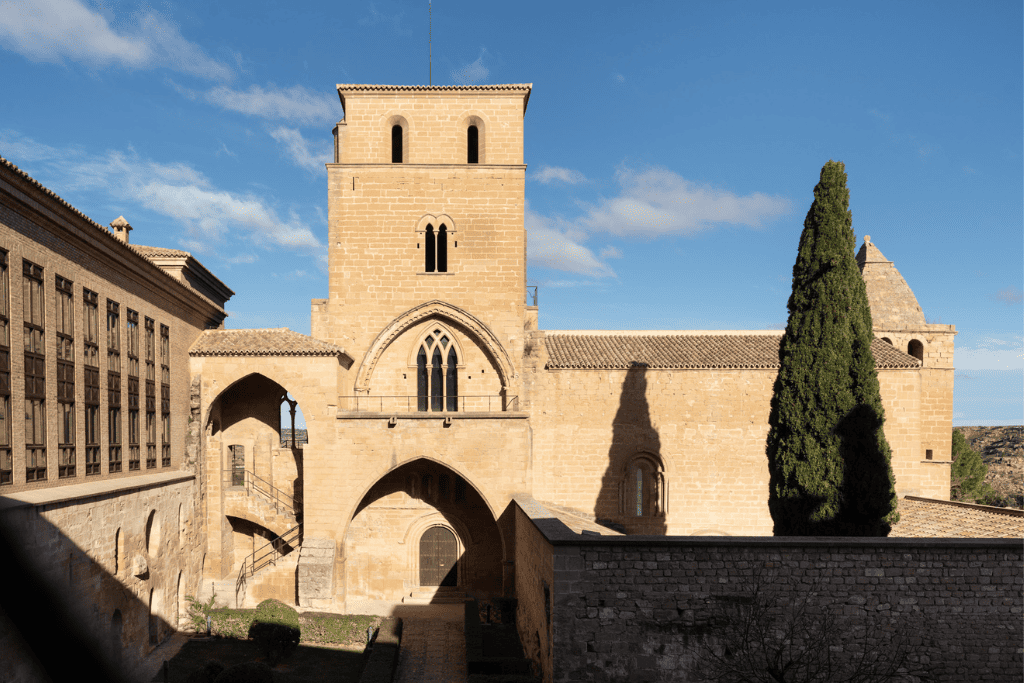
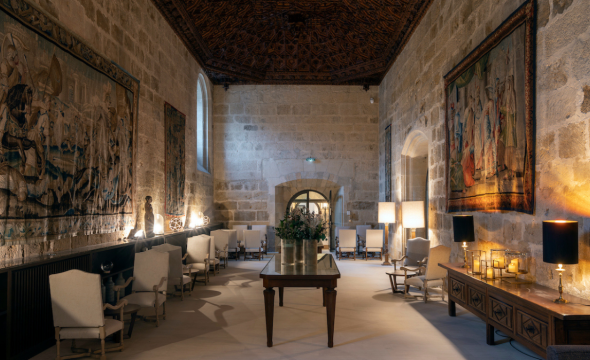
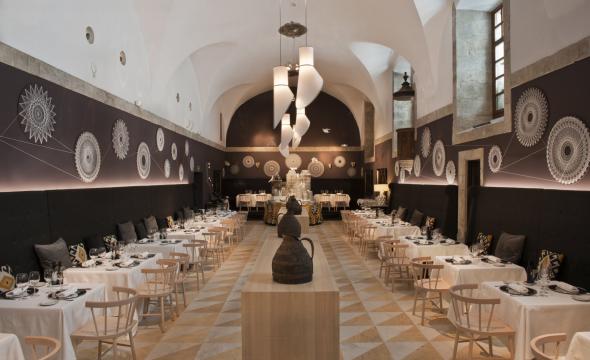
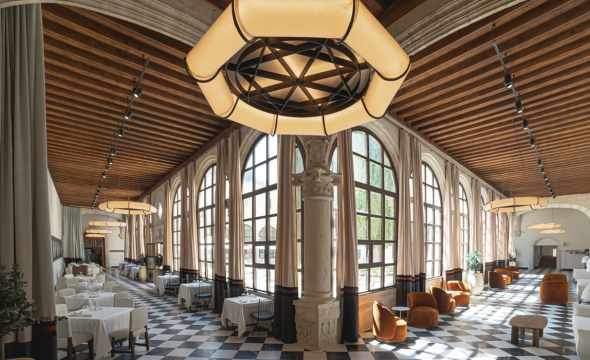
The present-day Parador de Alcañiz occupies one of the most complex and fascinating monumental ensembles in Aragon. Half castle, half convent, the complex combines different architectural styles as a result of its chequered past.
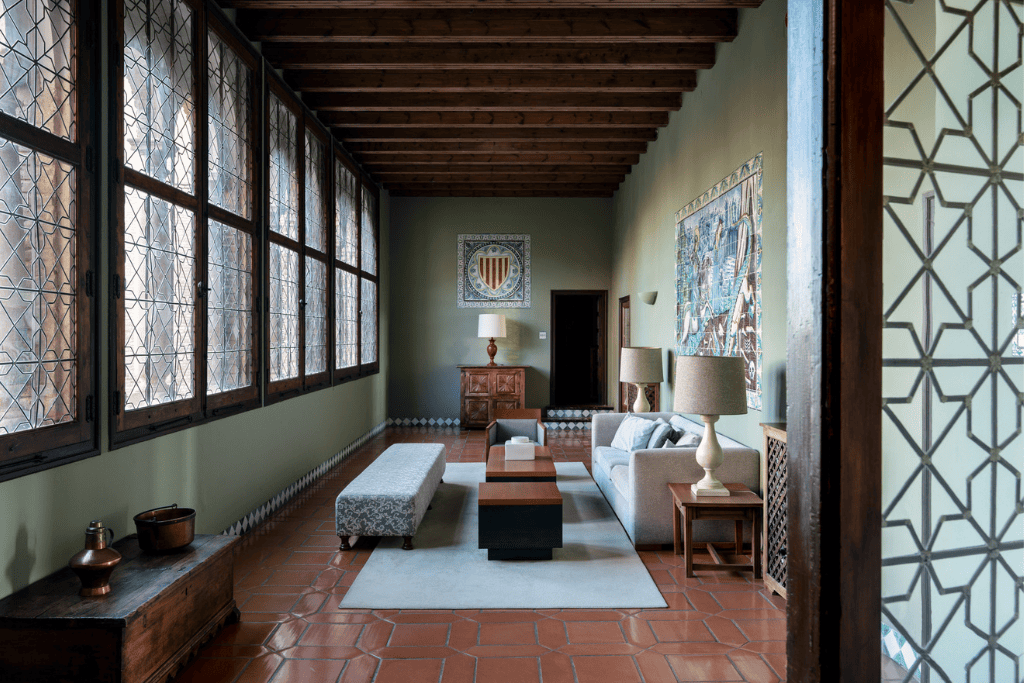
In the northern part, the medieval remains of the Calatrava castle, the keep, the church and the cloister are preserved, decorated with extraordinary 14th-century Gothic murals, one of the building's great artistic treasures. In the south stands the Palace of the Commanders, renovated in the 18th century and converted into a Parador hotel in 1968, with its imposing stone façade, corner towers and characteristic Aragonese arcade.
Room 218, Alfonso I the Battler
Among its unique rooms is room 218, dedicated to Alfonso I the Battler. This is no ordinary room; its name connects guests directly to the conquering spirit of the king and the military past of the building that houses it.
To sleep here is to sleep in a castle that was key during the Aragonese expansion, a strategic position used by military orders, such as that of Calatrava, which continued the defensive work begun in the time of the Battler. The stones of the Parador, witnesses to centuries of history, seem to whisper tales of campaigns, alliances and conquests.
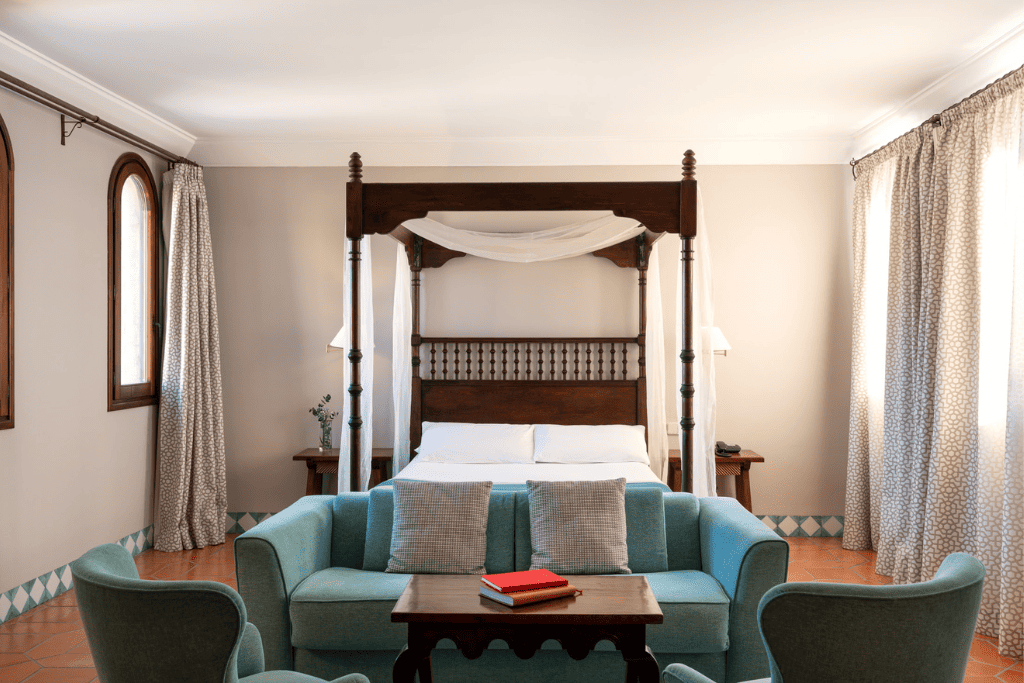
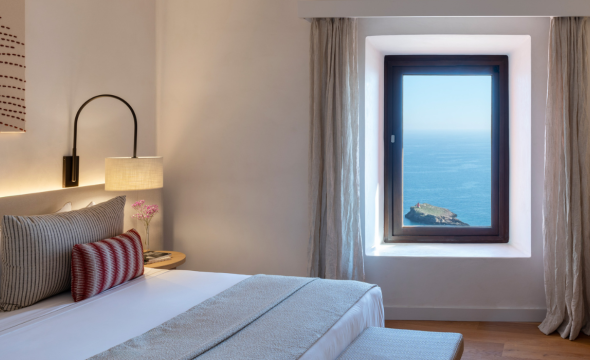
The room combines contemporary comfort with the historic atmosphere of the place, allowing travellers to feel part of a living legend. From this special refuge, the past ceases to be a distant story and becomes a tangible experience.