More than just a collection of villages with whitewashed façades, the white villages form one of Spain’s most distinctive cultural landscapes. Their history, architecture, and deep connection to the land make every visit a journey into the very essence of Andalusia.
There is an image that encapsulates much of the Andalusian imagination: a white village perched on a hillside, narrow streets where shade offers a welcome relief—especially in summer—courtyards overflowing with flowers, and viewpoints from which the gaze wanders among olive groves, mountain ranges, or the sea. These are the white villages, one of the most recognisable sights in southern Spain.
But why are they white? Although many of them trace their roots back to the era of Al-Andalus, when settlements were established on high ground for defensive reasons, the colour that defines them today came later. The façades began to be coated with lime, an abundant and inexpensive material that reflected the intense southern light, helped keep homes cool during the summer, and also acted as a natural disinfectant thanks to its antibacterial properties. What began as a practical solution ended up becoming one of the most iconic hallmarks of the Andalusian landscape.
Visiting these villages today is about much more than simply admiring a cluster of white houses. It means strolling through streets that retain the layout inherited from Al-Andalus culture, discovering castles that dominate the horizon, gazing out from spectacular viewpoints, and sitting in squares where life continues to unfold just as it did in days gone by. In short, it is a way of getting closer to the most authentic Andalusia.
Although the well-known White Villages Route passes through nineteen towns in the province of Cádiz, the charm of this traditional architecture extends across much of Andalusia. And several of these destinations feature a Parador from which to discover their heritage, cuisine, and landscapes at the leisurely pace that the journey deserves.
The balcony overlooking the Cádiz countryside
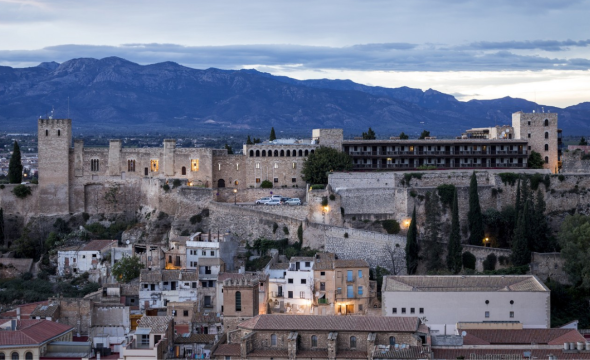
There are few villages that make such an impression even before you’ve walked through their streets. Arcos de la Frontera seems to hang from a sheer cliff face overlooking the Guadalete valley, offering one of the most spectacular panoramic views in the province of Cádiz.
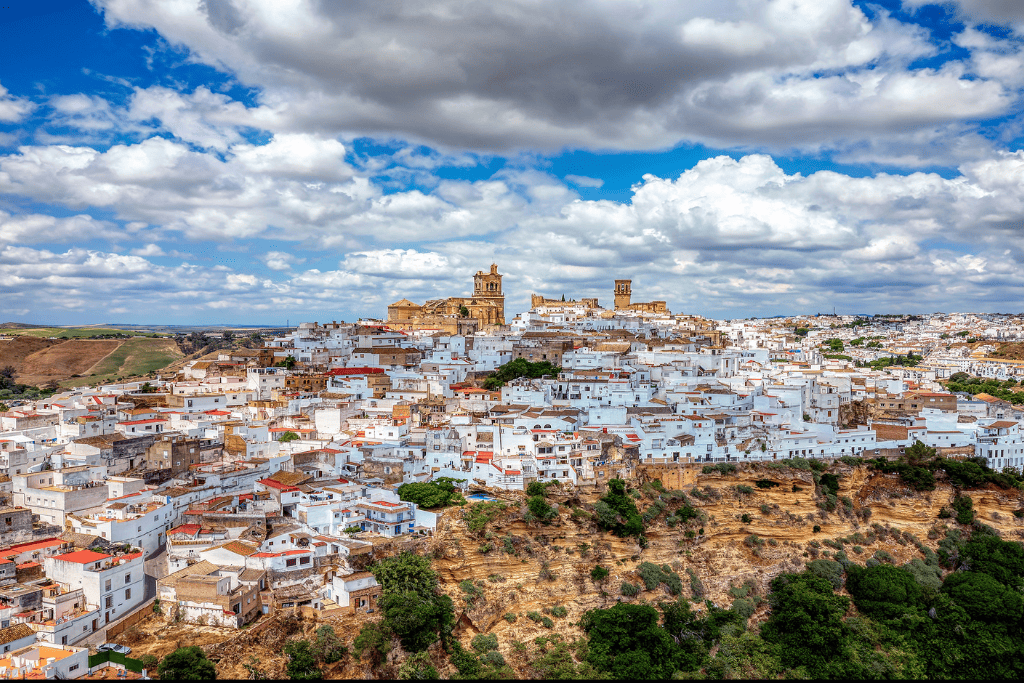
Its urban layout, of medieval origin and deeply influenced by its Al-Andalus heritage, invites you to lose yourself among narrow alleyways, whitewashed houses, arches, convents, and churches that appear almost by surprise. The heart of the town beats in the Plaza del Cabildo, where the Basilica of Santa María de la Asunción, the old ducal castle, and some of the town’s finest viewpoints stand side by side.
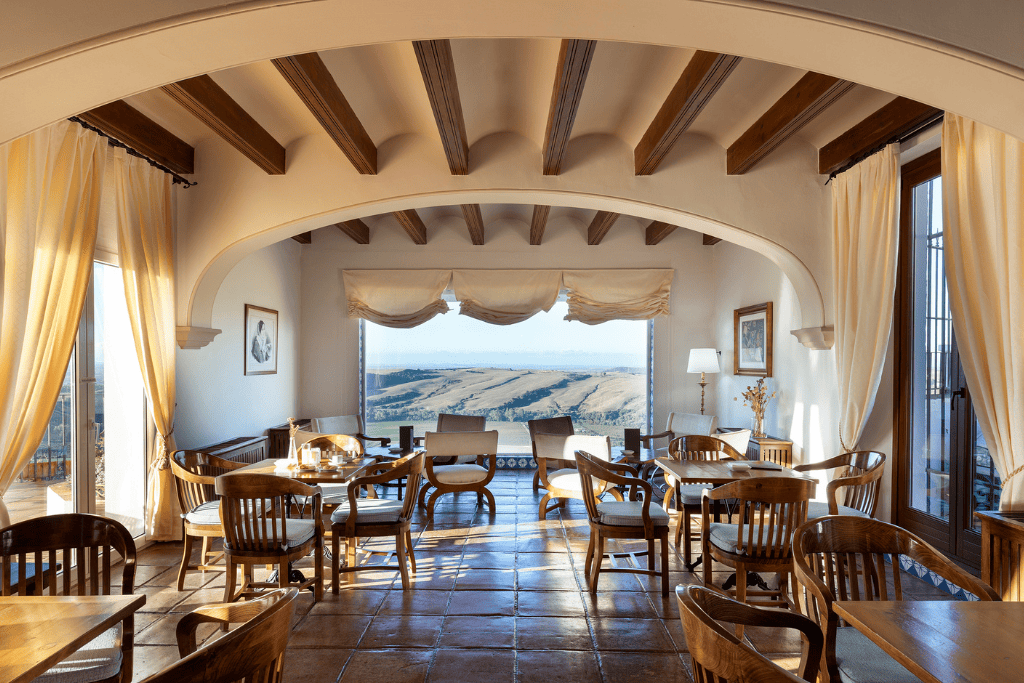
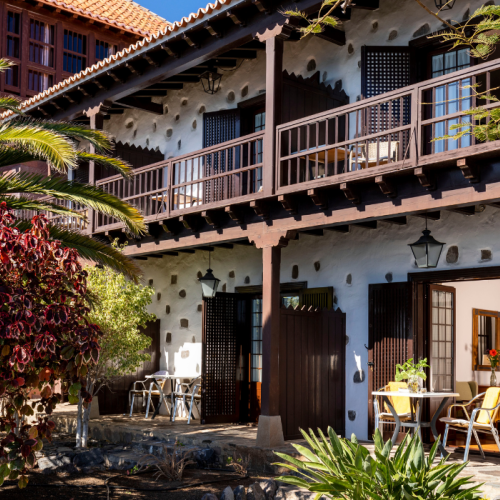
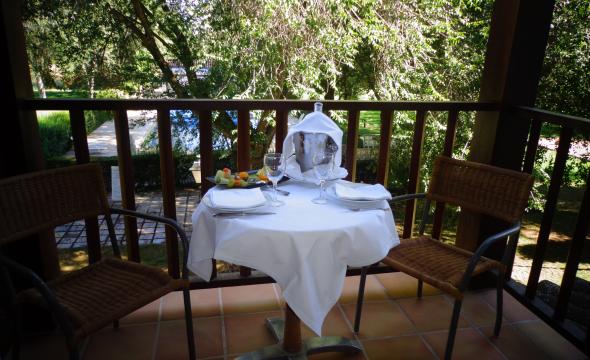
It is precisely here that the Parador de Arcos de la Frontera is situated. Housed in a building that retains the charm of traditional Andalusian houses, complete with its characteristic inner courtyard, it offers superb views over the Cádiz countryside and serves as the ideal starting point for exploring one of the most beautiful villages on the route.
The white village overlooking the Mediterranean
In Mojácar, the brilliant white of the façades rivals the blue of the sea. Perched on a hill in the Sierra de Cabrera, with the Mediterranean ever in view, this Almerian town combines the essence of the white villages with a coastal landscape that is hard to forget.
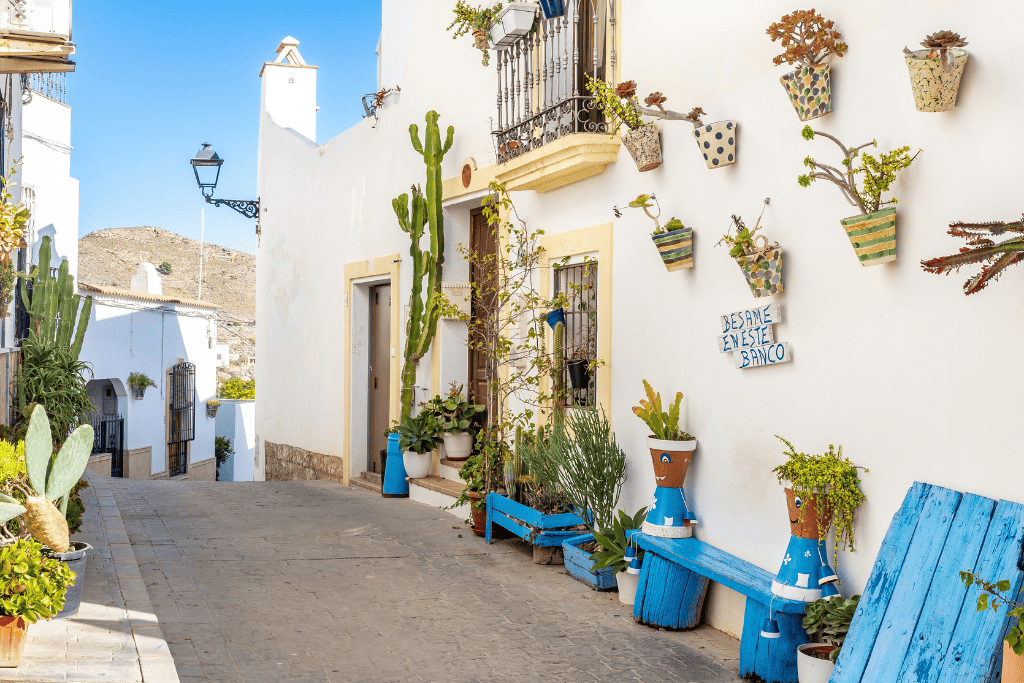
A stroll through its historic centre involves winding your way up cobbled alleyways that lead to small squares, viewpoints, and corners brimming with flowers. The City Gate, of Arab origin and rebuilt in the 16th century, serves as a reminder of the town’s significant Muslim past; much of its original layout remains beautifully intact.
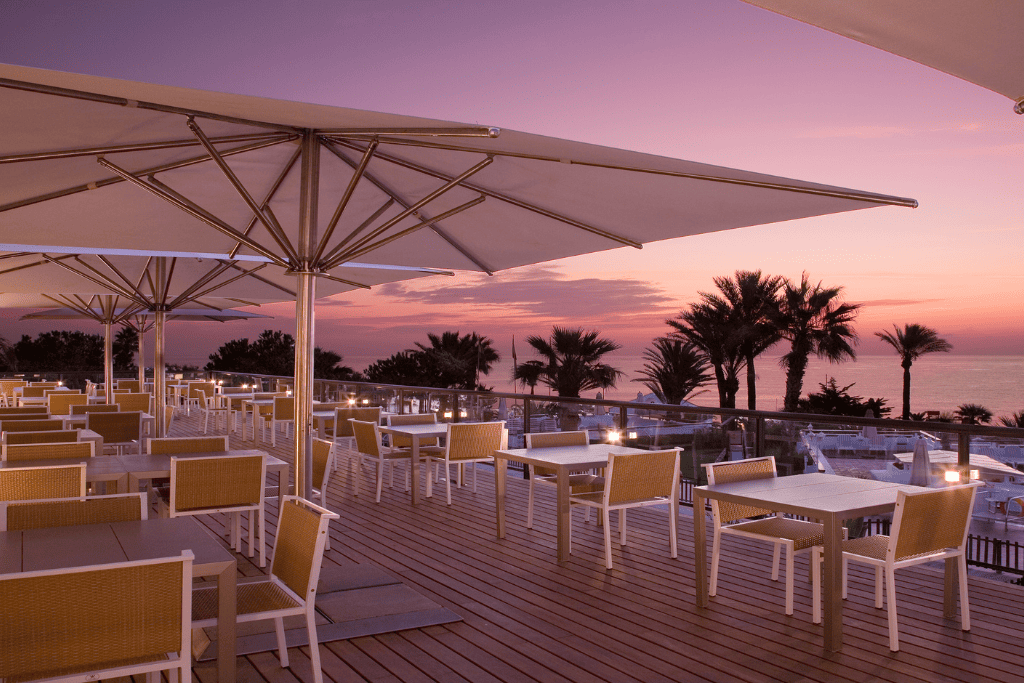
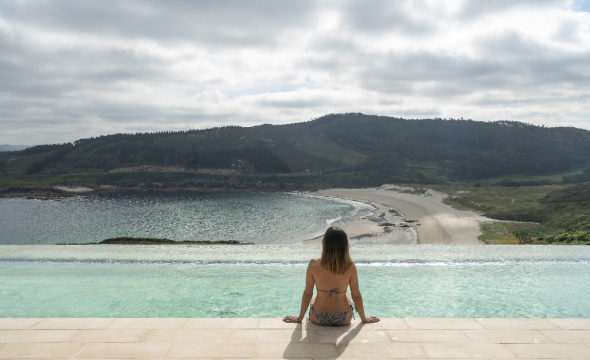
Just a few minutes from the historic centre, the Parador de Mojácar offers a completely different experience, yet one just as closely linked to the landscape. Facing the sea and surrounded by gardens, all of its rooms enjoy views of the Mediterranean. After a day exploring the town, its swimming pool, terraces, and cuisine based on the finest produce from the Almería coast invite you to linger and relax.
Where Andalusia meets Portugal
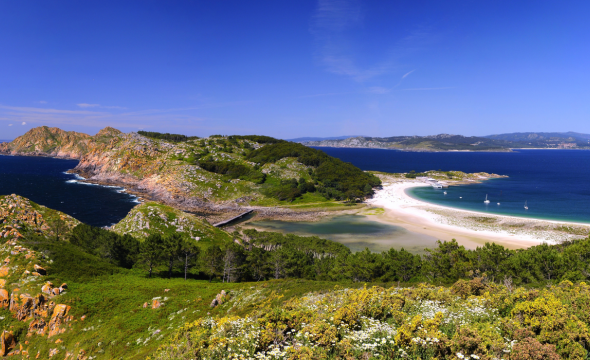
At the western tip of Andalusia, where the River Guadiana forms the natural border with Portugal, Ayamonte retains the serene charm of coastal towns that have always lived facing the water.
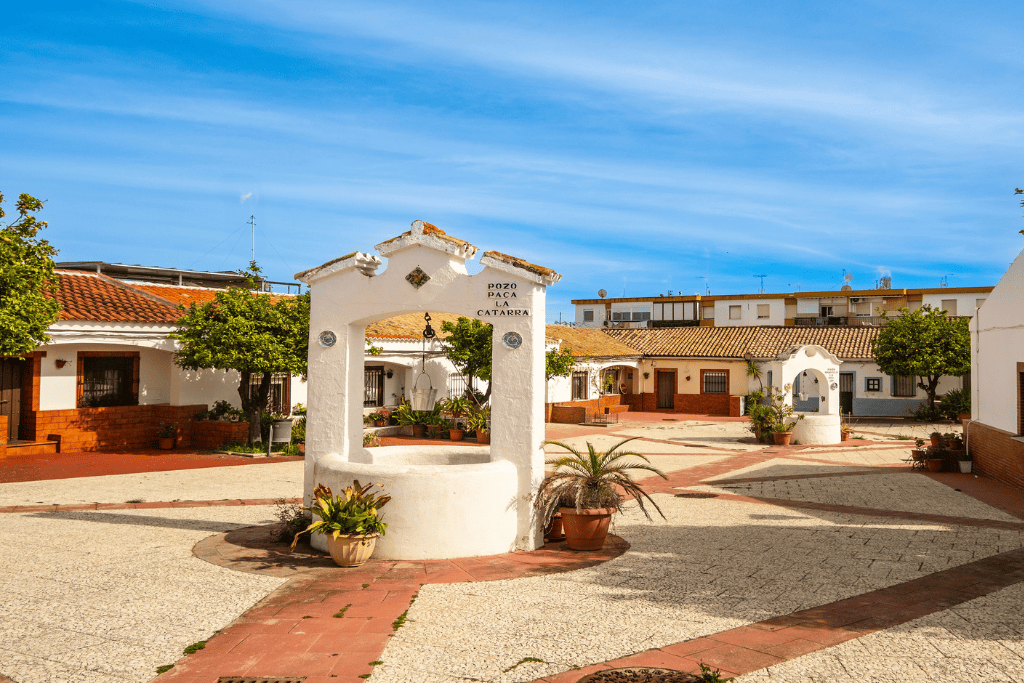
Its historic centre features quiet squares, churches, stately buildings, and a lively market where you can still experience the town’s authentic daily rhythm. Nearby lie the long beaches of Isla Canela and Punta del Moral, two vast stretches of sand where you can enjoy the Atlantic.
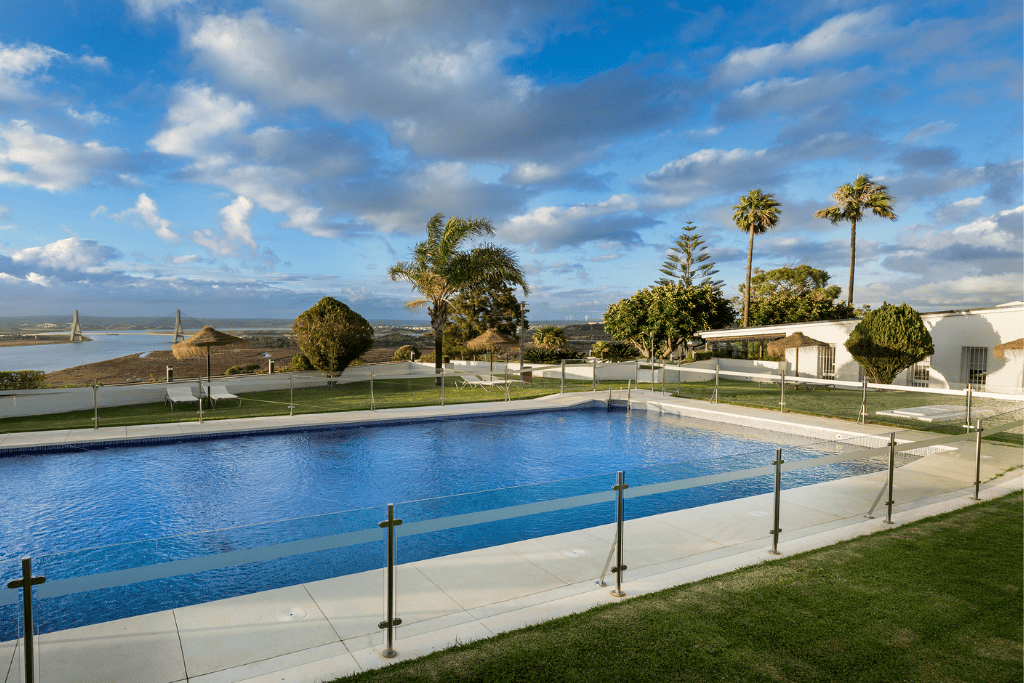
Perched on a hill with magnificent views of the Guadiana estuary, the Parador de Ayamonte offers a vantage point from its terraces to watch how the river both separates and, at the same time, unites Spain and Portugal. This is particularly true at sunset, when the fading light transforms the landscape into one of the most beautiful spots on the Huelva coast.
The gateway to Spain’s largest protected area
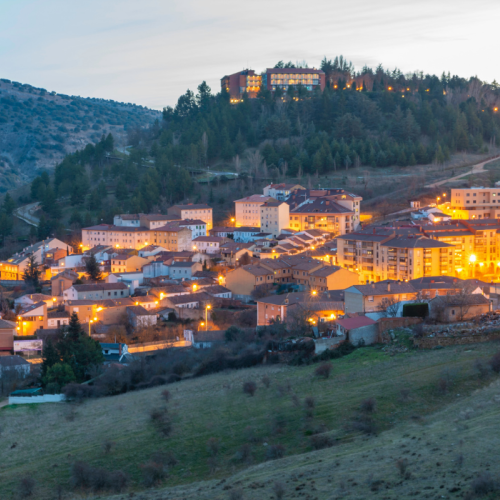
While white villages are often associated with mountain ranges and viewpoints, Cazorla epitomises the union of heritage and nature like few other places. Situated at an altitude of over 800 metres, this town in Jaén is the main gateway to the Sierras de Cazorla, Segura and Las Villas Natural Park, Spain’s largest protected area.
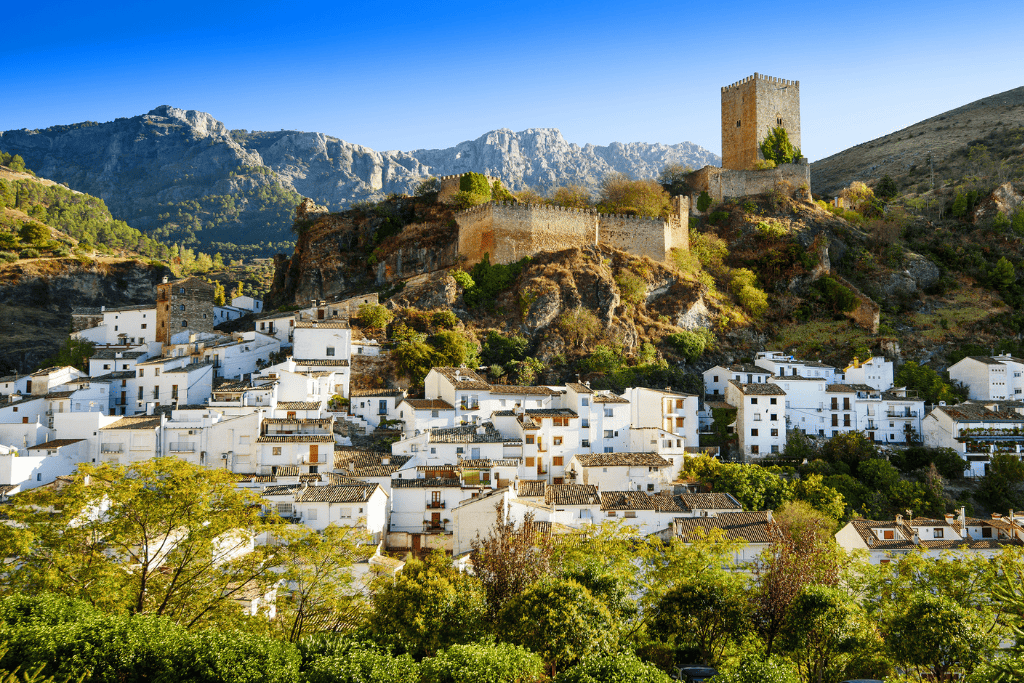
Before venturing into its forests, it is well worth spending some time exploring the village itself. Its streets wind their way up between traditional houses to the Castillo de la Yedra, while the unique Church of Santa María, built directly over the bed of the River Cerezuelo, serves as a reminder of the rich history of a place that has preserved much of its character intact.
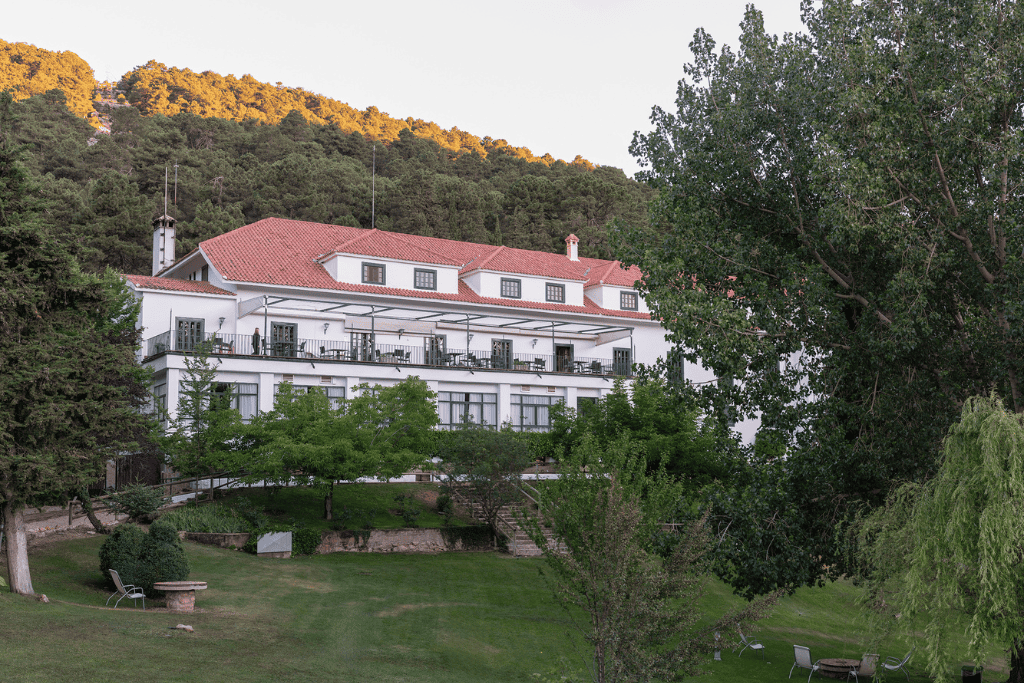
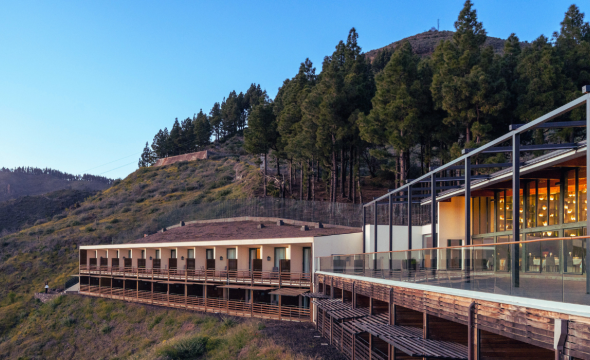
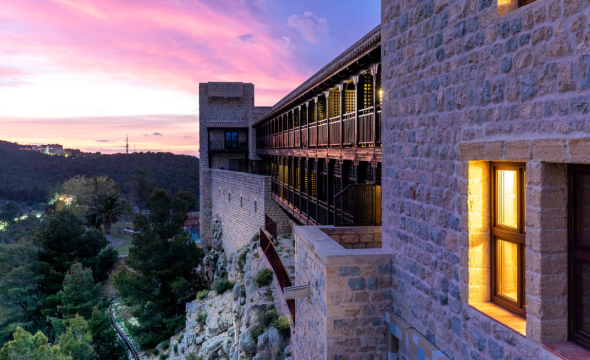
Surrounded by a lush pine forest and seamlessly integrated into the landscape, the Parador de Cazorla is housed in a former Andalusian farmhouse, now converted into a retreat for those seeking tranquillity and a connection with nature. Numerous routes through the natural park start right from here, and you can discover a cuisine deeply rooted in the mountains, where extra virgin olive oil, game, and seasonal produce take centre stage on the table.