Barely ten kilometres from the Parador of Pontevedra, a narrow stretch of land enters the Atlantic: O Morrazo, a territory where the blue of the ocean merges with the green of the mountains that descend to the shore. Fishing villages, medieval churches, forts and lighthouses that defy the tides are dotted across this peninsula filled with history and nature, where you can enjoy an unforgettable break far from the hustle and bustle and the crowds.
«Ondas do mar de Vigo... ondas do mar levado», sang the troubadour Martín Códex in the 13th century as he admired a coastline that, eight centuries later, continues to mesmerise travellers. Bathed by the clear, cold waters of the Atlantic, the O Morrazo peninsula stretches between the Pontevedra and Vigo estuaries, before giving way to the Cíes islands and the Ons archipelago, the domain of the forces of the sea that are calmed with the arrival of good weather. The four municipalities - Marín, Bueu, Cangas and Moaña - that make up this region, the smallest in Galicia, welcome visitors with narrow streets, fine sandy beaches and spots filled with history on all four sides.
Stones, lights and villages
Just above the inlet that shelters the beach of Mogor, three rocks defy time. Labyrinths carved into the stone of the rocks form one of the most unique petroglyphs in the northwest of the peninsula. They are not the only vestiges of the past.
Galicia is dotted with fortified settlements, and O Morrazo is no exception. Everywhere, there are stone reminders of a culture of circular houses and fortified settlements such as Montealegre, in Domaio. Here, the start of the wall and the dwellings are preserved among eucalyptus trees with privileged views of Vigo estuary and Rande bridge. Or there is Subidá, not far from the petroglyphs of Mogor. However, the most impressive is Donón. Located at the top of Facho mountain, it offers views extending as far as the Cíes and the island of Ons, with its characteristic emerald and golden tones in contrast to the intense indigo colour of the sea. With signs of life dating back to the 10th century BC, part of its importance lies in the temple - dedicated to Berobreo, a Galician god related to death and the afterlife - that stood on the site. Evidence of this are over one hundred and fifty sacred stones, recovered in the archaeological excavations, and now housed in the Museum of Vigo.
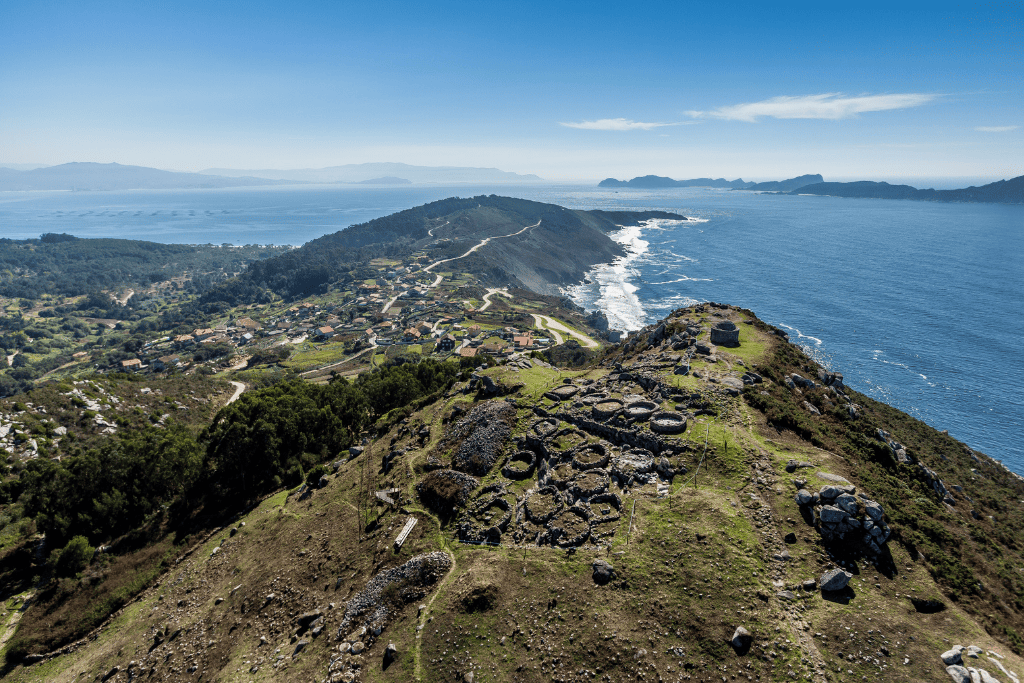
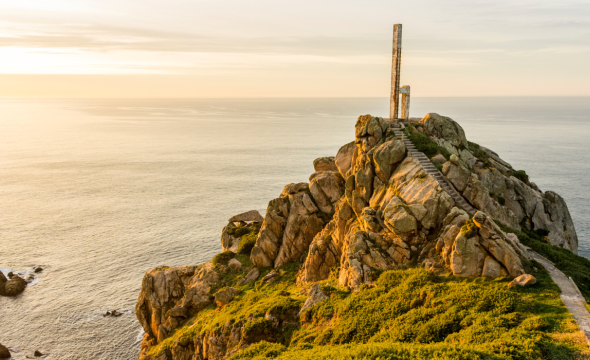
Another striking feature on the top of the hill is an 18th century stone sentry box, built on the foundations of an old medieval lighthouse from which the hill takes its name. "Facho" refers to the bonfires of wet straw that were lit on top of the hill and whose clouds of smoke were visible all along the coast. Today, other lighthouses look out over the ocean and warn sailors of the proximity of the coast, such as the one at Cape Home, in white and blue, that stands out against the Costa de la Vela, or Punta Robaleira lighthouse, whose bright red colour matches the sky when the sun sets.
Sheltered from the capricious fury of the sea, the villages of O Morrazo border the estuaries, illuminating them with a myriad of little lights on clear spring nights. Monumental sites such as Darbo - with the church of Santa María, one of the best examples of rural baroque in Galicia - or Hío - and its magnificent transept - mingle with the ‘casas de patin’ (traditional style of architecture) or the curious bell tower of the church of San Salvador de Coiro, in Cangas. To the north, Bueu houses the Massó museum in the warehouses of the old cannery, a space dedicated to the sea where you will find ancient manuscripts, maritime instruments and even boats. Also in this municipality, the Son Rías Baixas festival takes place at the beginning of August. This is one of the essential summer events for music lovers. In July, the Festival Intercéltico do Morrazo, in Moaña, is an international reference for lovers of folk music and has been held for more than fifty years.
Among waterfalls, oak and eucalyptus trees
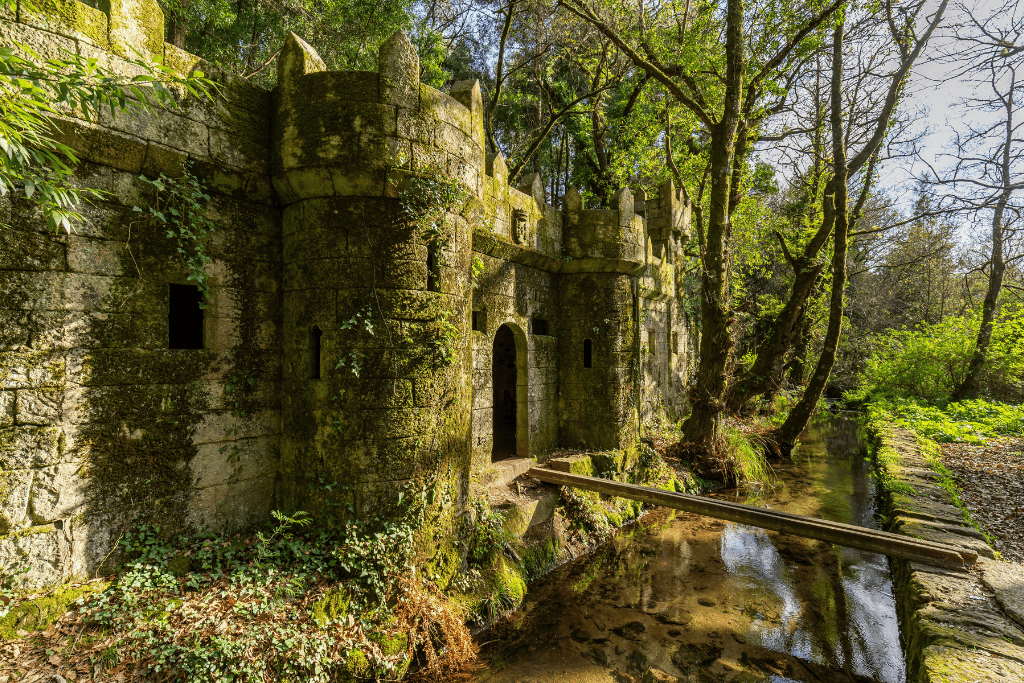
The natural environment that spreads across the peninsula is a stimulus for the senses. Craggy coasts, fine sandy beaches and cool forests delight the most adventurous. A path through the Enchanted Forest of Aldán allows you to get lost among birch trees, chestnut trees and ferns and explore a small castle, now covered in moss, built in the 1960s and never finished. The route of the mills of A Fraga, which runs between Moaña and Meira, is another unforgettable route along the banks of the Fraga, between oak trees and "fervenzas" or waterfalls where the white foam makes it seem as if the water is "boiling".
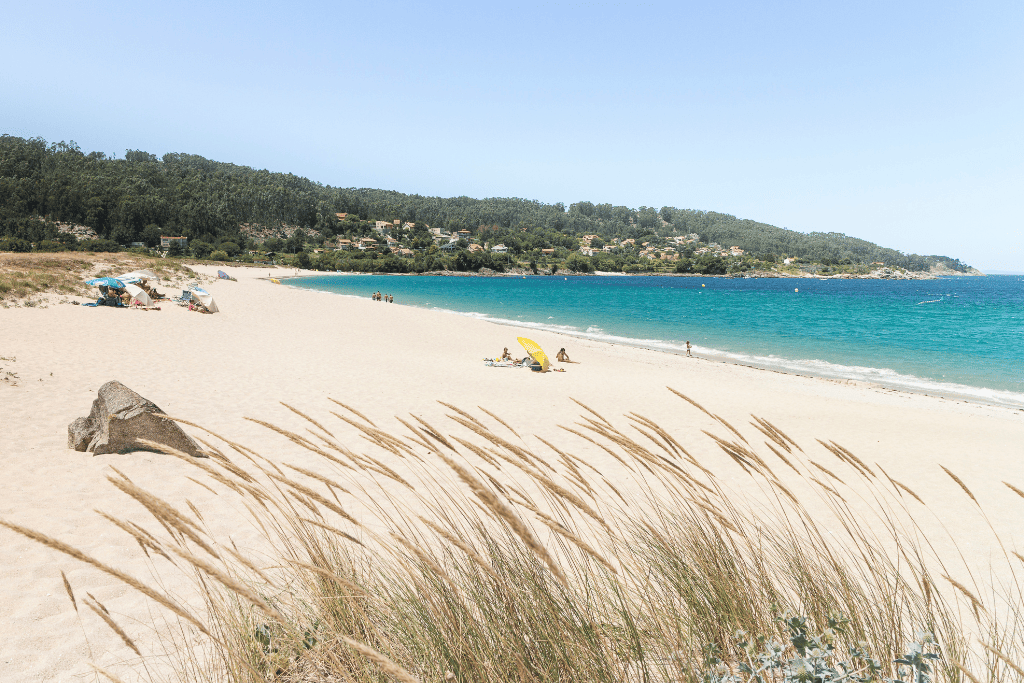
The trails, paths and roads also extend along the coast and provide access to beaches such as Areabrava, with crystal-clear waters and a small dune system; Arneles, sheltered from the waves; Menduiña, where the sea turns turquoise; Tulla, from where you can watch magnificent sunsets, or Barra, one of the best nudist beaches in Galicia.
For those seeking more adventure, from the port of Bueu, a short crossing takes you to the island of Ons, part of the Atlantic Islands National Park, with unique places such as the Buraco do Inferno or Melide beach. Back on the mainland, the region of O Morrrazo envelops the traveller with the Atlantic essence of Galicia, felt in every mouthful, every wave and every sunset.
Land of legends
Amid the mist that climbs with long fingers along the cliffs of O Morrazo, you can see beliefs that are lost in time and live in the collective memory of its inhabitants. Mythological beings, stories told in whispers and places wrapped in a magical halo exist alongside breathtaking landscapes. Lands crossed by the Santa Compaña. Legends such as that of A Banda da Figueiriña and A Costa do Río, on Mount Facho, from where souls depart to the west, chasing the sunset over the ocean on their journey to the Beyond, or that of Moura pool, in Domaio, which owes its name to an unfortunate love that ended with the death of the lovers. Since then, summer nights are filled with the laments of a woman who, when the sun sets on Saint John's Day, combs her long hair on the shore.
Flavours of the sea
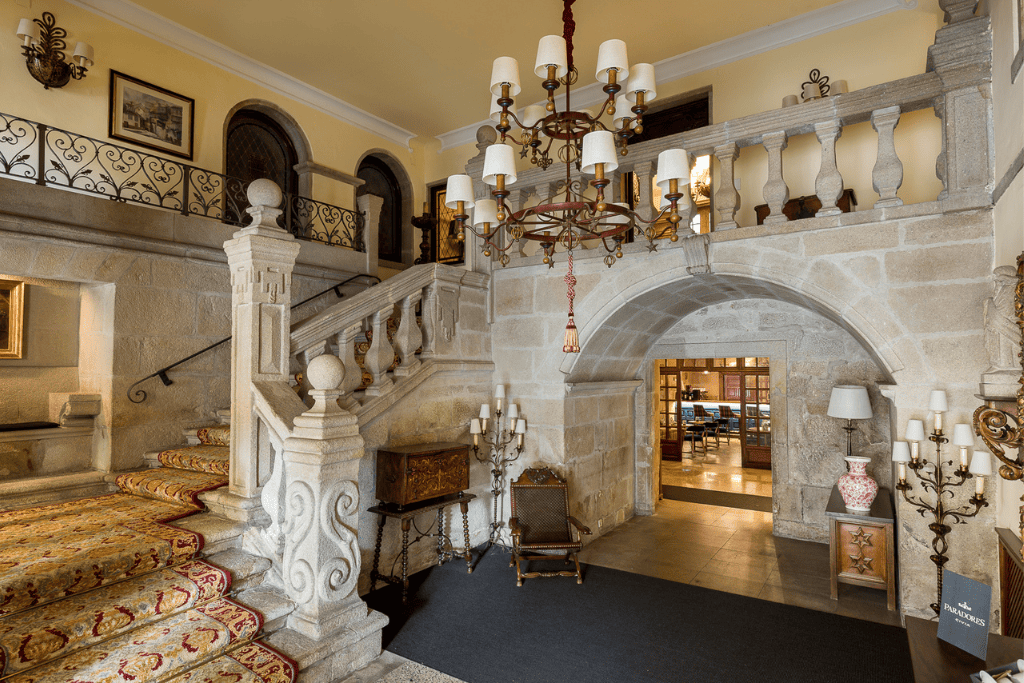
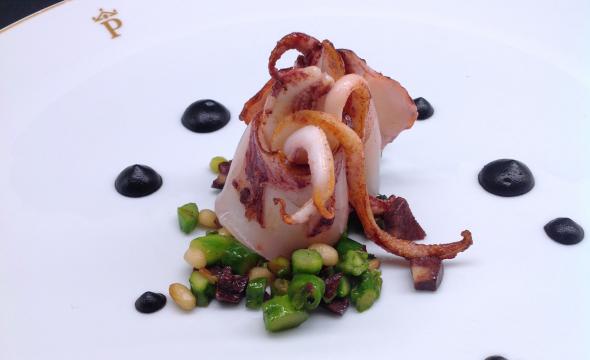
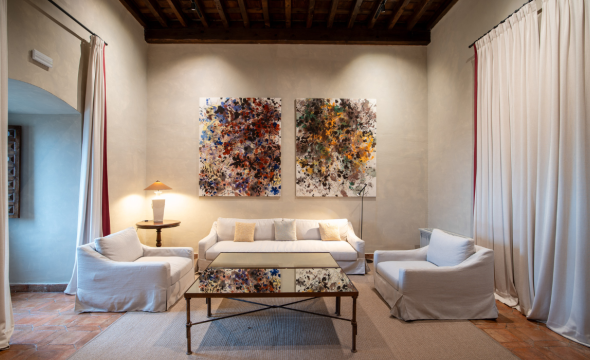
Tradition, flavour and authenticity define the culinary offer of the Casa do Barón Restaurant at the Parador de Pontevedra. A place where you can taste authentic traditional Galician cuisine, with a special influence from the Rías Baixas: fish, seafood, octopus a feira, homemade pies and local cheeses. The Parador de Pontevedra is located in the historic centre of the city, in a 16th century Renaissance palace, formerly the residence of the Counts of Maceda.