Located in the northeast of the province of Guadalajara, in the heart of the historic region known as the Señorío de Molina, this ancient town preserves all the charm of the Middle Ages, from its cobbled streets and imposing walls to the majestic Castle of Molina de Aragón, one of the largest in Spain. A place where time seems to stand still, and the perfect setting for the newest addition to the Paradores network.
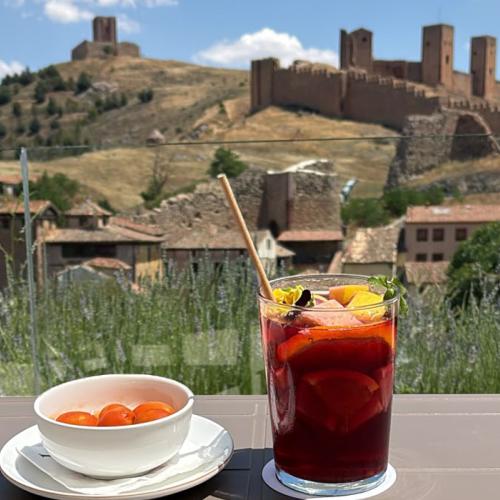
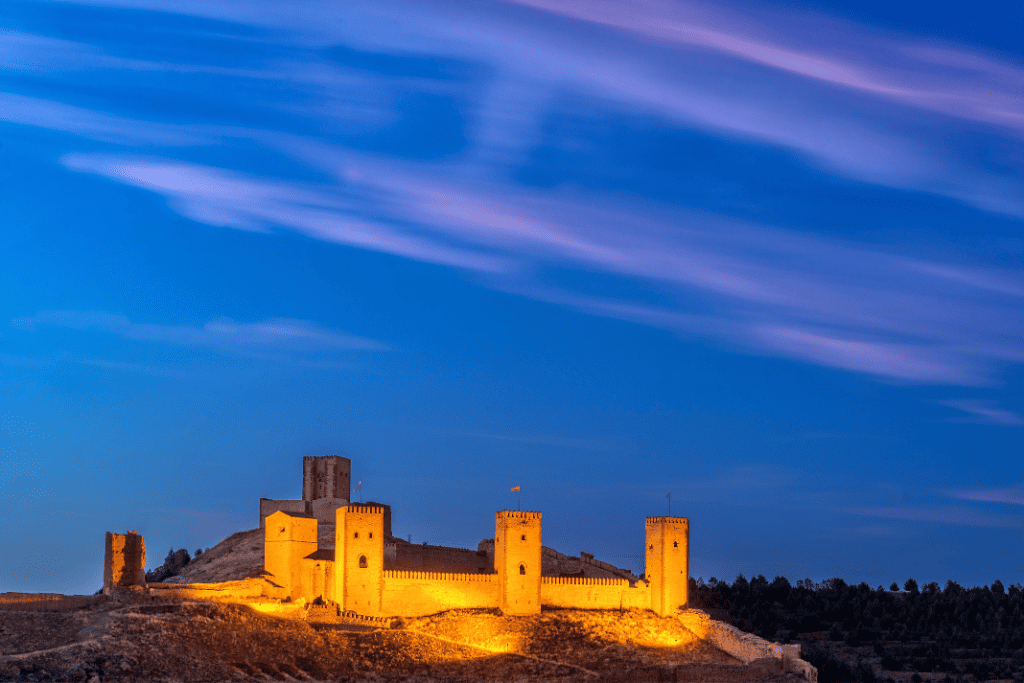
Dawn breaks over the land of the old Kingdom of Castile. The ground, grateful for recent rains, turns green again, painting the gentle hills of the Río Gallo valley. In the distance, standing tall on the horizon, rises the stone witness of ages past: the Castle of Molina de Aragón, a town which, despite its name, lies some thirty kilometres from the border with Zaragoza and Teruel.
It was in a different time, when borders shifted like the seasons and the Caliphate of Córdoba was drawing its final breath, that this town is first mentioned, as the capital of the small taifa of Molina. And it appears in the greatest Castilian epic: The Poem of the Cid.
But the Reconquista advanced, and barely half a century after El Cid sought refuge there, the stronghold fell into Christian hands under Alfonso I of Aragon, known as “El Batallador”. Soon after, it became an independent seigneury with its own charter, under the lordship of Manrique Pérez de Lara. Nestled between Castile and Aragon, Henry II of Castile sought to grant Molina as a gift to his constable, a French nobleman. But the townspeople rose in rebellion, and Molina, once known as “de los Caballeros”, pledged itself to the King of Aragon, who accepted it into his domain, a decision still reflected in the town’s name today.
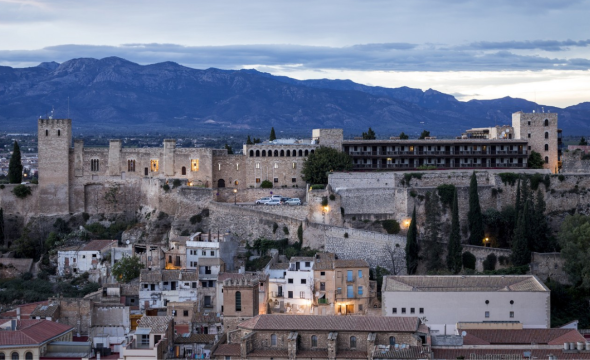
This borderland character and central position within its territory fostered the town’s development, which is still visible today in its narrow streets and stately homes, such as the Palace of the Viceroy of Manila, the Palace of the Marquises of Villel, and the Palace of the Molina family. Watching over the town stands its castle, the largest fortress in the province of Guadalajara. Within the inner compound, once home to the Lords of Molina, four of the original eight towers remain, all connected by a crenellated wall-walk. The outer enclosure, accessed via the Clock Gate, once housed an entire district, including a Romanesque church, now reduced to its foundational walls. To the north, standing alone, rises the Tower of Aragon. The town has other defensive features, such as turrets and a wall that once descended to the river through the Jewish quarter, which included a synagogue, now an archaeological site known as Prao de los Judíos, at the foot of the castle.
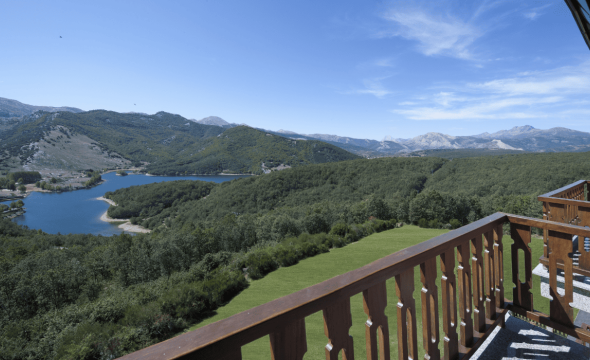
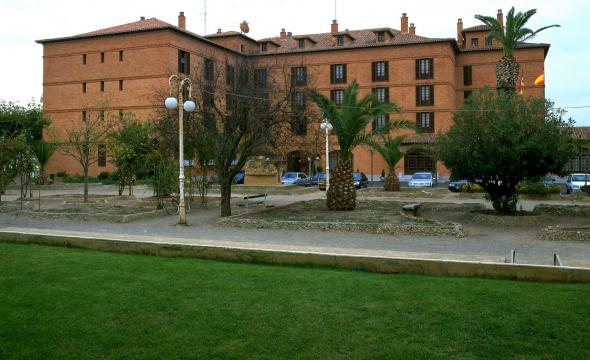
Across the river, perched on a rise with unbeatable views, the new Parador of Molina de Aragón blends seamlessly into the landscape, a bastion of modern, sustainable design that foster responsible tourism and the revitalisation of rural areas. Its origins go back to 2005, when the government pledged to support the region’s economic recovery following a devastating forest fire. Two decades later, that promise has taken shape in a newly built Parador.
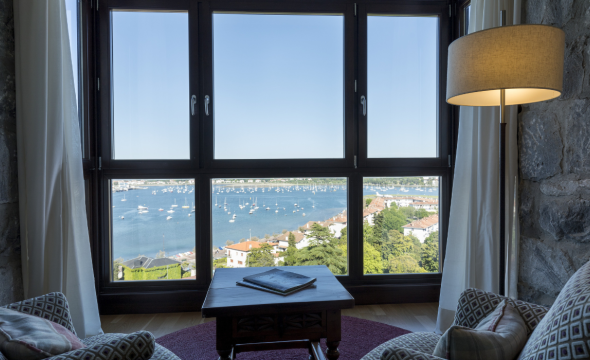
The Parador of Molina de Aragón respects its surroundings and opens a dialogue with the landscape using noble materials like stone and glass. Everything is oriented towards the castle, visible from the expansive windows, the bedrooms, and the gastronomic area. At night, a play of lights makes the building part of the town’s illuminated silhouette.
Its twenty-four rooms —including two junior suites, and all with terraces and unparalleled views— offer a peaceful retreat for travellers.
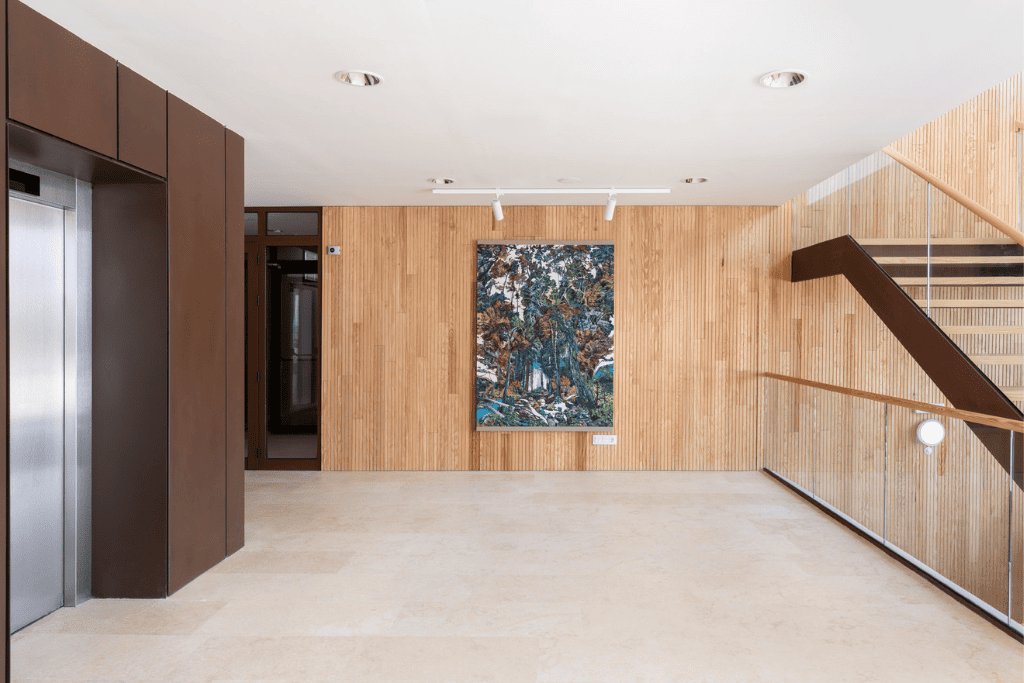
But beyond comfort, the new Parador also embraces memory. Its interior features an artistic journey that begins with the memory of the 2005 fire, taking as its starting point a photograph of the scorched forest of Selas by Eduardo Nave. From there, contemporary artworks by five other artists —Candela Muniozguren, Santiago Giralda, Rosa Brun, Santiago Picatoste and Roger Coll— take over, in a visual narrative that weaves reflection and hope. The interior design reinforces this dialogue between memory and modernity, drawing inspiration from traditional architecture of the Molina region, with a palette of earth, wine and mustard tones.
BOOK AT THE PARADOR DE MOLINA DE ARAGÓN
The Parador as a Starting Point
In the Señorío de Molina, culture and nature, history and gastronomy, landscape and tradition come together in perfect harmony. The Parador is the ideal starting point for exploring the trails that cross these lands and a well-earned place of rest after a day full of sensations and discoveries.
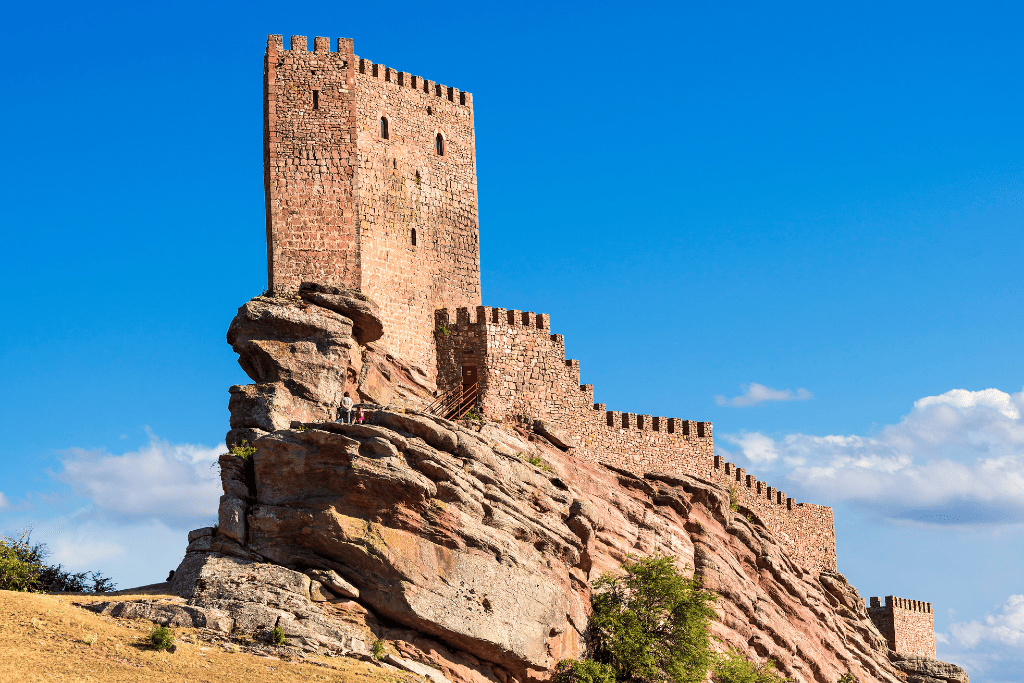
One such discovery is the Castle of Zafra, perched dramatically on a rocky outcrop. It featured in several scenes of Game of Thrones, but centuries earlier it played a leading role in another story: the rebellion of Gonzalo Pérez de Lara, which ended with the Concord of Zafra and the loss of Molina’s independence, after which the territory was absorbed into the Kingdom of Castile.
Also near Molina lies the Ceremeño settlement, which can be visited by prior arrangement and is one of the most important examples of Celtiberian culture in the region.
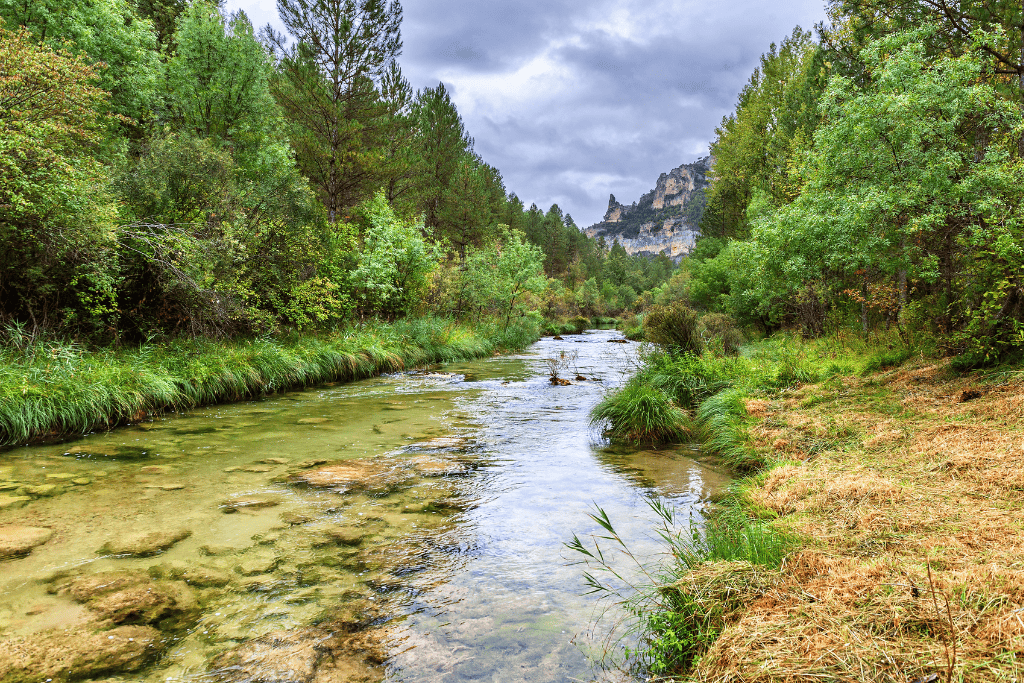
But it is the Alto Tajo Natural Park that truly captivates nature lovers. In this landscape, the river takes centre stage, carving out waterfalls, lagoons, viewpoints and swimming spots among pines, junipers and lime trees. Places like the Taravilla Lagoon, the Poveda Waterfall or the natural pools by the San Pedro Bridge offer the perfect setting for walking and immersing oneself in the surroundings. The historic salt lakes of Saelices de la Sal round off a destination that blends natural beauty with traditional heritage, with the Parador as the new gateway into this land of striking contrasts.
Flavours of Molina
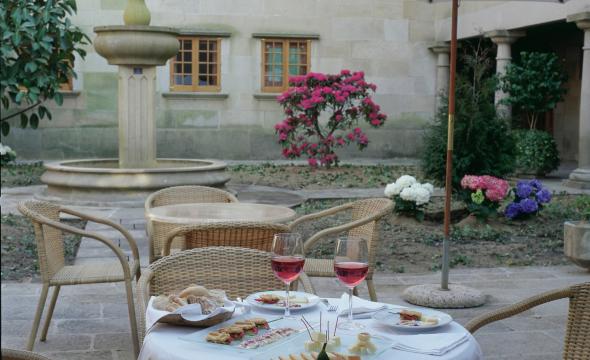
The menu at the Parador of Molina pays tribute to a region where gastronomy is deeply rooted in its history, landscape and traditions. This cuisine reflects the identity of a land of passage and encounter shaped by the confluence of cultures and centuries. Its origins go back to the Middle Ages, leaving an indelible mark on local culture, festivities and customs.
Among its signature dishes is bacalao de arriero —a traditional cod recipe once prepared by muleteers transporting goods— and migas with lavender, a direct legacy of pastoral life. Other highlights include cured game meats such as wild boar and venison, as well as mushrooms and truffles, which enrich local dishes in autumn.
Desserts, too, bear the region’s signature: the famous “pata de vaca”, a sponge cake filled with cream and coated in chocolate; or traditional sweets like the torta de San Blas and apple roscas.
Commitment to the Region
From the very beginning, Paradores has maintained a strong commitment to the development of the communities where its establishments are located, acting as a powerful force for local progress in many ways.
The new Parador of Molina promotes job creation, the protection of the surrounding natural heritage, the promotion of culture, and the preservation of local gastronomy bringing economic vitality and, ultimately, improving the quality of life for locals through a range of sustainable services and initiatives adapted to new social realities.