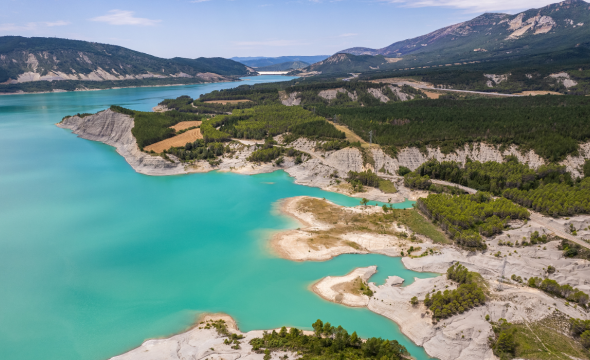
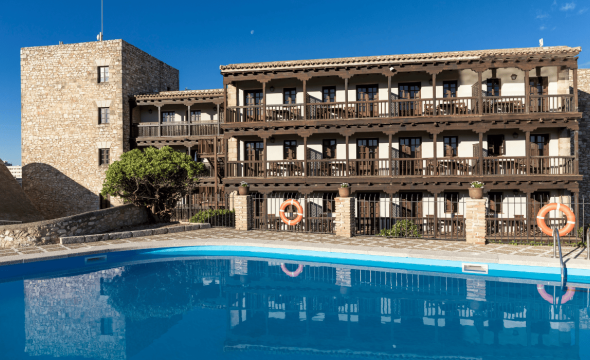
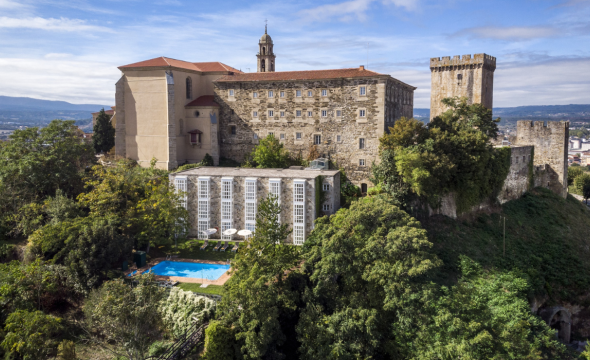
Autumn paints the stones gold and fills the roads with calm. It is a time for travelling, letting go and discovering hidden corners. Cathedrals that behold miracles, such as the Cathedral of Santo Domingo de la Calzada; palaces that exude nobility, such as those of Argomaniz or Zafra; or squares where village life beats, such as the Plaza de San Marcos in León.
This autumn, Paradores invites you to inhabit heritage, to sleep within centuries-old walls and to feel history from within. Choose your destination.
Cathedrals
The Cathedral of Santiago de Compostela and its eternal guardian
In the heart of Galicia, the Cathedral of Santiago de Compostela stands as the final destination of one of the universal paths of faith. For centuries, the majestic Baroque façade has dominated the Plaza del Obradoiro, where the echo of bagpipes mingles with the murmur of pilgrims as they excitedly reach the end of their journey.
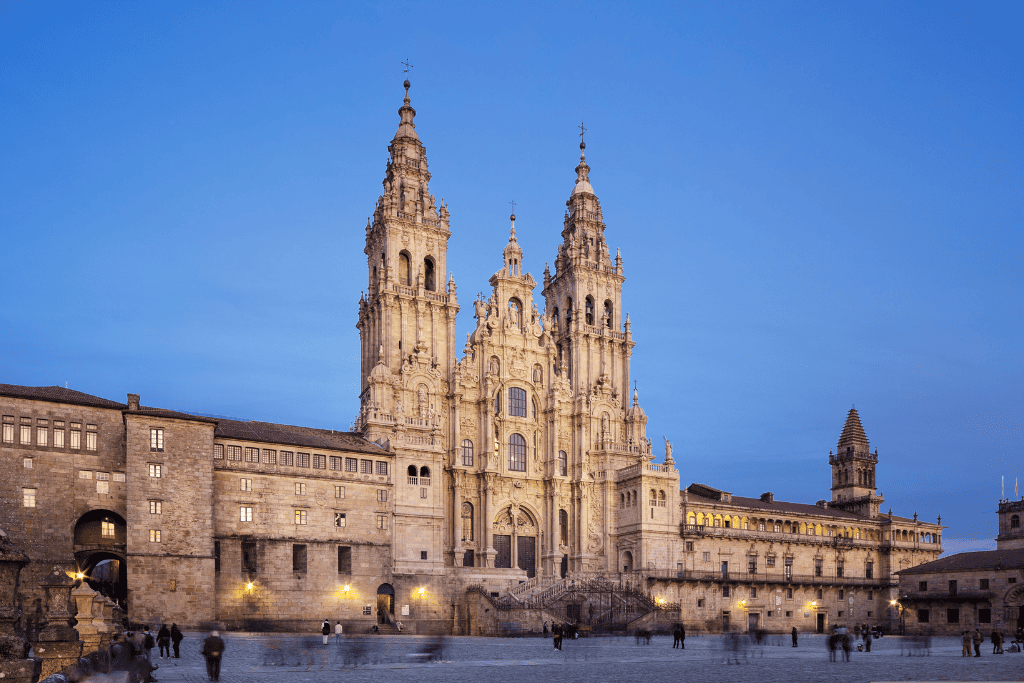
There, like a stone guardian that has seen generations come and go, stands the Parador de Santiago de Compostela, known as the Hostal dos Reis Católicos. Founded by the Catholic Monarchs as a royal hospital to provide shelter for travellers, this 15th-century building is considered the oldest hotel in Spain.
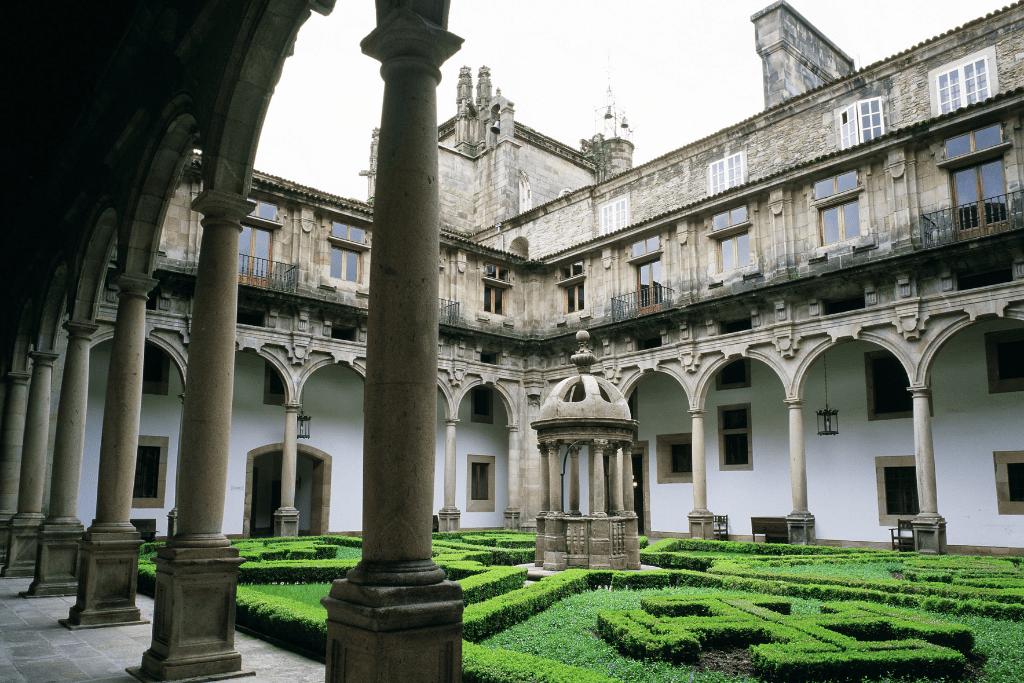
Centuries of hospitality beat beneath its Plateresque façade. The four cloisters, the halls adorned with works from the Madrid School by artists such as Martínez Novillo and Menchu Gal, and the rooms of noble charm make a stay here a unique experience.
BOOK AT THE PARADOR DE SANTIAGO DE COMPOSTELA
The legend of Saint Dominic and his miraculous cathedral
On the banks of the River Oja, the Rioja town of Santo Domingo de la Calzada is home to one of the most fascinating legends of the Camino de Santiago. The proto-Gothic cathedral was built on the site of an ancient oak forest by a hermit named Domingo, who dedicated his life to helping pilgrims cross the Sierra de la Demanda.
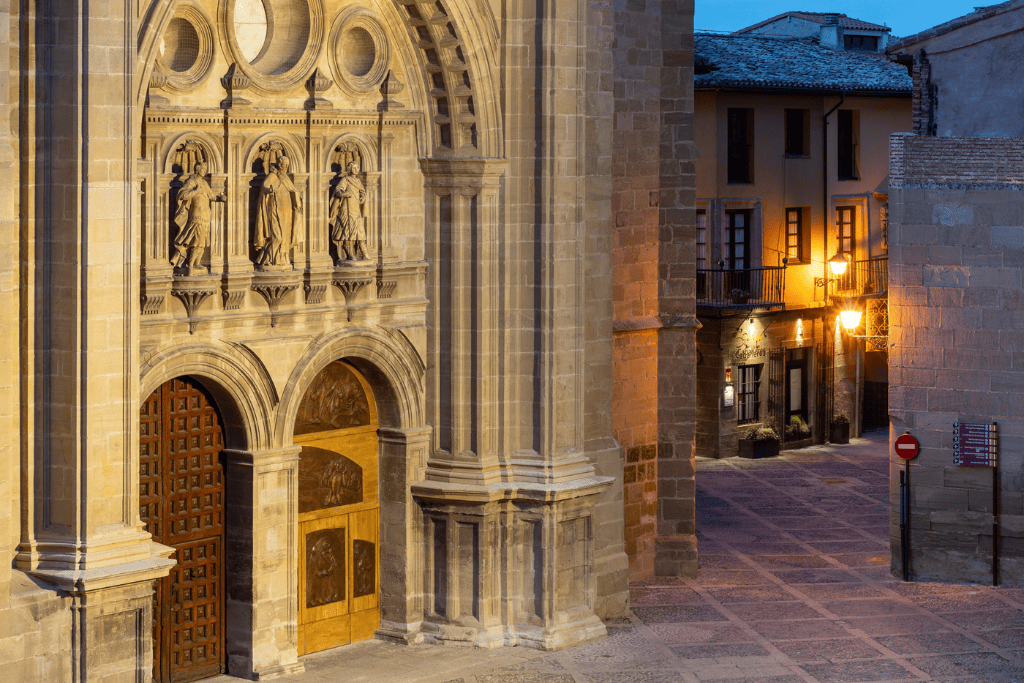
The temple preserves a Renaissance altarpiece by Damián Forment and a curious henhouse with a live rooster and hen, symbolising the miracle of the pilgrim who was unfairly hanged. This mixture of faith, art and myth makes the cathedral a unique place in La Rioja.
Opposite stands the old Pilgrims' Hospital, founded by the saint himself in the 12th century, and today the home of the Parador de Santo Domingo de la Calzada. The architecture retains the regal and elegant spirit of yesteryear: Gothic arches, wooden coffered ceilings and spacious halls that breathe history.
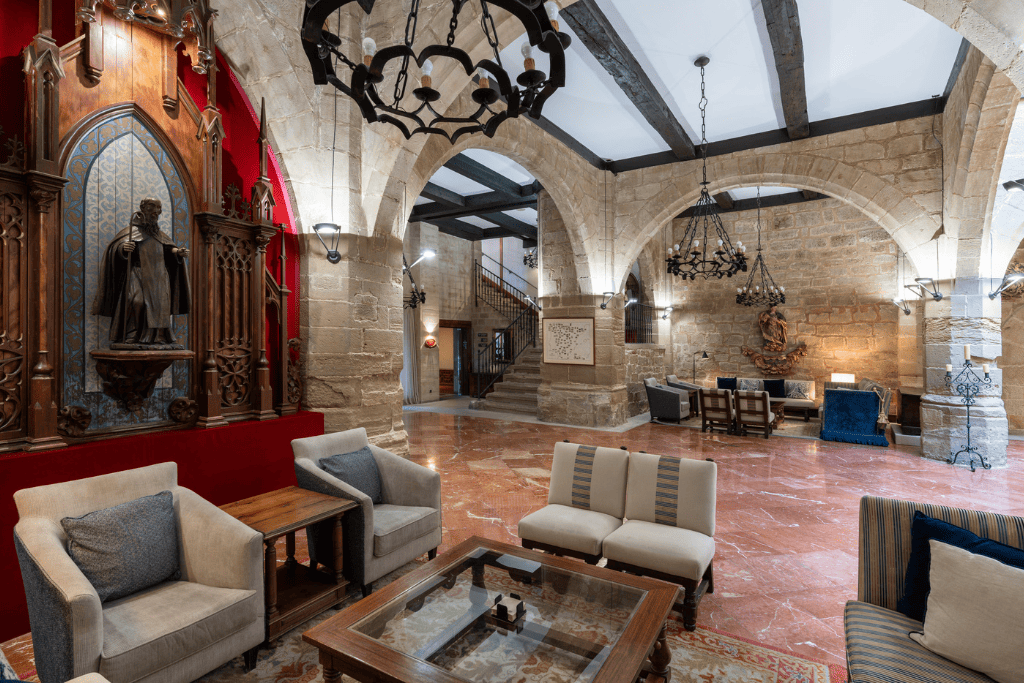
This is a warm refuge for those seeking to experience the Camino, and also for those who wish to enjoy the rural charm of La Rioja, among vineyards and mountains.
BOOK AT THE PARADOR DE SANTO DOMINGO DE LA CALZADA
Palaces
The serene soul of a Renaissance palace
On a hill overlooking the Alava plain stands the Palacio de los Larrea, a building that was once a convent, a noble residence and the headquarters of Napoleon's troops. Its sober and elegant Renaissance façade tells a story of power and tranquillity: that of an illustrious family and a land marked by the passage of civilisations.
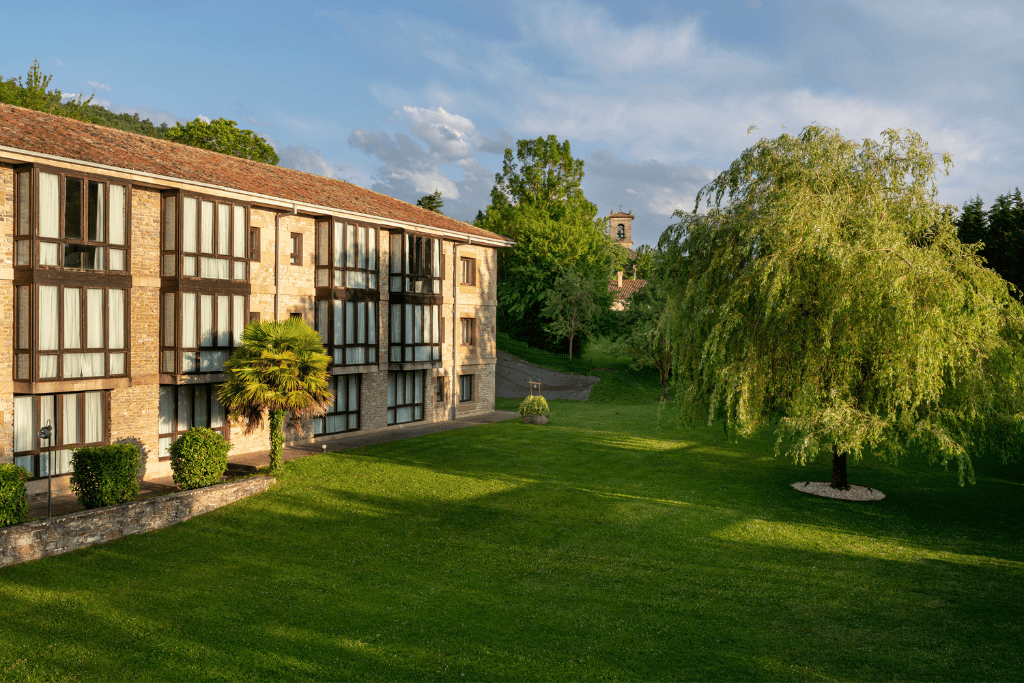
Today, this palace is the Parador de Argomaniz, a place where calm reigns supreme. From the Garayo viewpoint, the views stretch out over the fields of the Llanada Alavesa, a sea of ochre and golden tones in autumn.
In the Aletegui restaurant, located in the palace's old barn, Basque cuisine becomes an art form: Club Ranero cod, oxtail or wild mushroom pie over a mushroom sauce.
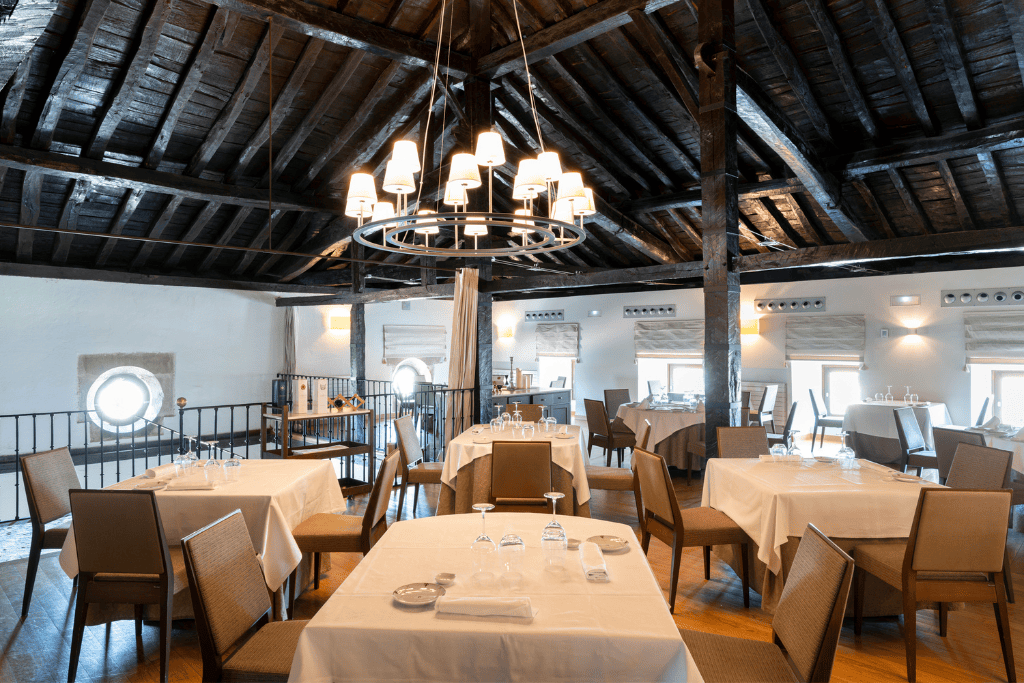
Between the noble walls and the surrounding landscape, Argomaniz offers an experience of tranquillity and beauty that only a palace with centuries of history can provide.
BOOK AT THE PARADOR DE ARGOMANIZ
Fortress, palace and witness to conquerors
In the heart of Extremadura, the fortress-palace of the Dukes of Feria dominates the historic centre of Zafra. Nine towers and high walls recall its defensive past, while the gilded and polychrome Gothic-Mudejar coffered ceilings speak of the splendour of a nobility that marked the destiny of these lands.
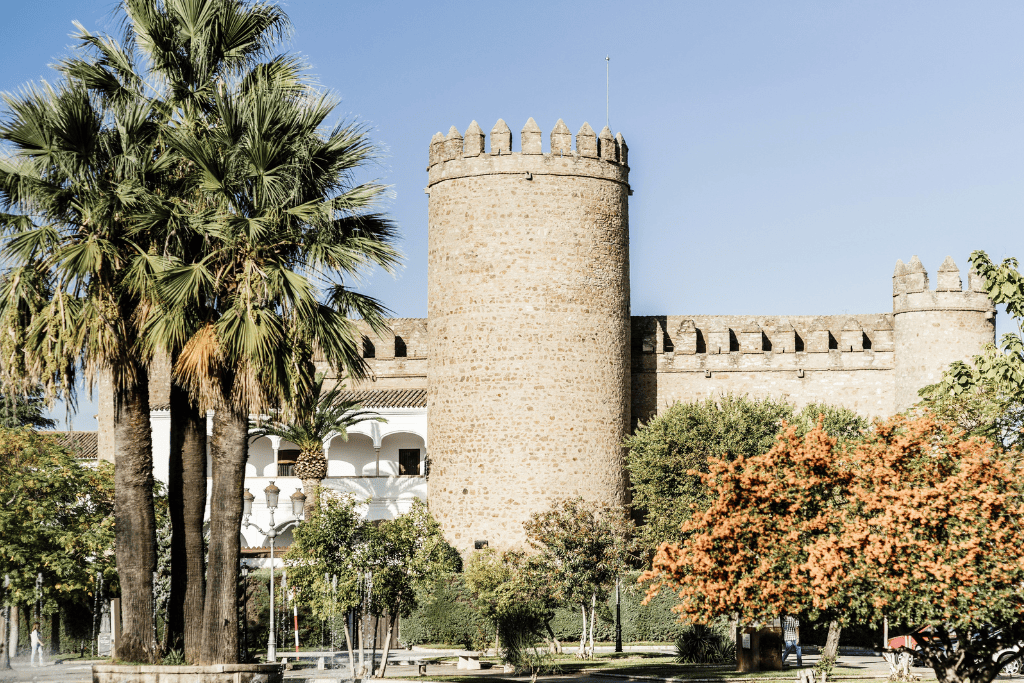
Hernán Cortés passed through these rooms before embarking for America, while centuries earlier, Alfonso IX had reconquered it from the Muslims. Each stone holds a story of power, conquest and beauty.
Today, this monumental building houses the Parador de Zafra, where echoes of the past combine with modern elegance. From here, you can explore the historic quarter, discover the Plaza Grande and Plaza Chica, or venture into the mountains of Hornachos and Aracena.
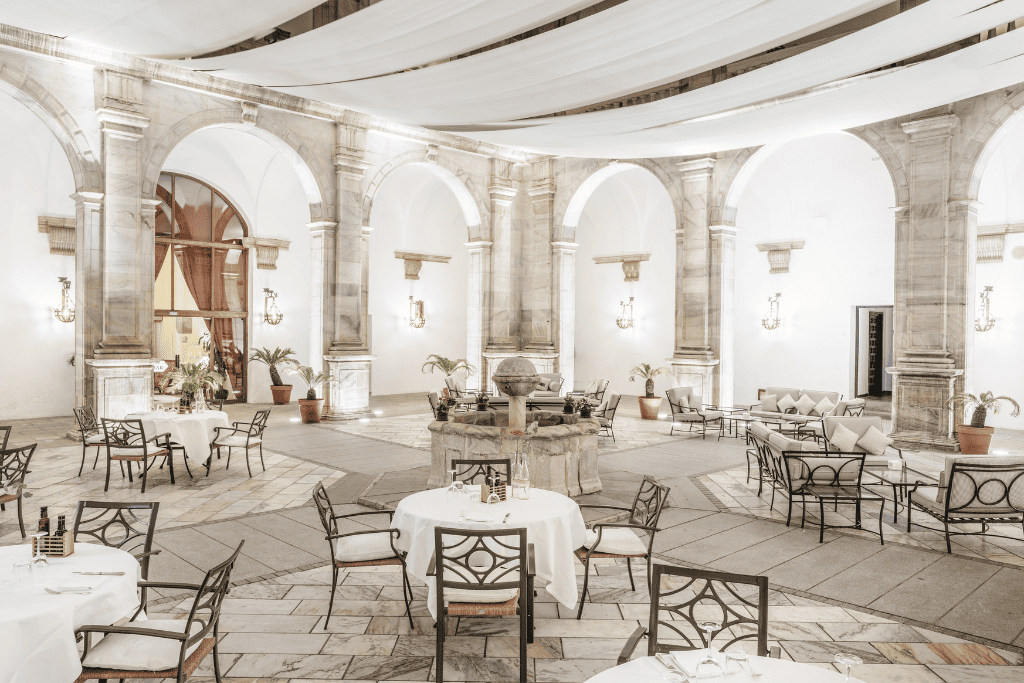
In the restaurant, the cuisine of the dehesa: migas del pastor (shepherd's breadcrumbs), lamb stew or Iberian sirloin with Torta de Barros cheese pay homage to the authentic essence of Extremadura./p>
Squares
Arcos de la Frontera and its balcony over the Guadalete
The Plaza del Cabildo, the heart of Arcos de la Frontera, is one of the most beautiful squares in Andalusia. It is home to the town's most important buildings: the Basilica of Santa María with its Baroque tower, the castle, the old Town Hall and the Peña Nueva viewpoint, overlooking the Guadalete river gorge.
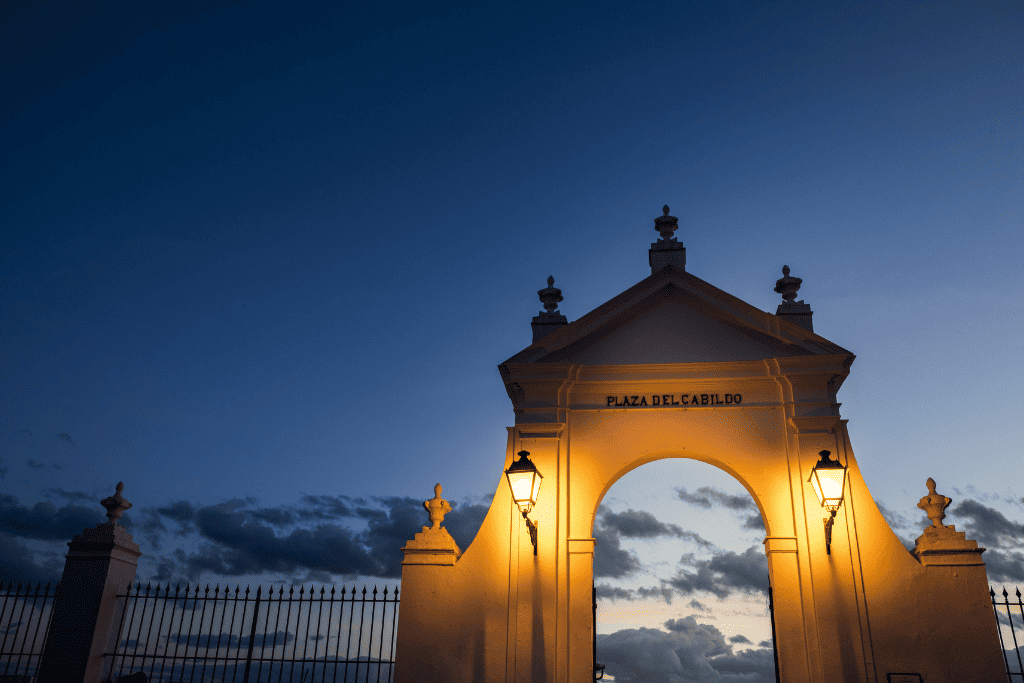
The Parador de Arcos de la Frontera, formerly the Casa del Corregidor and now a symbol of the Andalusian soul, stands there. The interior courtyard, with its traditional latticework and tiles, evokes the serenity of southern homes. From the terraces, the views over the Sierra de Grazalema are pure poetry.
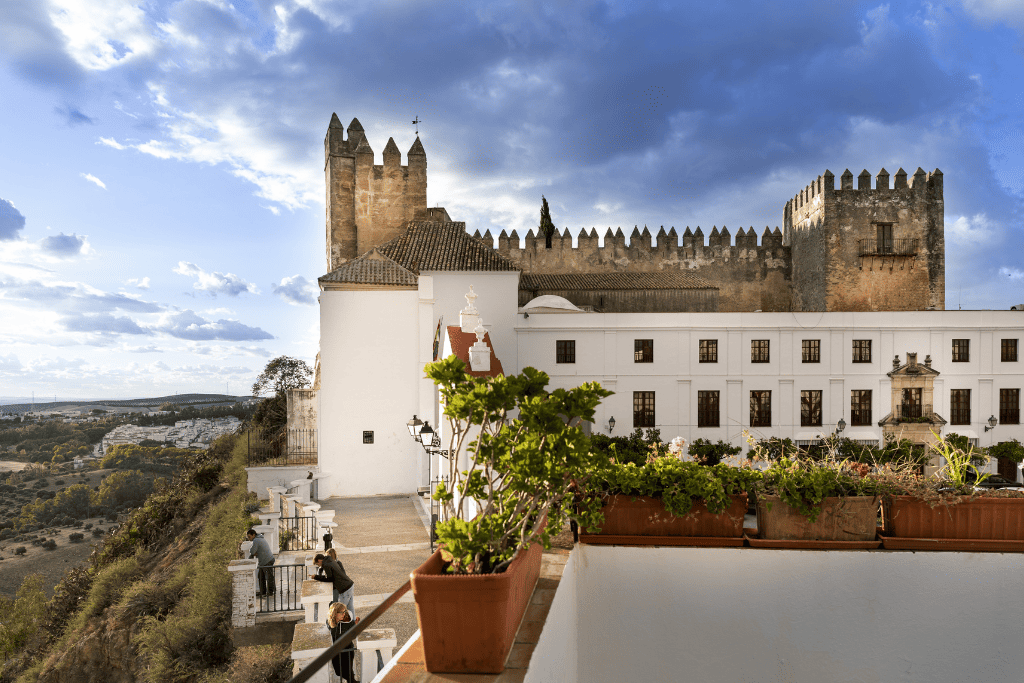
Arcos, the gateway to the White Villages Route, is a place to wander aimlessly along whitewashed streets, enjoying the scent of orange blossom and flower-filled balconies. Every corner is a living postcard of the bright south.
BOOK AT THE PARADOR DE ARCOS DE LA FRONTERA
Plaza de San Marcos, emblem of León
In León, the Plaza de San Marcos stands as one of the most impressive examples of Spanish Renaissance architecture. Formerly the headquarters of the powerful Order of Santiago and a key point on the Camino, where the French and Salvador routes converge. In the centre, a cross with a pilgrim pays tribute to the travellers who, for centuries, have crossed this land in search of Santiago.
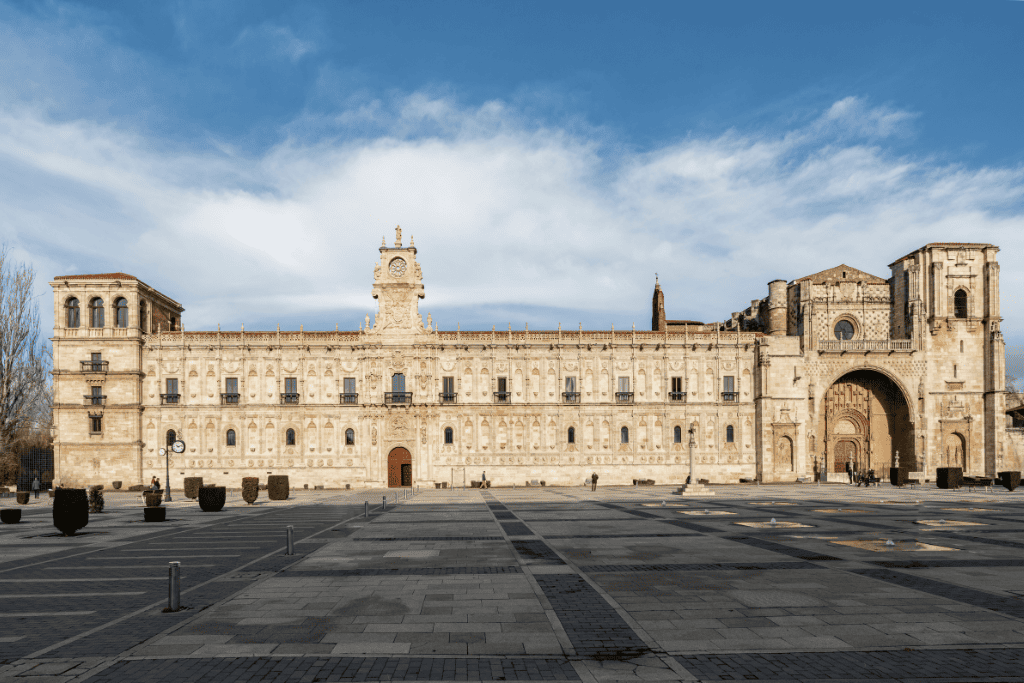
Presiding over the square is the Hostal de San Marcos, now the Parador de León. Its Plateresque façade, cloister and imposing staircase make it a living museum. Inside, history and modernity coexist: sculptures by Juan de Juni, the 16th-century choir and contemporary works by Chillida, Zóbel and Vela Zanetti.
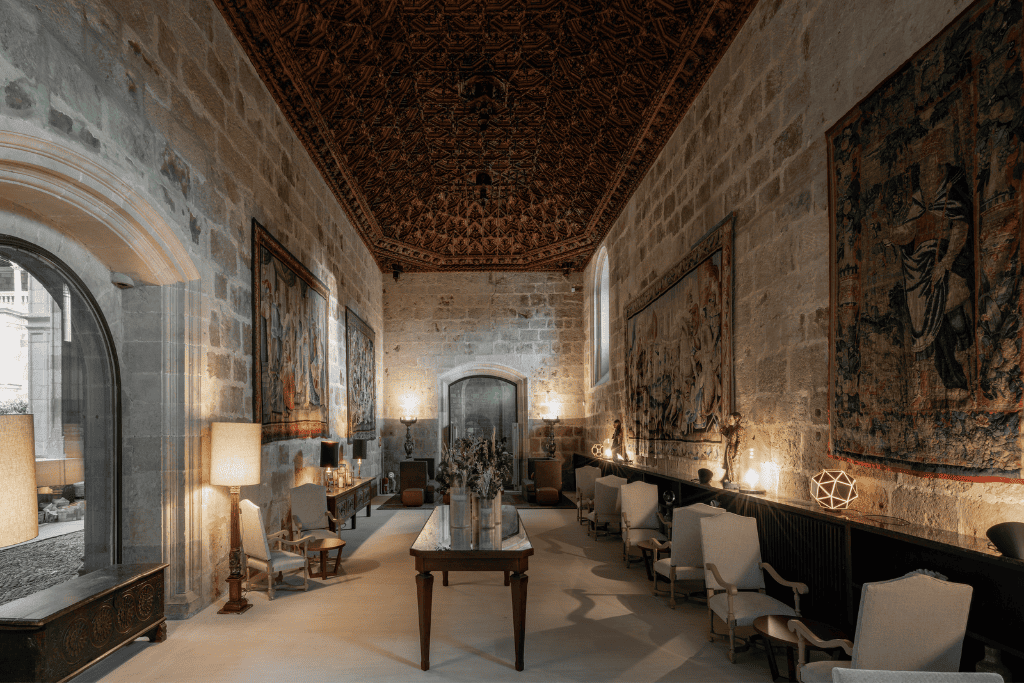
Enjoying a coffee on the terrace or contemplating the Mudejar coffered ceilings of the Chapter House is like travelling through centuries of art and history without moving.