Ávila, a city of mysticism and stone, stands like a medieval jewel within some of the best-preserved city walls in the world. These walls, which surround the historic quarter, not only protected the city, but also served as a backdrop to the stately palaces that were built against them as a second defensive belt. One of these palaces is Piedras Albas, a 16th-century building that now houses the Parador de Ávila.
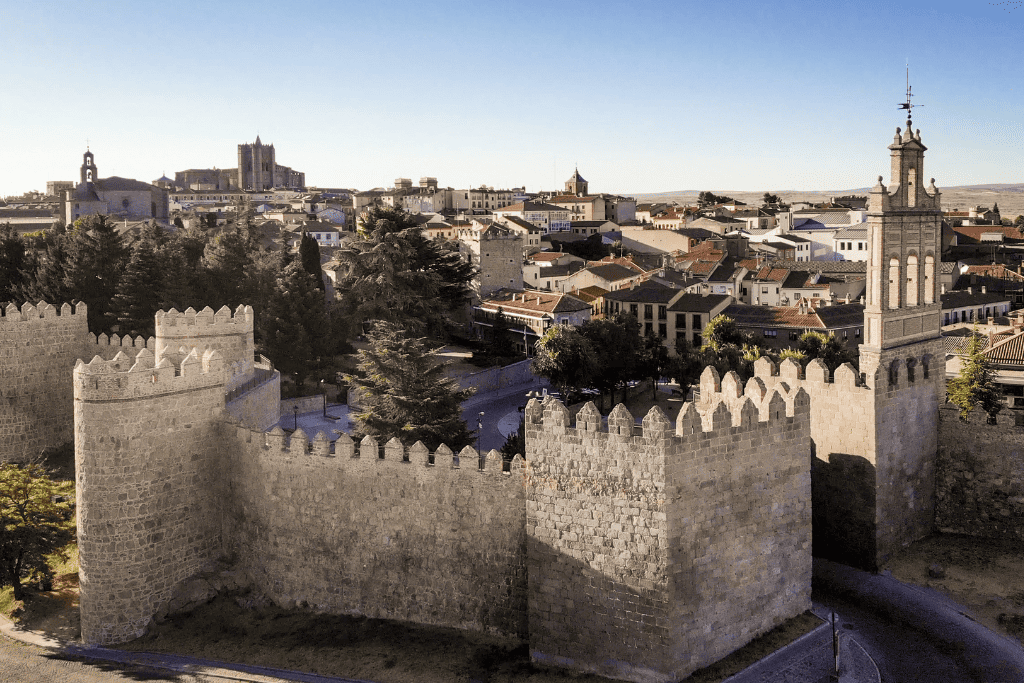
Built of granite, with sturdy walls and a tower that evokes times of nobility and resistance, the Piedras Albas Palace was home to the corregidor Juan de Henao and later to the Sarmiento family. It is said that even Teresa of Ávila may have played in its gardens as a child. At the end of the 19th century, the building underwent a significant transformation under the impetus of its new owner, the 9th Marquis of Benavites, who had a tower built to house his extensive library. Today, this palace, converted into a Parador in 1966, retains its stately essence and offers visitors a unique experience combining history and comfort.
The Count of Benavites, passionate about Ávila and its culture
Bernardino de Melgar y Álvarez de Abreu (1863–1942), 9th Marquis of Benavites, was much more than a nobleman. A lawyer, historian, diplomat and bibliophile, he dedicated his life to the culture and heritage of Ávila. He held positions as senator of the Kingdom and deputy, and was a member of the Royal Academy of History, among other institutions.
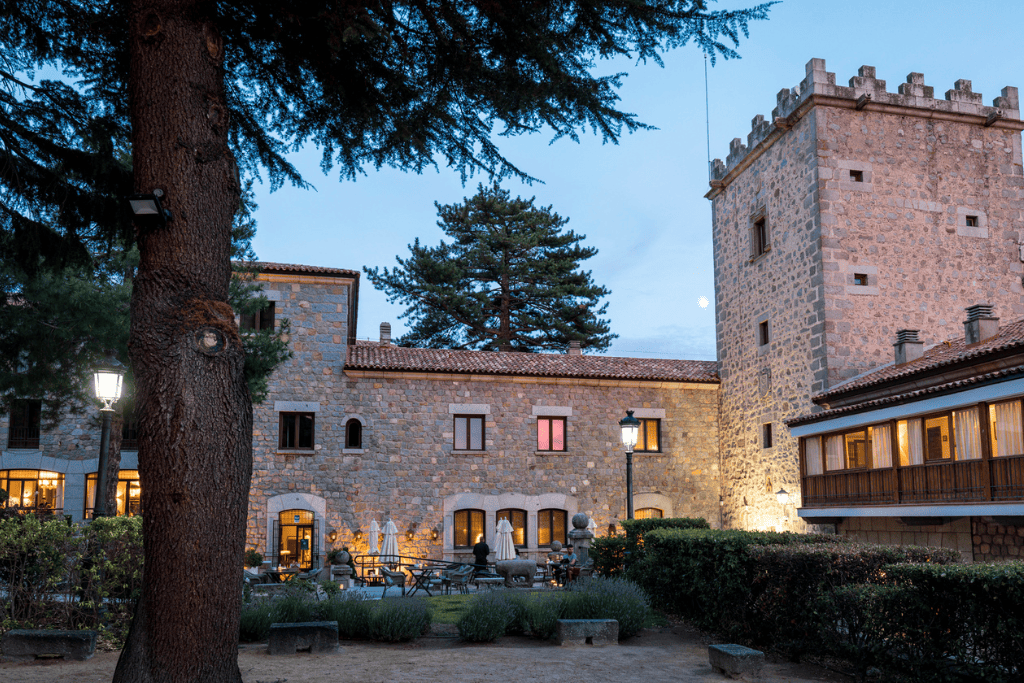
His legacy in Ávila is profound: he transformed the Palacio de Piedras Albas into a pioneering cultural centre, with a library of more than 20,000 volumes, a bullfighting museum and a museum of popular art. He organised gatherings, exhibitions and activities open to the public, turning his residence into a living space of knowledge and tradition. In addition to being the Marquis of Benavites, he held the titles of San Juan de Piedras Albas and Lord of Alconchel, and was a real patron who promoted the restoration of monuments and the conservation of historical archives.
Room No. 111
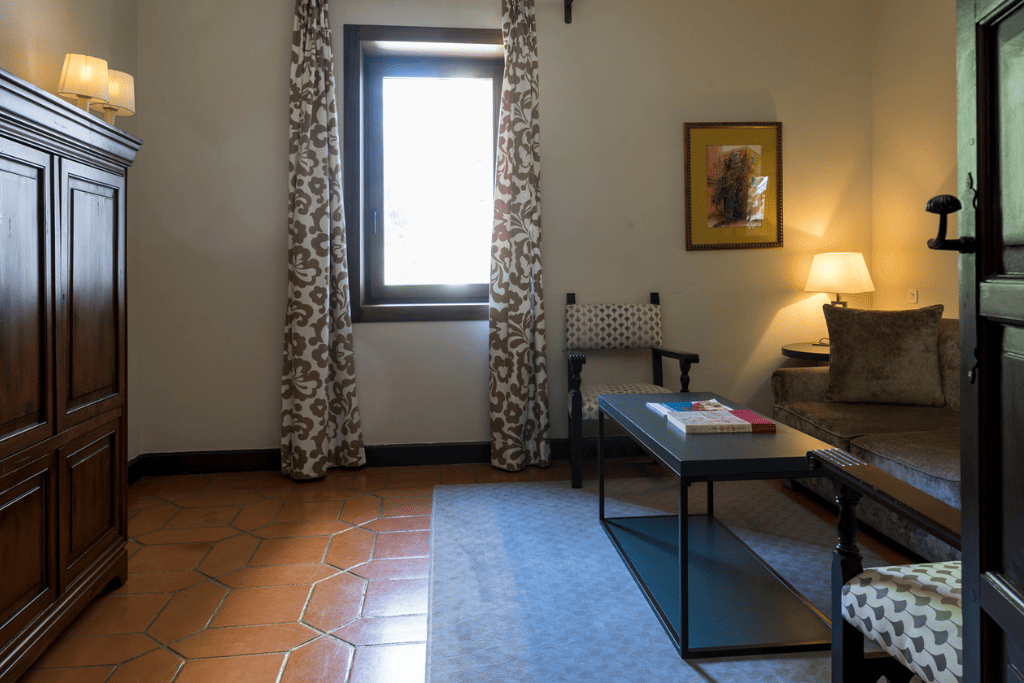
Among the 61 rooms at the Parador, Room 111 stands out as the most spacious and distinguished. Known as the Counts of Benavites' room, this space combines good taste with elegance and has witnessed illustrious visits, such as that of the current King Felipe VI when he was still Prince of Asturias.
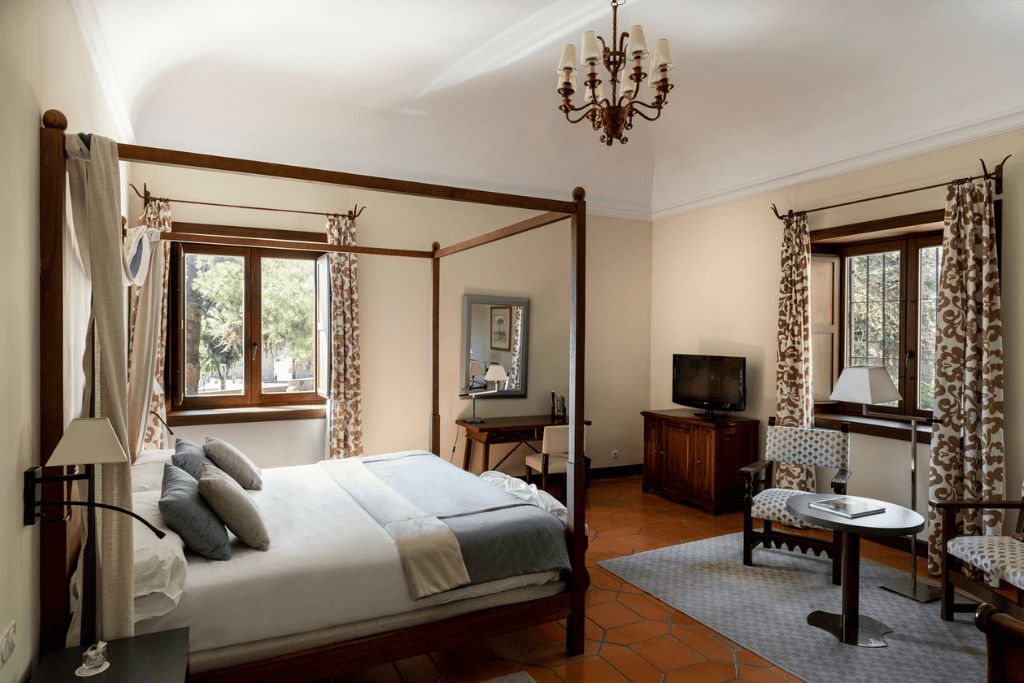
Its large windows offer unparalleled views of the garden and the city walls, and its bathroom with jacuzzi adds a touch of luxury to the experience. Located in the tower built by the Marquis for his library, this room is a unique refuge that connects guests with the living history of the building.
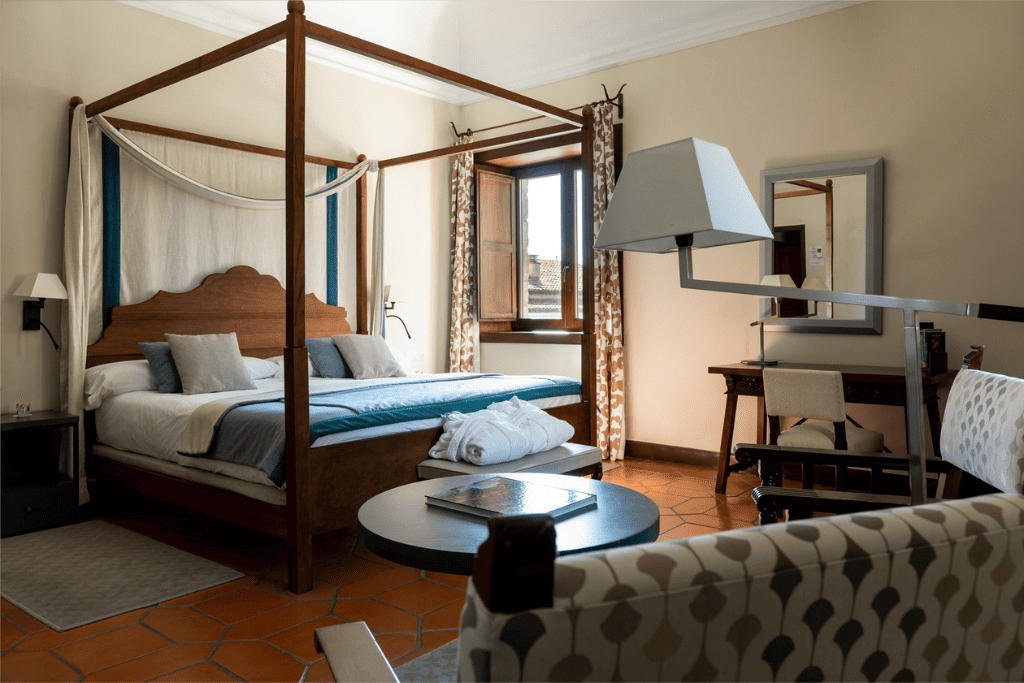
The Parador de Ávila
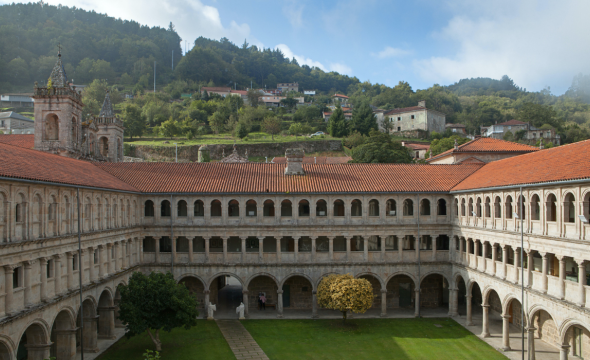
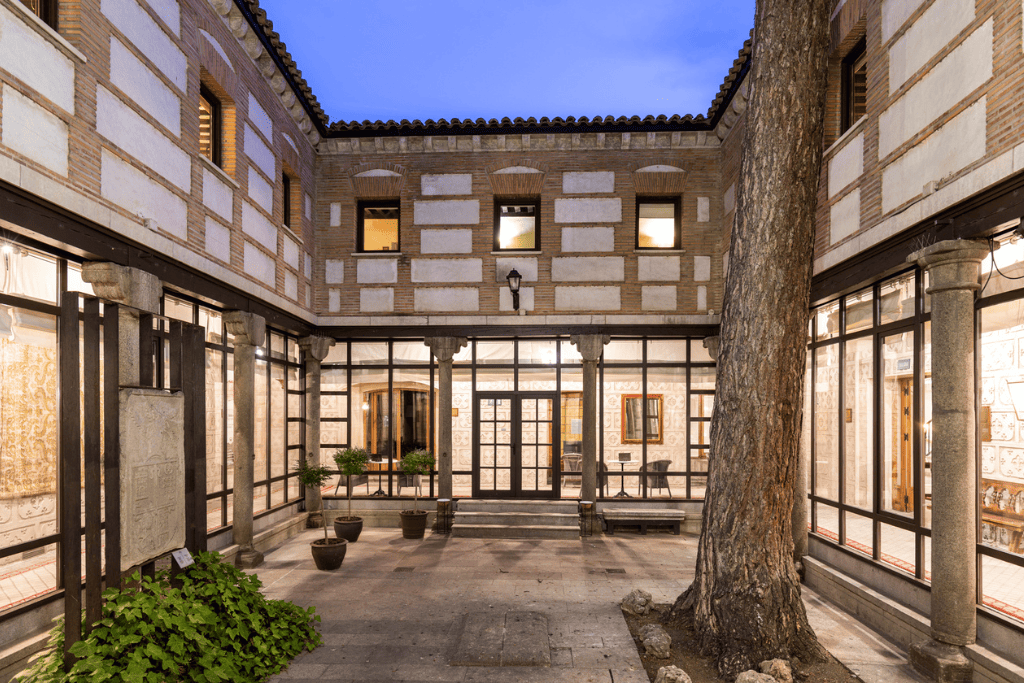
Staying at the Parador de Ávila means immersing yourself in a stately, warm and charming atmosphere. The building retains original features such as the courtyard, the staircase and the cloister, as well as cosy lounges decorated with period paintings, antique furniture and fireplaces that invite you to relax.
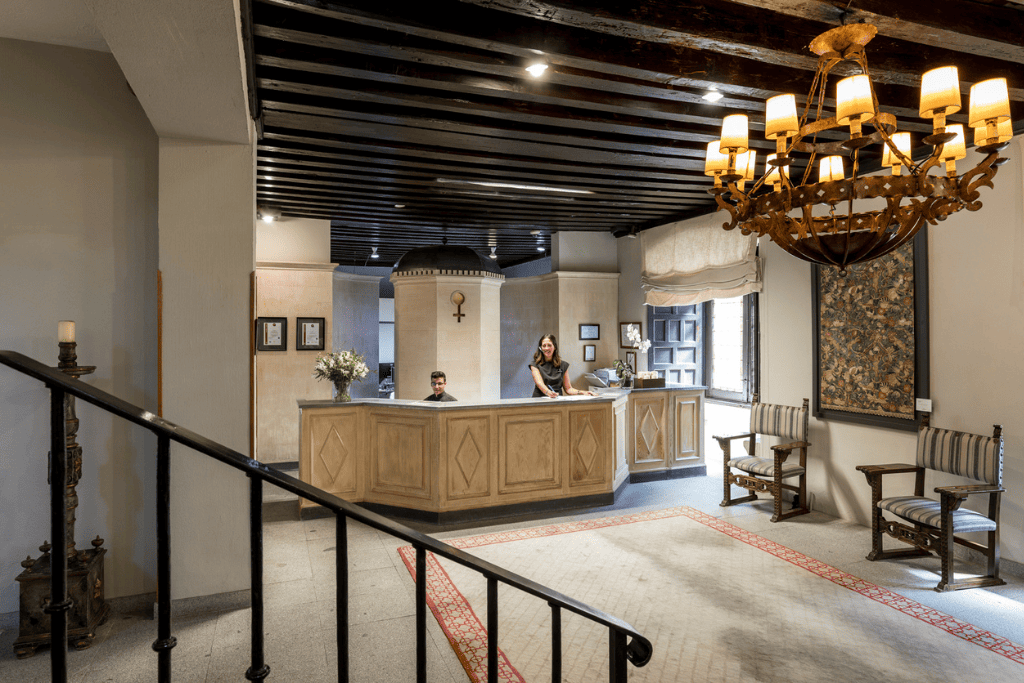
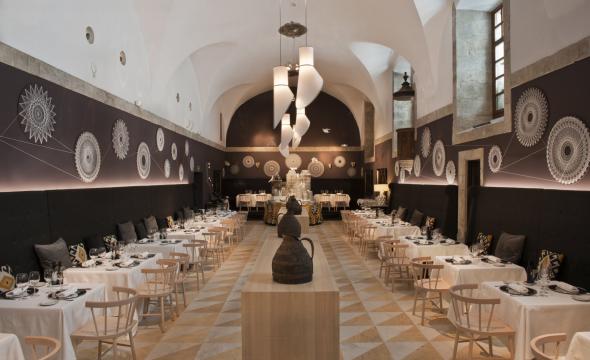
Each room is different, lovingly adapted to the corners of the old palace, making each stay a unique experience. The dining room, with views of the garden and the city walls through a glazed courtyard, completes the majestic atmosphere of the place.
Strolling along the ramparts, losing yourself in the streets of the historic quarter and resting in a room like No. 111 is to experience Ávila from its noblest heart.