There was a time when travelling meant merely ticking sights off a checklist. It meant catching connecting flights, rising at the crack of dawn to beat the queues, and returning home with a full memory card but the nagging feeling of not having truly been anywhere. Today, in contrast to this frantic pace, another way of exploring the world is gaining ground—one that advocates swapping speed for presence, a hectic itinerary for quality time, and the mere accumulation of experiences for those that leave a lasting impression. This is slow tourism: a philosophy that allows us to travel better.
Its origins lie far from airports. In 1986, Italy witnessed the birth of the Slow Food movement in response to the rise of fast food and an increasingly homogenized, hurried culture of consumption. That defense of local produce, heritage, and the pleasure of dining without watching the clock eventually spilled over into other areas of life. Thus emerged ‘Slow Living’—a way of approaching daily life with greater mindfulness and less haste—from which ‘slow travel’ was born. The publication of Carl Honoré’s In Praise of Slow in 2004 cemented an idea that feels more relevant today than ever: that travel is not about going further, but about being more present.

It is therefore no coincidence that this trend has found fertile ground at a time when rest has become almost a luxury. We live surrounded by screens, notifications, and schedules that rarely permit a moment of silence. That is why more and more travellers are seeking destinations where they can rediscover something as simple—and as rare—as calm.
For this way of travelling to work, accommodation ceases to be a mere place to sleep and becomes an essential part of the journey. The architecture, the landscape, the cuisine, and the connection with the surroundings make all the difference between just another holiday and a genuine chance to unplug. In this sense, Paradores aligns naturally with the core principles of slow tourism. With historic buildings or properties nestled in landscapes of immense ecological value, locally sourced cuisine, walking routes starting right from the doorstep, spas, gardens, viewpoints, and settings where luxury consists, precisely, of nothing happening... except what truly matters.
Amidst monasteries and forests in Cangas de Onís
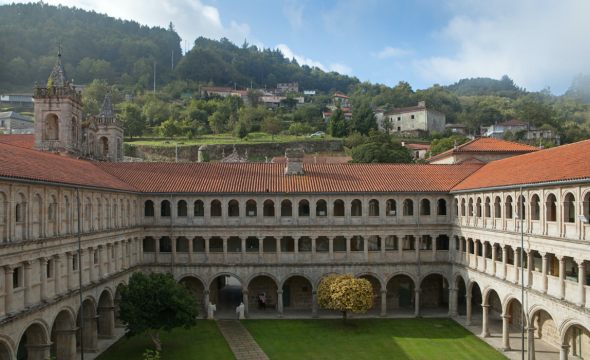
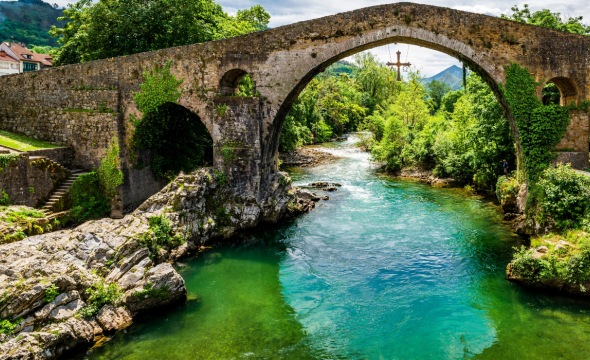
There are few places where silence is steeped in as much history as the ancient monastery of San Pedro de Villanueva, now the Parador de Cangas de Onís. Originally built for monastic life, these walls have witnessed more than twelve centuries—a time when a leisurely pace was not a trend, but a fundamental way of understanding the world.

Set on the banks of the River Sella, the surroundings invite you to wander through damp woodlands, follow trails leading to the Picos de Europa, and stroll along the water's edge. The ‘Nature for the Senses’ programme also offers immersive experiences, such as forest bathing, discovering the traditional work of sheepdogs, or exploring the Lakes of Covadonga with local guides.

Then comes another of the great pleasures of slow travel: sitting down to a meal. Fabes, verdinas, fresh catch from the Cantabrian Sea, and traditional monastic desserts make Asturian cuisine another sensory way of getting to know the region.
The therapeutic power of the mountains in Vielha
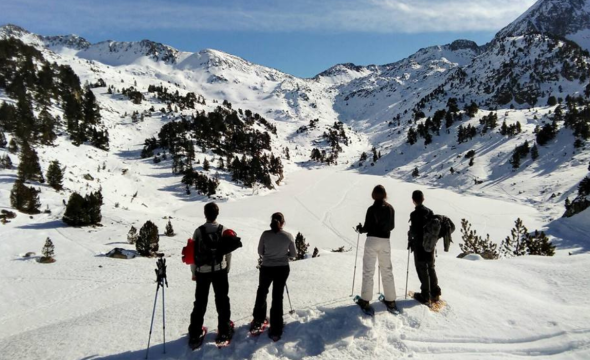
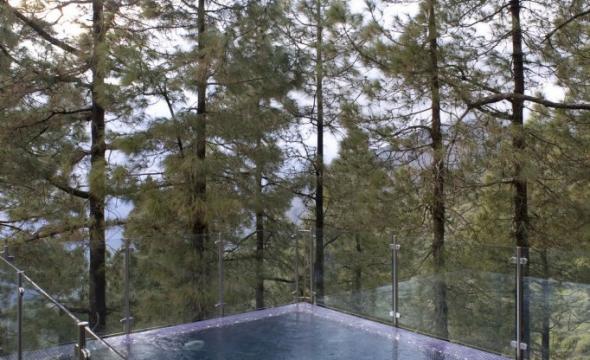
Mountains have an almost immediate capacity to clear the mind. In the Val d'Aran, the landscape flows seamlessly into the Parador de Vielha thanks to a building designed to open up to the peaks through expansive windows and one of the most complete panoramic spas in the Paradores network.

Yet the real luxury lies outdoors. Paths that follow the course of the Garonne, fir forests, small Romanesque churches, and villages where traditional architecture still defines the valley's character allow you to discover the mountains from a peaceful perspective, far removed from the high-octane world of extreme sports.

Aranese cuisine, featuring the ‘olla del valle’ stew, trout, and seasonal produce, rounds off an experience deeply rooted in the local area.
El Hierro, where the road ends
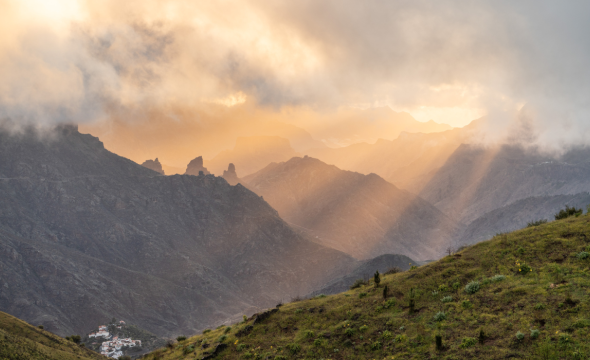
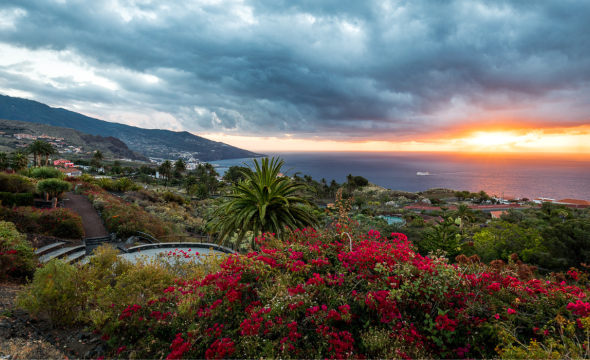
There are destinations whose greatest virtue is precisely that they are far from everything. On the westernmost tip of the Canary Islands, the Parador de El Hierro occupies a narrow strip of land between the ocean and the El Julan cliff. Here, the road ends and another way of measuring time begins.

A designated Biosphere Reserve, the island preserves a virtually untouched volcanic landscape where shoreline walks, birdwatching, and the constant swell of the Atlantic replace the noise of everyday life.

The table is set with freshly caught fish, local vegetables, papas arrugadas, and tuna with mojo verde—a simple cuisine that perfectly encapsulates the authenticity of the island.
Doñana to the rhythm of the dunes
Well-being can also be found suspended between the forest and the ocean. The Parador de Mazagón, situated in the heart of Doñana National Park, overlooks a landscape of pine forests, shifting dunes, and kilometres of unspoiled beach.

Here, there is no need for a fixed schedule; you can walk barefoot on the sand, cycle through the pine forests, watch birds in the marshes, practice yoga by the sea, or wait for the sunset as the light shifts across the cliffs. At night, you are naturally drawn to look up and gaze at the moon, far from light pollution.

Huelva’s cuisine embodies this same philosophy, centering on locally sourced fish from the Gulf of Cádiz, coastal vegetables, cuttlefish, and fresh recipes that prove that eating well is an essential part of a restorative break.
A historic retreat in La Granja
Slow tourism is not limited to natural spaces; it also finds its home in cities and historic sites where heritage takes centre stage.

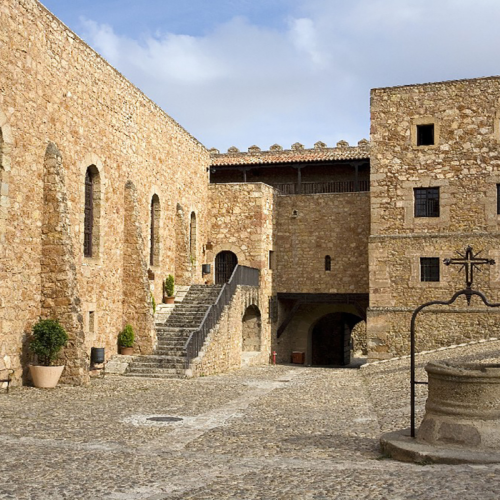
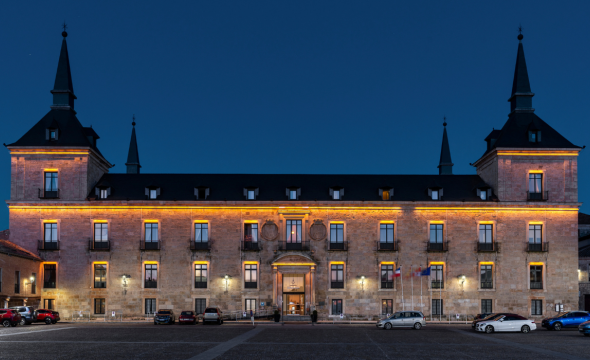
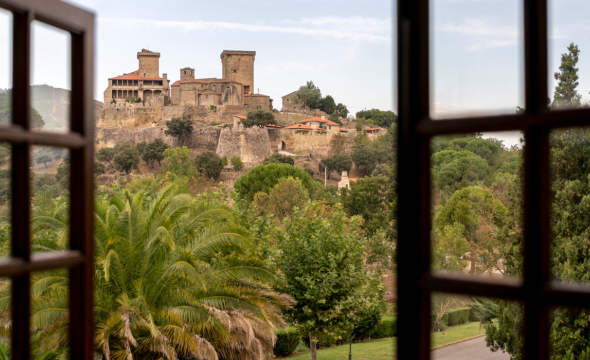
The Casa de los Infantes, built in the 18th century by order of Charles III, retains the serene elegance of neoclassical architecture. Within it, the Parador de la Granja, with its courtyards, galleries, and spa, creates an atmosphere designed to make time stand still for a few days.
Nearby, the gardens of the Royal Palace of La Granja feature tree-lined avenues, ponds, and monumental fountains that seem designed specifically for a contemplative stroll—one of the most underrated activities of modern travel.

Afterward, Segovian culinary tradition takes centre stage with judiones (large beans), suckling pig, lamb, and the unmistakable Segovian punch.
Where the Atlantic sets the pace
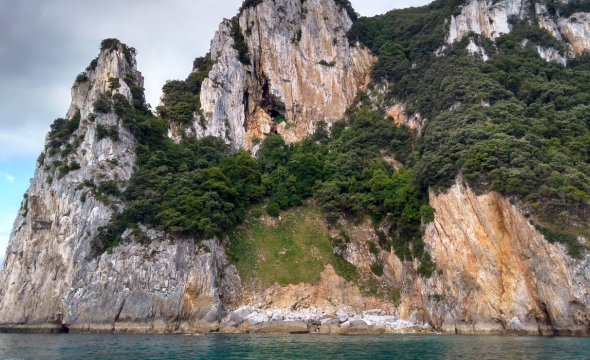
On the Costa da Morte, the ocean is never the same twice. It changes in colour, intensity, and character throughout the day; simply gazing at it becomes an activity in itself.
The Parador Costa da Morte, nestled into the hillside with terraces clad in stone, wood, and glass, seems to merge into the landscape itself. From its rooms, the sea takes absolute centre stage.

Paths leading to Lourido beach, sections of the Camiño dos Faros, and walks along the cliffs invite you to discover one of the wildest coastlines on the peninsula at your own pace, while the panoramic spa prolongs that deep sense of connection with the surroundings.
The experience ends, as it so often does, around a table where fresh fish and seafood from the local market are served alongside Galician cheeses and the renowned ternera rubia beef.
True luxury is having time
Perhaps the greatest lesson of slow tourism is to remember that you do not need to fill every minute for a trip to be worthwhile—that, sometimes, it is enough simply to listen to a river from a centuries-old cloister, have breakfast without watching the clock, walk among the dunes, watch the sea change, or let the silence do its work.

In a world that rewards speed, choosing destinations that encourage you to pause has become almost an act of rebellion. And also of well-being.