There are buildings that hold centuries of history within their walls. These are places that have served as the backdrop for coronations, pilgrimages, political decisions, or major historical events, and which—far from becoming spaces frozen in time—remain open to travellers, breathing new life into them. Staying overnight in them offers a different way of engaging with our heritage: not as someone merely walking through rooms on a guided tour, but as someone who has the opportunity to inhabit, even if only for a single night, a piece of Spain’s history.
For almost a century, Paradores has been restoring some of the most iconic buildings in Spain’s heritage to transform them into unique accommodation. Castles, convents, historic hospitals, and palaces now combine architectural heritage with contemporary comfort, allowing guests to discover each destination from a fresh perspective. These four Paradores are a prime example of this.
Spain’s oldest hotel
Few experiences are as special as waking up to views of the Plaza del Obradoiro before the first pilgrims arrive. The Parador de Santiago de Compostela is housed in the former Royal Hospital, founded by the Catholic Monarchs in 1499 to care for those completing the Camino de Santiago. More than five centuries later, it remains one of the oldest hotels in Europe and one of the city’s most iconic landmarks.
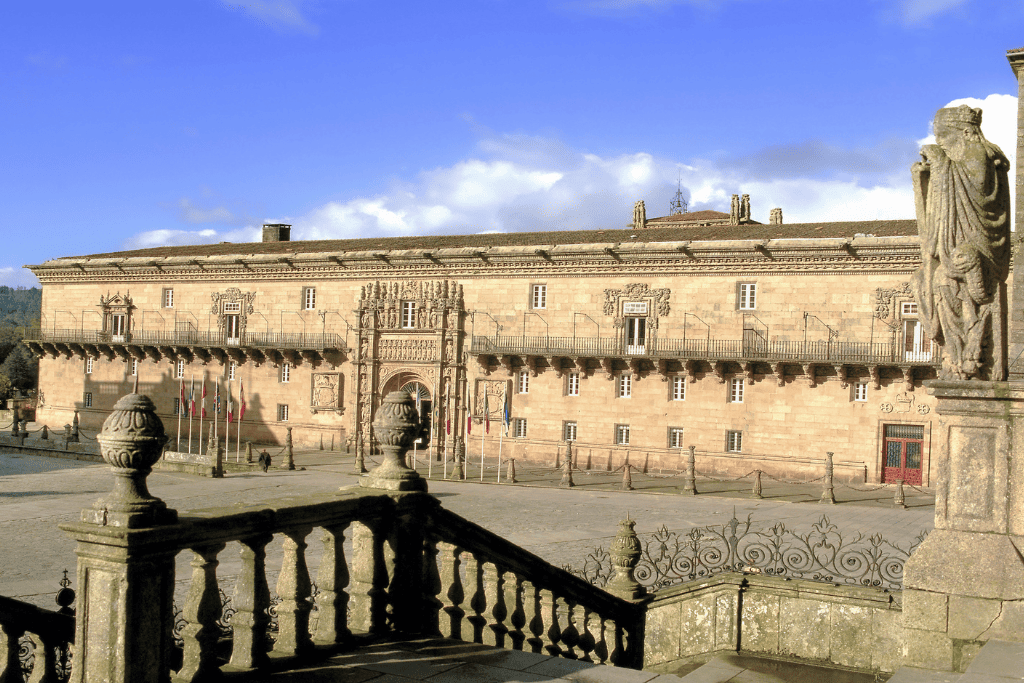
Its four Renaissance cloisters, stone courtyards, galleries, and historic halls preserve the building’s monumental character, while the guest rooms offer all the comforts of contemporary accommodation. Staying here allows you to discover Santiago from the inside out, at a time when the city is still waking up and the square reclaims the silence that, during the day, is shared by thousands of visitors.
Sleeping inside the Alhambra
There are very few places in the world where it is possible to spend the night inside a World Heritage Site. The Parador de Granada is housed in a former 15th-century convent built over a Nasrid palace in the heart of the Alhambra, Spain’s most visited monument.
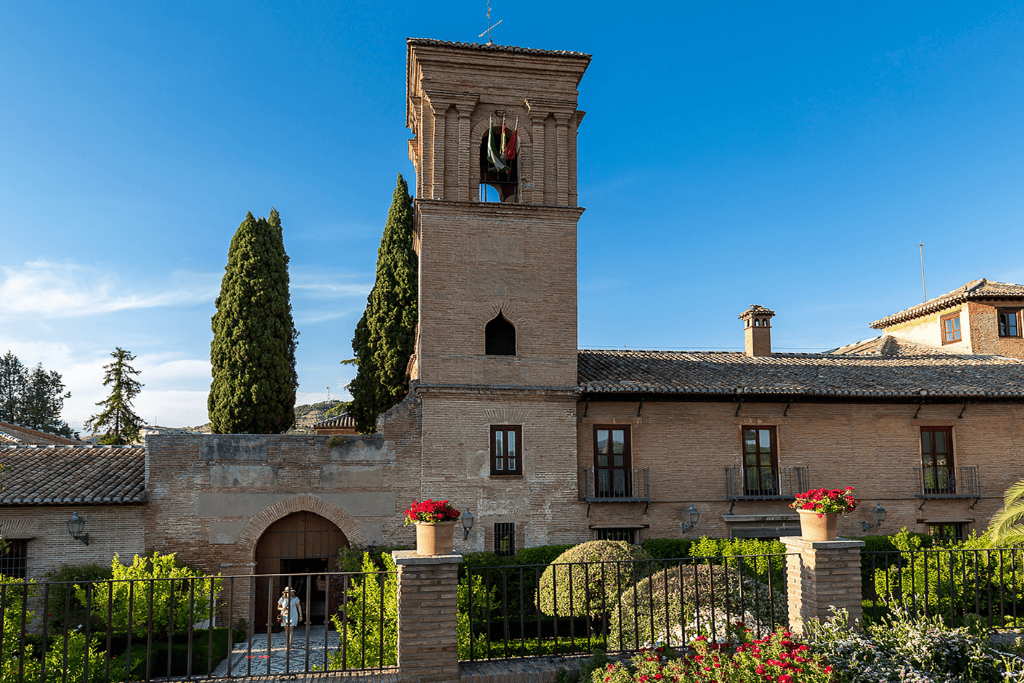
Its history is palpable in every corner; from the inner courtyard and the ancient Arab hall to the fountains and the views over the Generalife gardens, a stay here becomes an experience that is hard to match. Once the site closes its gates to the public and the bustle fades away, the monument reveals a much more serene side. It is then that staying here takes on its full meaning.
A medieval fortress turned into a refuge
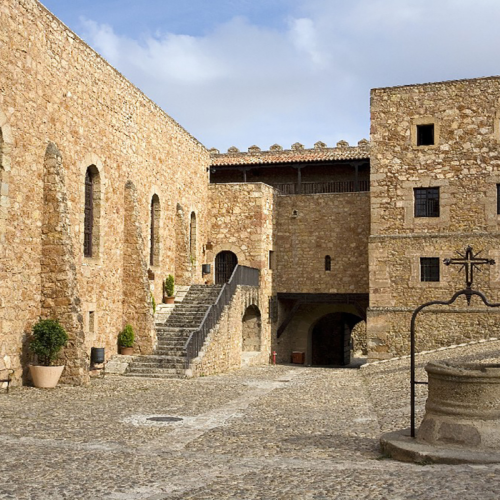
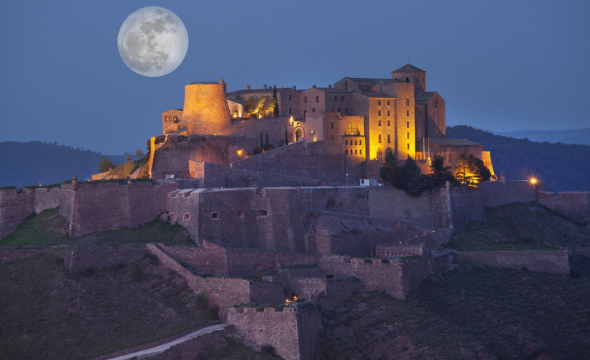
Perched high above Sigüenza, a 12th-century castle—now the Parador de Sigüenza, continues to dominate the city’s skyline, just as it has for centuries. Bishops, kings, and knights once lived within its walls, and today it welcomes travellers as one of the most singular Paradores in Castilla-La Mancha.
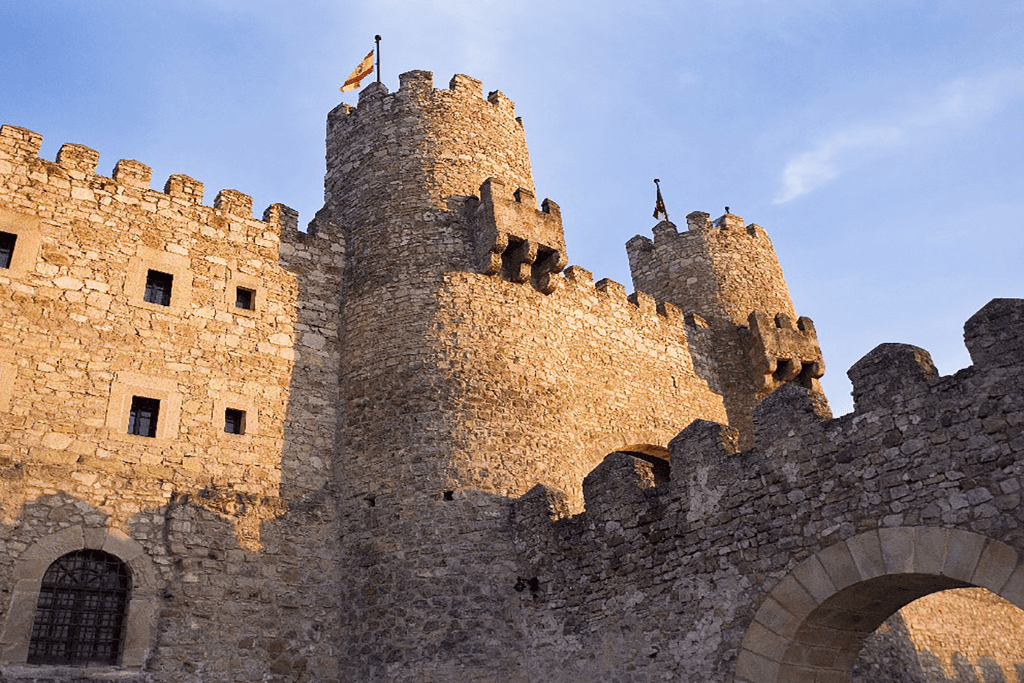
The ancient fortress retains much of its medieval essence intact. The parade ground, the Romanesque chapel, the vaulted halls, and the thick stone walls transport visitors to another era, while the guest rooms offer every modern comfort. Staying here means extending your visit beyond the usual opening hours and discovering the castle as it regains its quiet tranquility.
A night in a building that is also a museum
The Parador de León is one of the great masterpieces of the Spanish Renaissance. Its spectacular façade dominates one of León’s historic gateways and encapsulates a history as diverse as it is fascinating. It has served as a convent, a pilgrims’ hospital, a prison, a school, and, today, stands as one of the most iconic properties in the Paradores network.
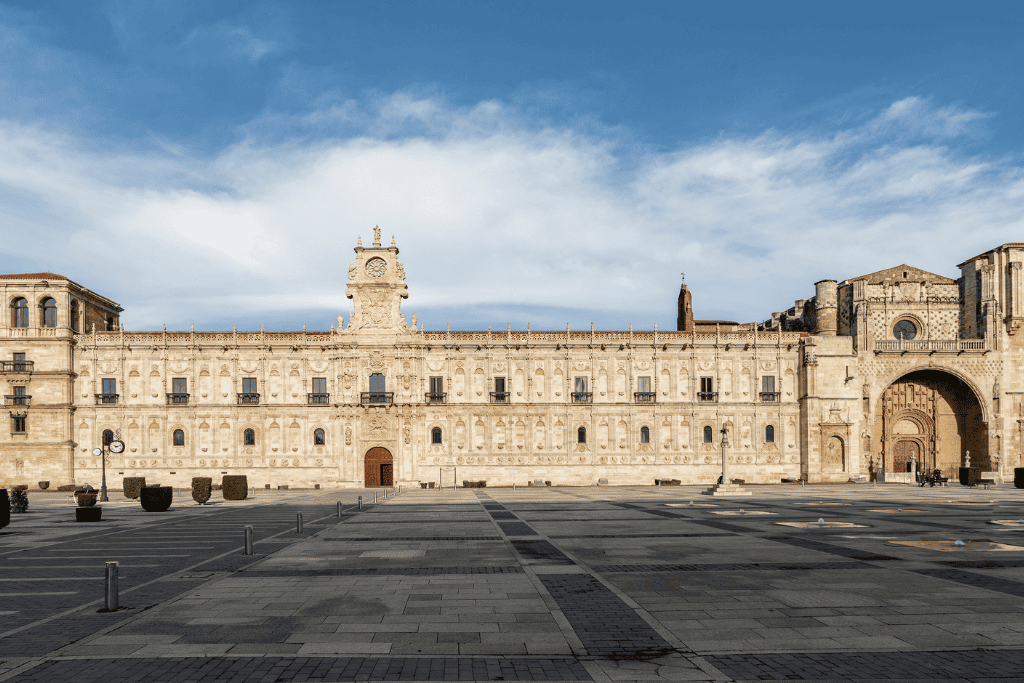
The building retains all its architectural splendour and houses an outstanding art collection, with over five hundred works displayed throughout its various spaces. Strolling through its cloisters, exploring its grand halls, or pausing to admire the artworks is all part of an experience where heritage and hospitality coexist with the utmost naturalness.