Cervantes' Numancia will open this year's Mérida Festival under the direction of José Luis Alonso de Santos. The veteran playwright takes on the challenge of adapting a complex and powerful text, with echoes of current events, to dress it up with the ritual grandeur demanded by Roman theatre.
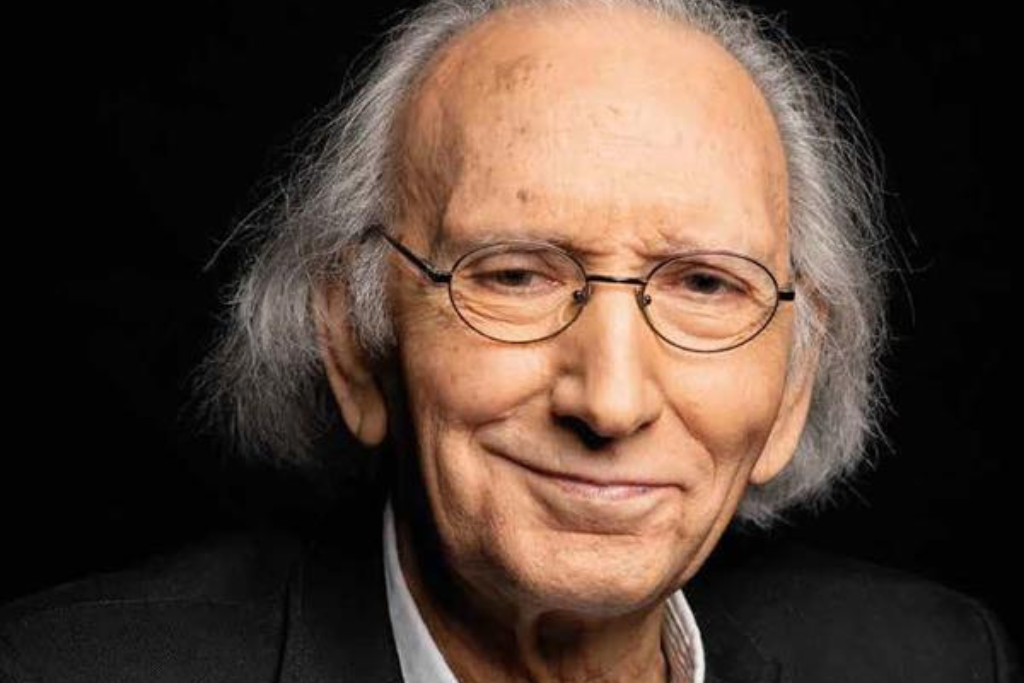
You have adapted and are directing a text as energetic as Numantia. What attracted you to this Cervantes text?
It’s one of the great Spanish classical texts, and moreover, it’s by Cervantes. Beyond its quality, we must highlight its difficulty, because it’s a very complex work. When it premiered, Lope’s theatre was not yet well established, and they were trying to create a kind of new tragedy. It’s difficult to bring it to the stage, but it’s great theatre. I’ve already years of experience under my belt, and at this point, I wouldn’t have chosen it if it weren’t a challenge.
When adapting the original text, what did you take into account to make it relevant to a contemporary audience?
I wanted to connect it with the modern viewer. Just as there are terms today that would be incomprehensible and need updating, there are themes that are timeless: freedom, honour, and human dignity. In the adaptation, I leaned more towards the historical issue raised by Cervantes, and I built a bridge to the present. It’s about rescuing what might interest today. There are things in Numantia that could have been taken from this morning’s newspapers.
How have you navigated between staying faithful to the original text and exercising creative freedom?
I’ve spoken with Cervantes in my sleepless nights, through the mobile of imagination, and I asked him what he would change. He replied that I should change the same things he would change if he were alive. I am his representative, and I’ve put myself in his shoes. I haven’t done anything in this adaptation that Cervantes himself wouldn’t like.
The battle for dignity in the siege of Numantia is a message that must be heard today, for its rarity.
The word “siege” can be interpreted in many ways. You are besieged by those who surround and mistreat you, both on an individual and collective level. Those who are attacked have the right to defend themselves. There are heroic people who sacrifice themselves and write pages for history. Here is Cervantes’ work, but also the events that took place in Numantia. Some guys in a village in Soria stood up to Rome. That brave feat, that struggle for ideals and the defence of land, is also a defence of Spain.
What about today’s freedom? Does it risk losing its meaning after so much misuse?
When there are risks of distorting the narrative, it’s best to be simple and refer to the dictionary. For any school kid or for someone in prison, the word “freedom” has a very clear meaning: not to be oppressed or imprisoned. Then, each person can add their own spin on it. Words can be used to defend or to crush values. I agree with the sacred meaning Cervantes gave it. Keep in mind that he wrote this work after coming out of prison in Algiers. How bad must it have been for him!
The play arrives in Mérida after its premiere in Alcalá. Is that an advantage?
On one hand, yes, because it’s more polished. But on the other hand, no. I’ve had to make two different setups because the set design for one place didn’t work for the other. The spaces in theatre are very important. We’ve tried to make it more intimate in Alcalá, and to capture the grandeur of what lies behind in Mérida: the Roman theatre.
How does this space influence the scenic conception?
The Roman theatre gives you a special relationship with the audience, not just because it’s much larger. It’s a monumental place, with a tradition that the audience perceives as a great cultural and civic event. That’s how the performances there used to be.
Talking about the Festival, every time you come, it truly is an event.
I’ve done seven or eight productions, each in a different phase and with different actors. It’s always been rewarding. The theatre in Mérida takes on the grandeur of ritual, of the collective act. Those who have never been there don’t know what they’ve missed.
As a history enthusiast, and a fan of good stories, you must surely have a favourite Parador.
Some Paradores are closely linked to theatre, such as those in Almagro or Mérida. During festival seasons, it’s common for me to stay in them and mingle with the audience. I remember that, in Almagro, as the director of the National Classical Theatre Company, the Parador was filled with theatre people or individuals who had booked months in advance to attend the festival. Paradores are always connected to cultural movements. People travel to go to the beach, but also to go to the theatre.