Some rooms echo with the passage of time. Walls have witnessed kings, promises and silences. At the Parador de Chinchón, one of these rooms opens like a reliquary: room 140, known as the Chapel of Felipe V. Inside, history and tranquillity intertwine to offer travellers more than just rest: an experience where the memory of the past becomes part of the present.
Chinchón, the essence of time standing still
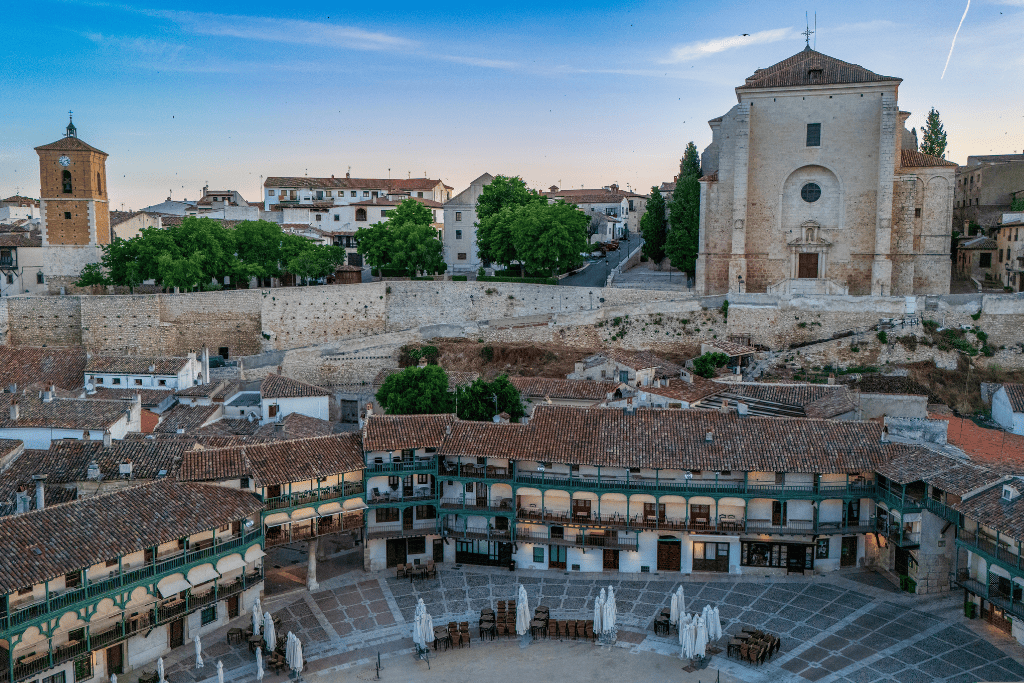
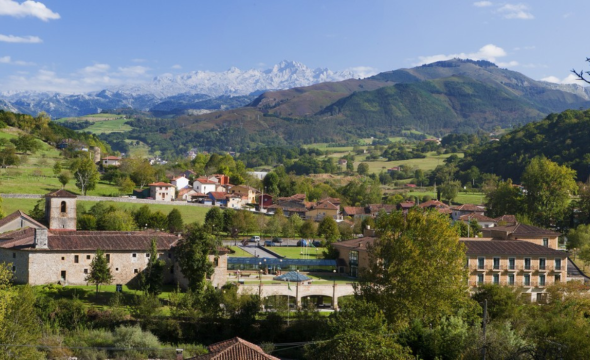
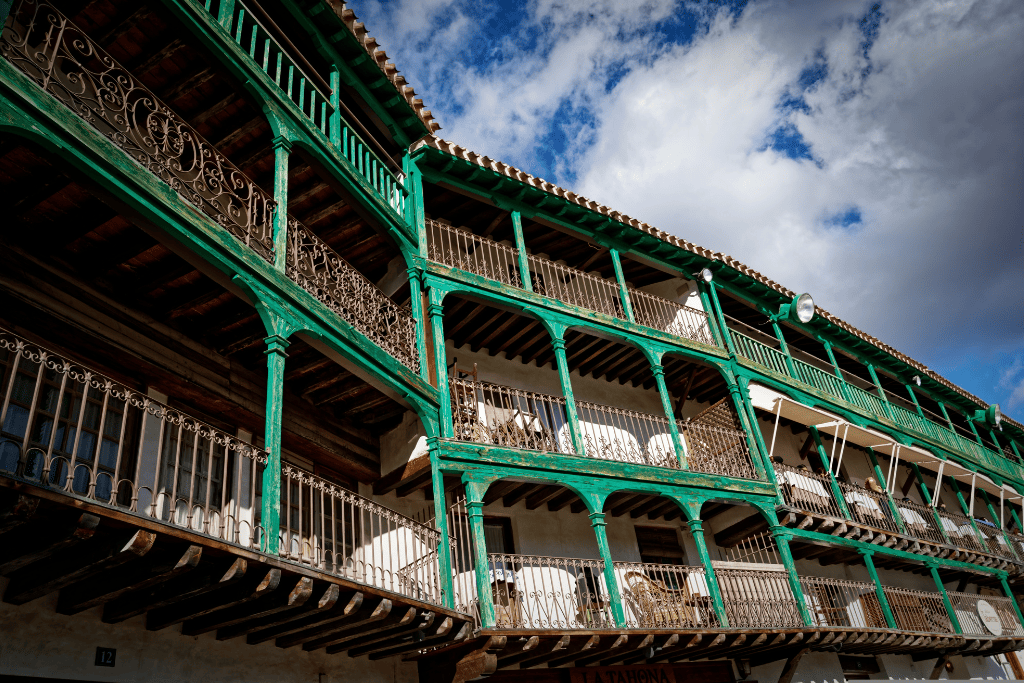
Just over forty kilometres from Madrid, Chinchón preserves its Castilian essence intact. The landscape of brown, grey and ochre tones paints a picture in which time seems to move more slowly. Clusters of whitewashed houses descend from the hills and gather around the famous Plaza Mayor, one of the most beautiful and unique squares in Spain, where green balconies and wooden arcades frame the heart of the town.
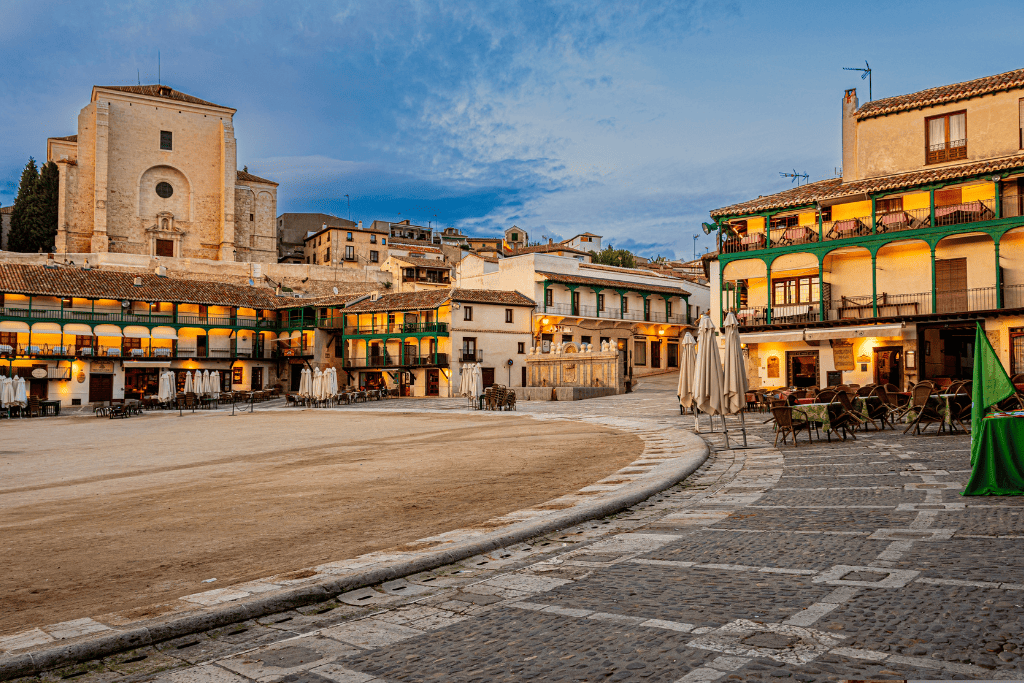
In 1974, the town centre of Chinchón was declared a Historic-Artistic Site. From then on, its name became synonymous with heritage and hospitality. That recognition marked the beginning of a new era: the rise of cultural and gastronomic tourism, the arrival of travellers in search of authenticity and, of course, the consolidation of the Parador de Chinchón as its best host.
Felipe V, the echo of history and room 140
The history of Chinchón is linked to major episodes in the Spanish monarchy. In the midst of the War of Succession, the town loyally supported the young Felipe V, and on 3 August 1706, the king was acclaimed in the Plaza Mayor. Since then, the town's relationship with the first Bourbon king of Spain has been engraved on local memory.
Over the centuries, this story of loyalty became shrouded in legend. And so, between historical memory and romantic evocation, a link emerged that today gives its name to a very special room in the Parador: the Chapel of Felipe V, named in homage to the monarch who found the support and calm that his time denied him in Chinchón.
Room 140 of the Parador de Chinchón stands in what was once the church of the old Augustinian convent. The stone walls, vaulted ceilings and light filtering in from above preserve the solemn atmosphere of the original temple.
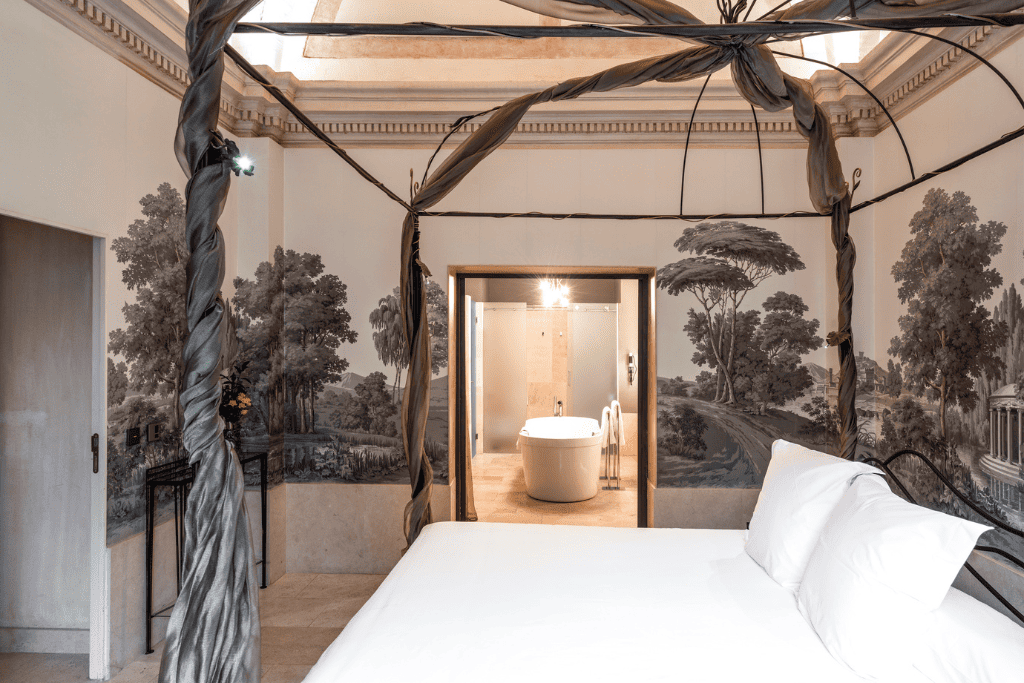
The space, restored with exquisite respect for its history, combines the serenity of the old with contemporary elegance. The paintings that decorate the walls, with their soft tones and spiritual themes, dialogue with the stone and wood, evoking the contemplative essence of the convent. In the centre of the room, a large, round bathtub takes centre stage.
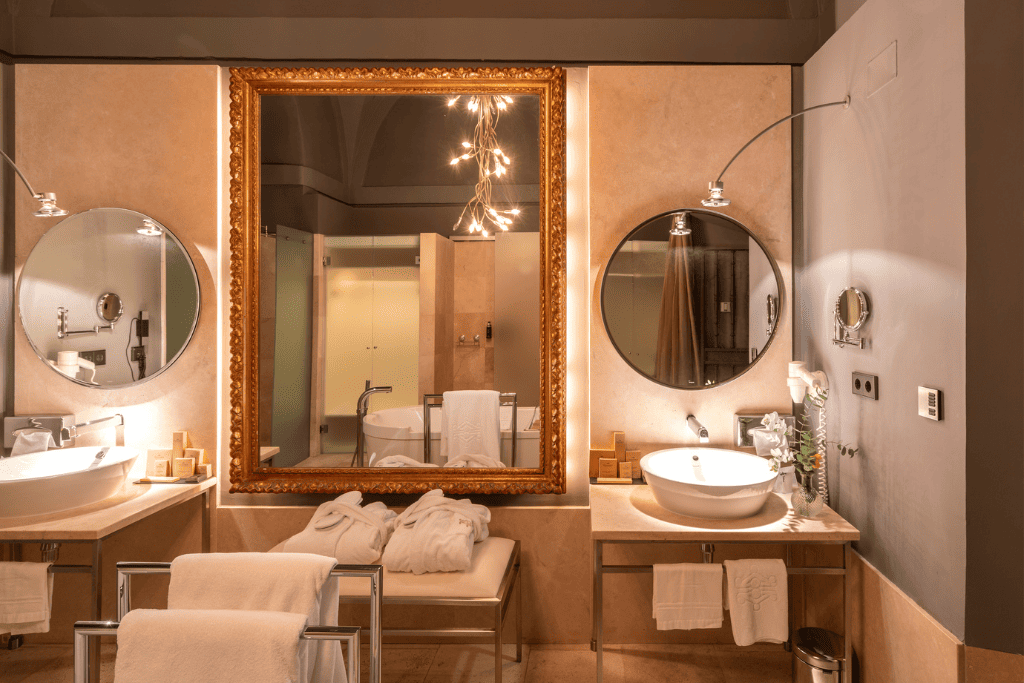
Sleeping in this room is like sleeping on the border between two eras. History beats beneath every stone, but modern comforts make the experience unique.
The Parador de Chinchón
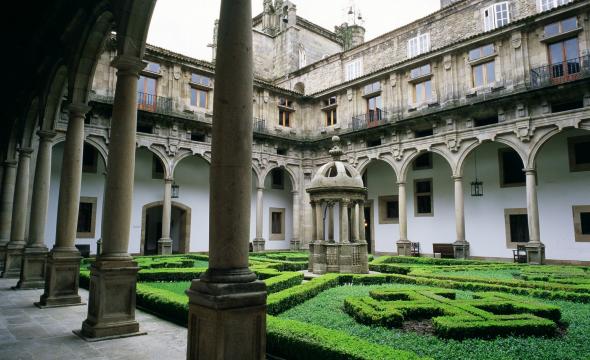
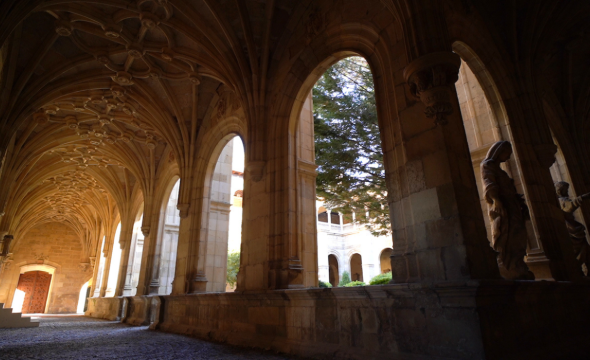
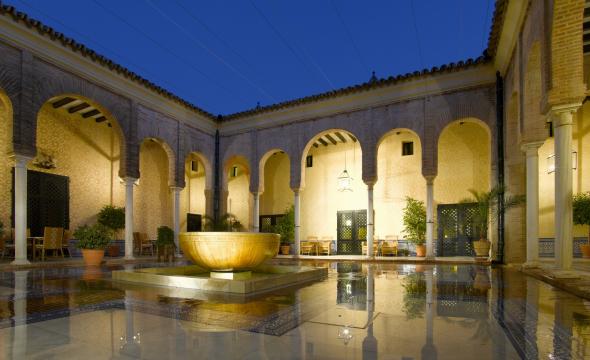
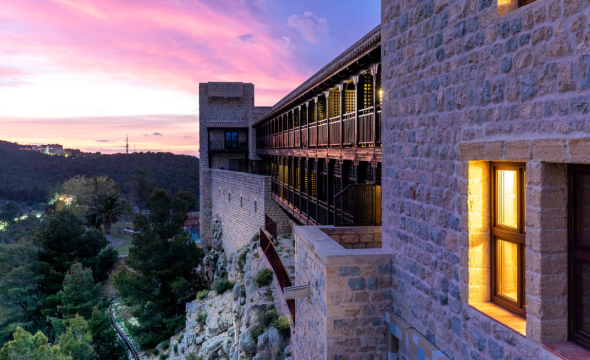
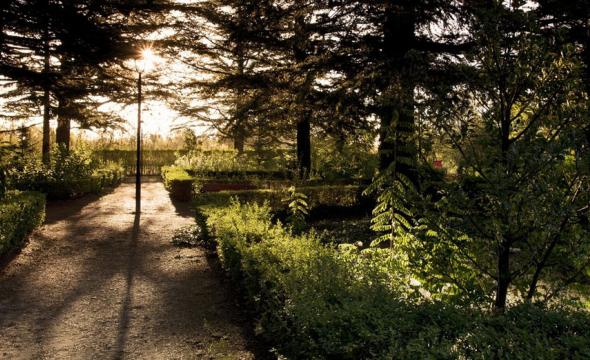
The Parador de Chinchón occupies the imposing 17th-century Augustinian convent, a building that retains its original beauty intact: the landscaped cloister, the vaulted galleries and the stone corridors that whisper centuries of history. The complex reflects the soul of Paradores: harmony between heritage, art and hospitality.
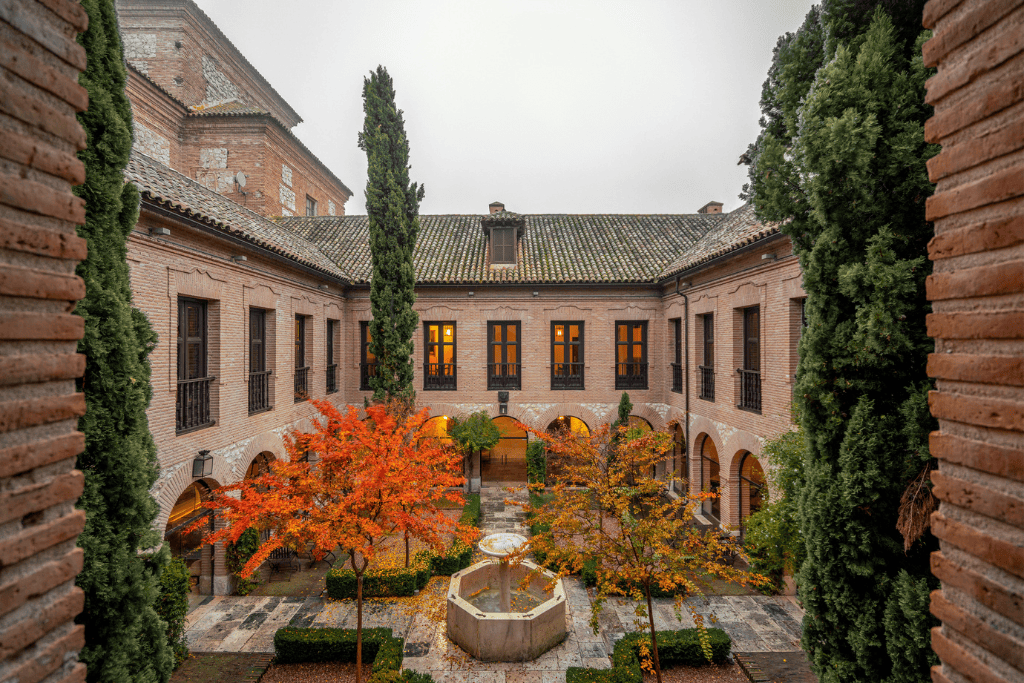
In addition to its monumental charm, the Parador is a destination for the senses. Every autumn for the past 27 years, it has celebrated its traditional Jornadas del Cocido de Taba (Taba Stew Days), which begin on 1 November, coinciding with the All Saints' Day long weekend. This authentic local recipe is served in El Bodegón restaurant, which occupies the convent's old wine cellar. Under its vaults, among check tablecloths, earthenware tableware and walls decorated with traditional paintings, diners enjoy a journey to the most authentic tradition.
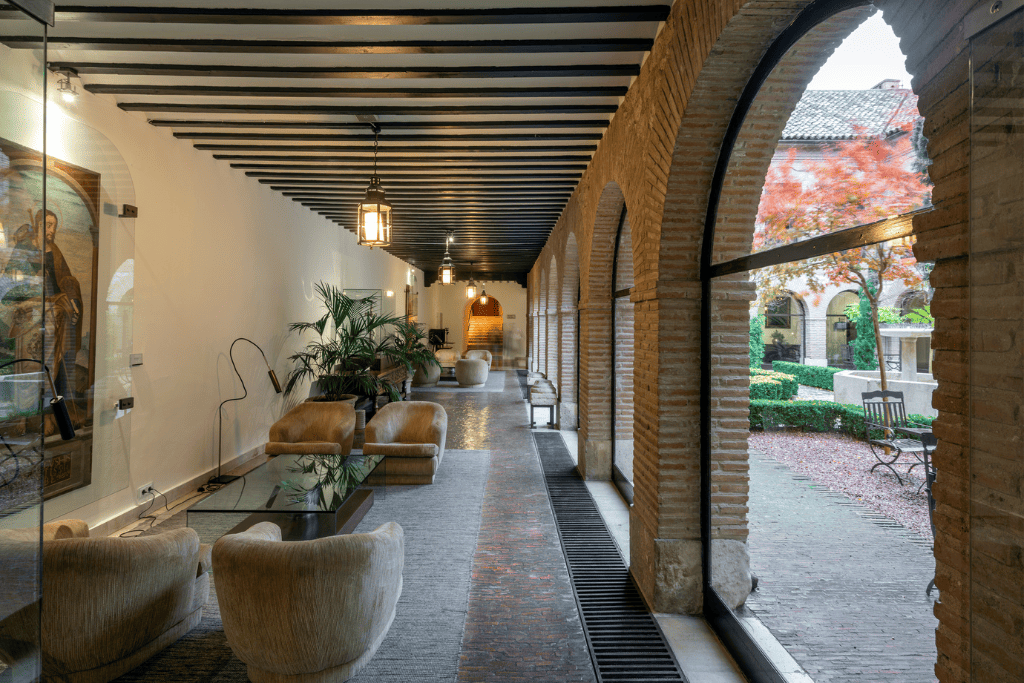
The Parador de Chinchón is thus much more than just a place to stay: it is living history, habitable art and a constant celebration of Castilian culture. And in room 140, the legend of Felipe V continues to breathe, discreet and majestic, amid the echoes of stone and the serenity of rest.