Although the series has served to show off Mina El Hammani's magnetic presence to viewers, it is merely a small example of her potential. Mina is much more than that. Visitors to the Roman Theatre in Mérida hoping to be amazed by The Trojan Women, Euripides' classic tale adapted by Carlota Ferrer and Isabel Ordaz, can see this for themselves. A timely reflection on the disasters of war and its most frequent victims: women.
This is not your first time at the Mérida Festival. You previously played Queen Jocasta in Oedipus. What do you remember about that first experience?
That project came at a very delicate time for me... I was going through some pretty intense personal stuff, and getting on stage in Mérida was... incredible. It's a place with so much power, so much history, that it totally absorbs you. Playing Jocasta, with all the weight that she carries, was almost therapeutic. I remember that, despite what I was going through, I felt really supported, very connected to the audience, to the team... It was an experience I’ll never forget.
On this occasion, you are part of the cast of a powerful classic tale, The Trojan Women. What attracted you to this story?
It's a play with tremendous power. It speaks of pain and loss, but also of the dignity and resilience of women in the midst of disaster. When I received the proposal, it moved me deeply. I was also very keen to work with Carlota Ferrer. I really admire her vision, how she builds from the symbolic, from the physical, from the emotional... I knew that with her, this story would be told from a very special place. It's a gift to be part of this project.

Despite your youth, you are an established and highly regarded actress. Does a stage like the Roman Theatre in Mérida command your respect?
The Trojan Women is a cry against war and violence against women's bodies. Since Euripides, unfortunately, things haven't changed that much...
It continues to be a brutal and necessary reflection of how war and violence particularly affect women. From Euripides to today, the tragedy persists, and the play reminds us of that reality that has not changed so much. That is why I think it is important to bring it to the stage now, so that the audience can reflect on the wounds that remain open and are not silenced. It is a cry that is still relevant and that we are seeing every day, in Gaza itself.
Your character is both an interpretive challenge and an opportunity for growth as an actress. Do you see it that way?
Absolutely. I feel that this character will mark a turning point in my career, not only as an actress, but also as a person. It will make me ask myself many questions, stir things up, confront parts of myself that I may not have looked at so much before. It is a very complex character in a very powerful play, and I know it will be an intense process, but also one of enormous growth.

Do you recognise yourself in the spirit of resistance of these women?
Yes, I recognise myself a lot in the spirit of resistance of The Trojan Women. I think that all of us, to a greater or lesser extent, have had to fight, for our place, our identity or simply to be ourselves without having to justify ourselves all the time. In my case, as a woman, the daughter of migrants and an actress, I have often felt the need to prove myself twice as much, to break stereotypes, to make a place for myself in spaces where it has not always been easy.
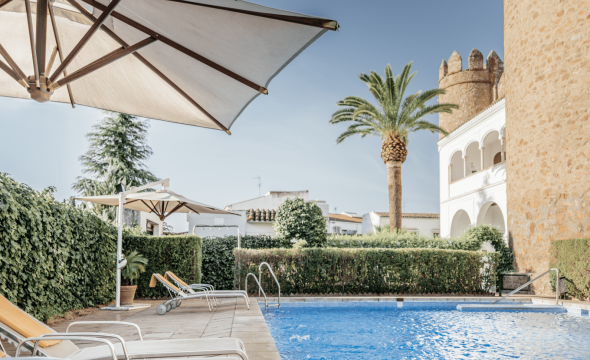
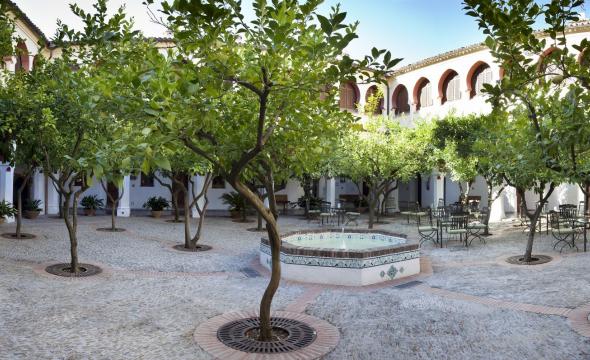
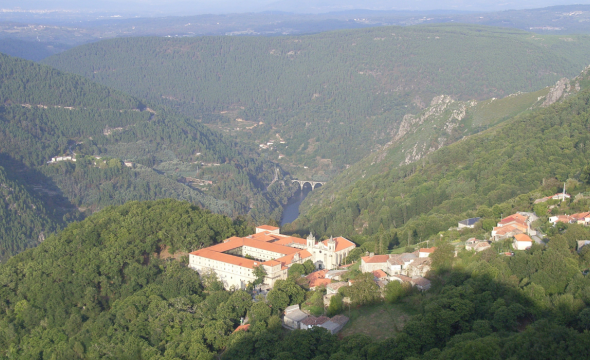
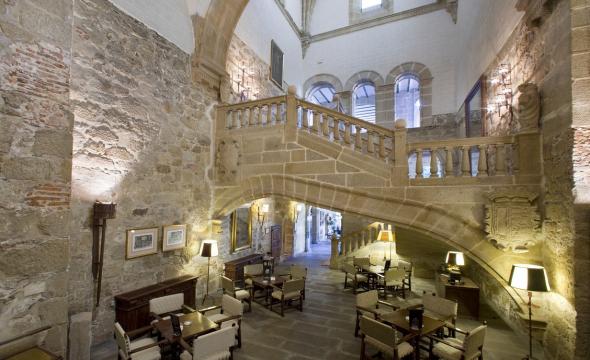
One of the best experiences in Mérida is visiting its Parador. Are you familiar with the Parador network? Do you have a favourite?
This year I hope to visit and enjoy it, no matter what.