In addition to being a great actor, Miguel Ángel Muñoz lives with intensity everything he does. He is restless, versatile, and emotionally generous. After an entire career in front of the camera, he continues to be interested in learning, connecting, and showing his true self. And also in not losing his smile.
Your latest work is The Footballest 2, the sequel to a film that was already a box office hit. It’s easy to imagine he had a great time during the shoot…
I am very happy to have participated in this film. The first one was a success, and the books are already in their 27th edition; it’s a real bestseller in children's literature. I worked under the direction of Miguel Ángel Lamata, with whom I had already worked in Unresolved Sexual Tension. It was like telling the story of a friend, directed by another friend, surrounded by friends: a very fun luxury. Additionally, there were children with amazing energy who reminded me of my early days. In any discipline, when people get along and enjoy themselves, it’s almost impossible for things to go wrong. Despite filming in the summer, in scorching heat on artificial grass football fields, we laughed a lot, betting on who would get a heatstroke first."
We have seen you in all genres, and in all, you excel. Can versatility be a double-edged sword for an actor?
Acting versatility is a gift and a blessing. It's also about accepting it. I've been in the profession for many years, and it was a while ago that I embraced my versatility to allow myself to work on the projects that I’m passionate about. Once you embrace your conditions and stop fighting against them, life becomes more fun and interesting. I enjoy doing everything, both in my profession and in life. I’ve had to learn many things since I was young to offer them to my characters, whether it was playing the piano, horseback riding, or handling a sword. I have also applied that curiosity to my life. I don't know how to be any other way.
This has led you to present Pekín Express and win MasterChef Celebrity, transmitting a lot of truth in both cases. Is that something you're born with?
You can be born with truth, but transmitting it is a different thing. I started working as an actor at ten, and the first time I stepped into an acting school was at twenty-two, at Juan Carlos Corazza’s studio. There, I learned a different way of working, linked to personal knowledge, and I started therapy, about seventeen years ago. That has allowed me to embrace who I am and show it as it is. On television, you enjoy more when you are yourself. I was lucky that it was a positive reinforcement for people, but it wasn’t something planned. I’ve managed to be myself, even though there’s a risk of being misinterpreted by being spontaneous.
It’s impossible not to be moved watching your documentary 100 Days with Tata. Sometimes, as a viewer, it’s inevitable to feel awkward watching him with his grandmother.
It was a very generous act of love from my Tata, and from my side, when showing our relationship, with its fears and virtues. It was important to present it this way. I wanted to be as honest as my heart allowed me to. I can't reveal too much, but I’m in the post-production phase of another documentary directed by me. It’s a necessary story for me, and I felt it was important to share it openly and honestly. I’ve also been writing a fictional story for some time, and I hope to complete and direct it. The two projects I’ve done as a director stem from a spontaneous need.
Looking back, many of the children who saw you in One Step Forward might now see you in The Footballest 2.
Definitely! When I did UPA Next, the Atresplayer series already had a new generation of actors who were children of viewers of the original series. In The Footballest 2, we’ve gone even further back in terms of the target audience.
How does this fact affect you?
It's strange. I feel — and I am — young, and my body still keeps up with me. I find it incredible that there are people who have seen me work for thirty years at my age.
What do you learn in the whirlwind of a phenomenon like UPA Dance, being a young guy at the time?
In my case, it was a combination of learnings. It was helpful to have done other successful series like Al salir de clase and Compañeros. In Al salir de clase, after doing 150 episodes, I saw that people no longer asked me for photos but asked me to take photos of them with my co-stars. I learned how fleeting it could be and that it didn’t mean as much as it seemed. Having the right environment also helped me keep my feet on the ground.
It ends in the paradox of being someone familiar to strangers.
Many people greet you with tremendous affection because you’ve accompanied them for many years. That can throw you off a little, but you understand it, even in the least opportune moments, when you try to empathize with their desire to take a photo with you.
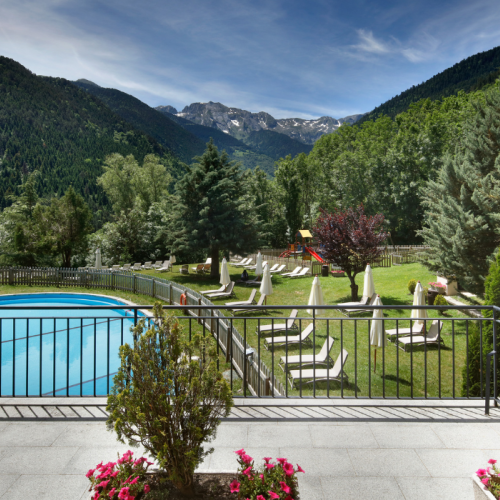
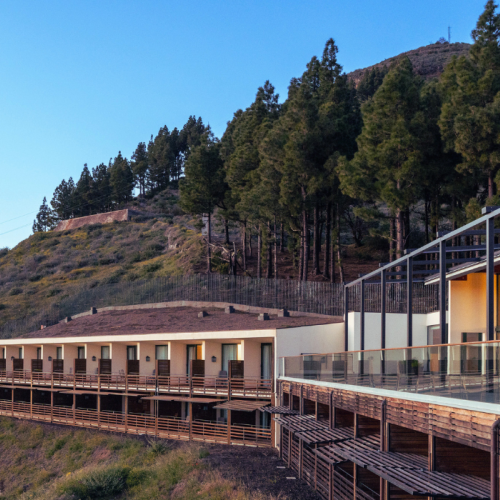
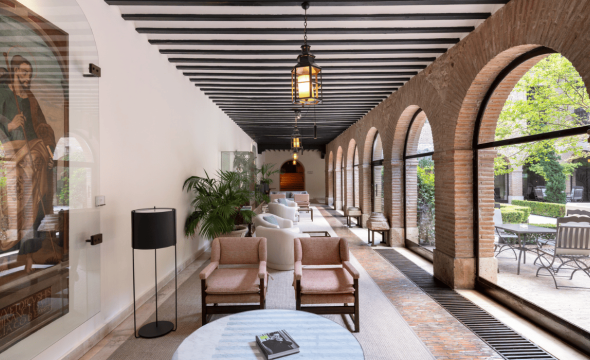
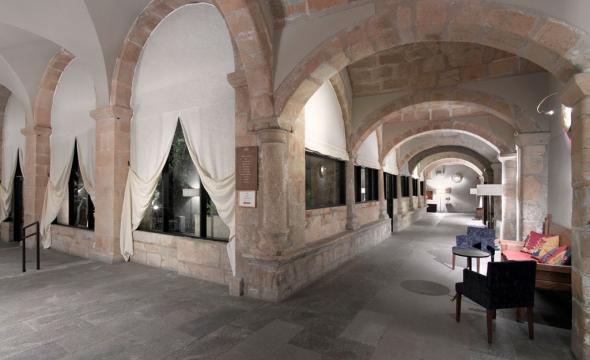
Speaking of old acquaintances, do you have a Parador that you feel particularly fond of?
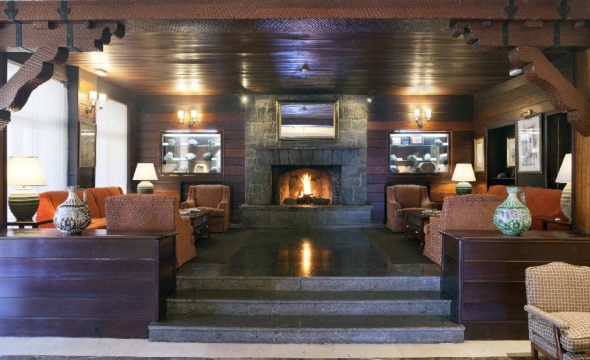
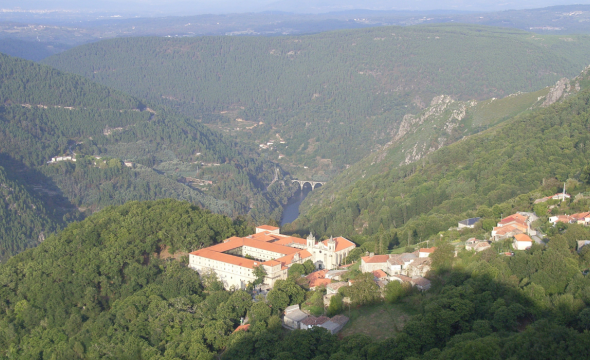
I love Paradores. They are usually located in strategic places, with those buildings that have so much history to tell. You feel a lot of peace, and the food is excellent. I particularly remember the Parador de Mérida, where I stayed when we filmed 100 Days with Tata. They are my first choice on trips to inland Spain… and not so inland!