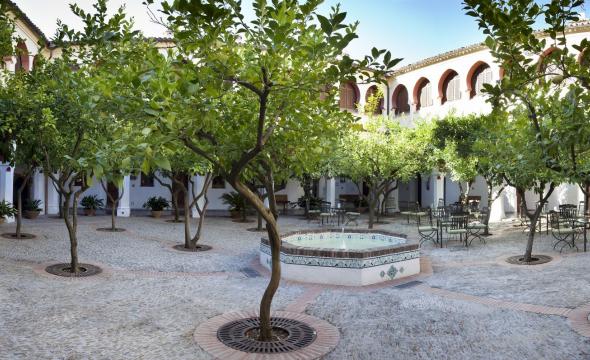
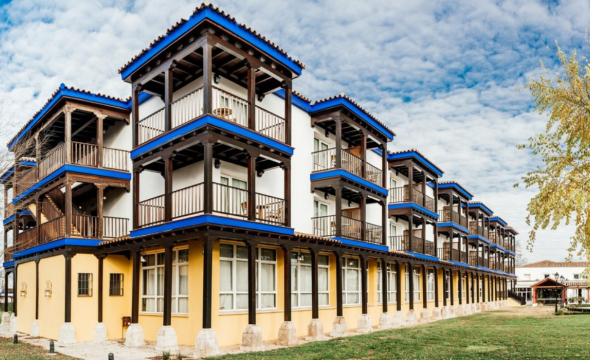
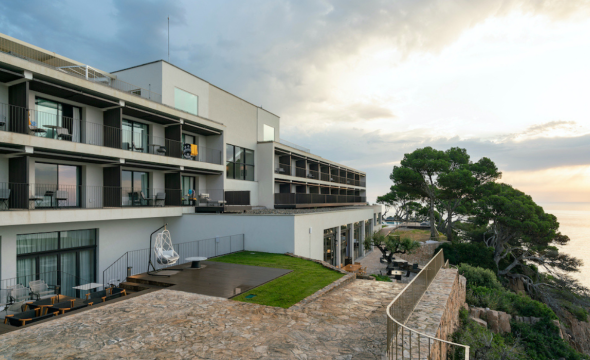
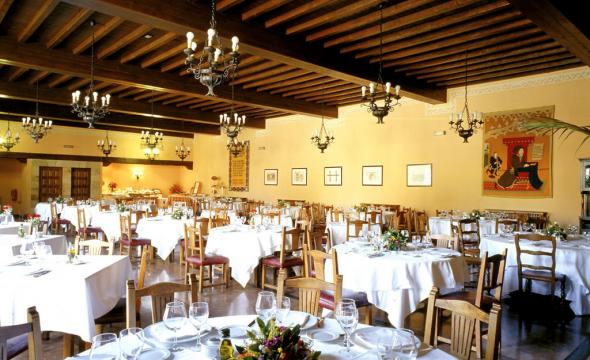
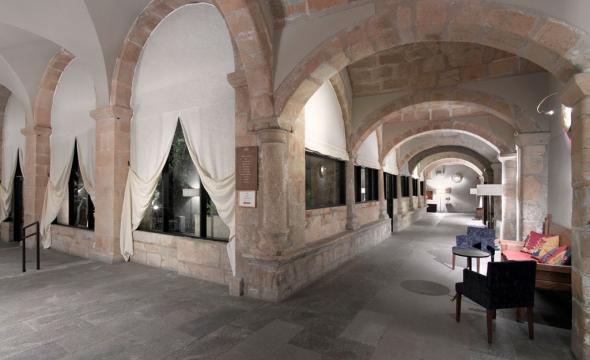
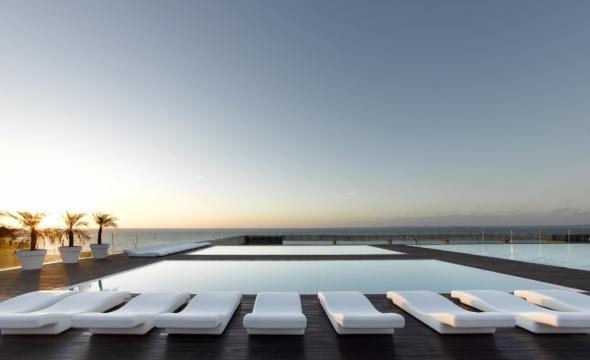
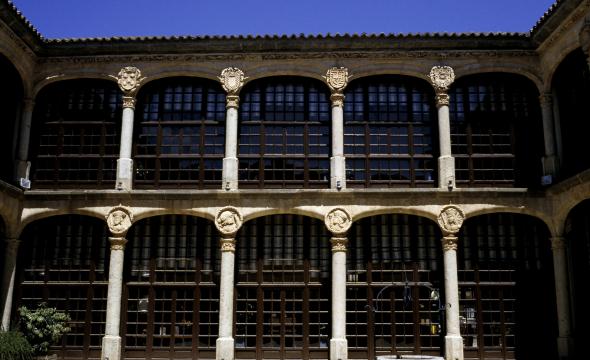
The Parador de Cuenca, renovated with an aesthetic that respects the essence of the former convent of San Pablo, has not only transformed its facilities, but has also given a significant boost to 20th-century art, consolidating its close ties with the city’s cultural history and its tradition as the epicentre of abstract art in Spain.
Enhancing the artistic project
During the renovation process, the Parador has prominently integrated contemporary art, expanding its collection and reinforcing its cultural mission. The convent of San Pablo, home to the Parador for many years, houses a renovated art exhibition that includes pieces by some of the most influential artists of Spanish abstraction. Among the most notable works is Julián Casado's Malevich Series, 42 canvases that explore the effect of light on geometric bodies, a tribute to the famous Kazimir Malevich and the constructivist tradition.
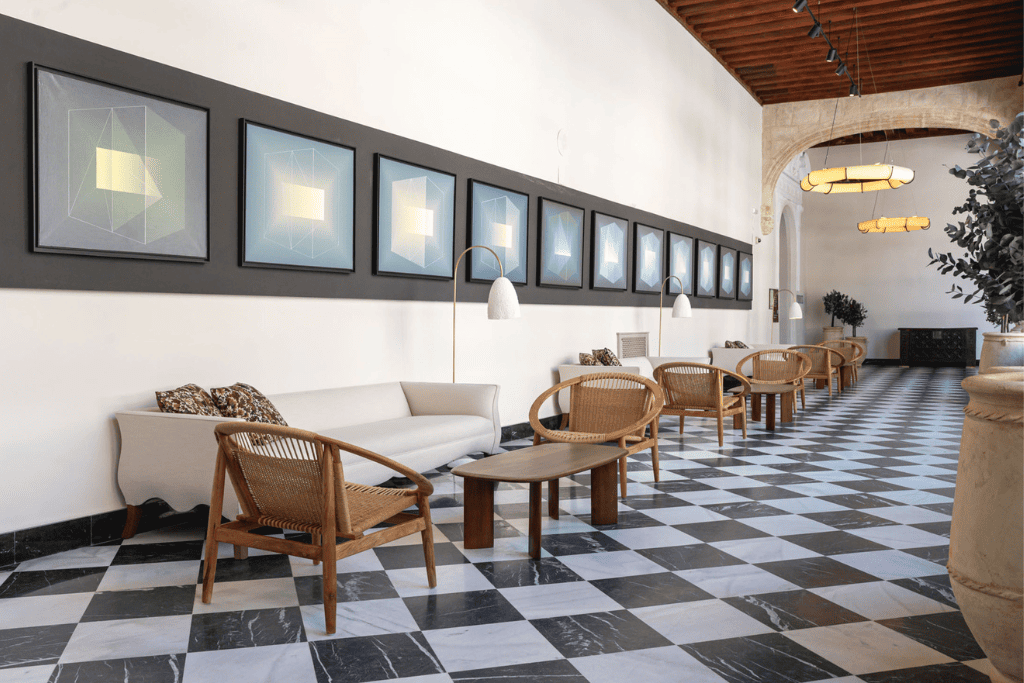
In addition, the Parador features works by Gustavo Torner and Fernando Zóbel, key artists of the Cuenca Group, who co-founded the Museum of Abstract Art in Cuenca and set the course for contemporary Spanish art. The Parador thus becomes an extension of this artistic legacy, offering a sensory experience that combines art, architecture and the natural environment.
Gustavo Torner: A leading figure in abstract art
Gustavo Torner, born in Cuenca in 1925, is one of the most important figures in 20th-century Spanish abstraction. His work spans various media, from painting and sculpture to collage, drawing and photography. Torner began his artistic career in the 1940s, initially with a figurative style that later evolved into a texturalist abstraction influenced by the avant-garde trends of the time.
Together with Fernando Zóbel, Torner founded the Spanish Abstract Art Museum in the Hanging Houses of Cuenca in 1966, a space that transformed the city into a key centre for contemporary art. His work has been recognised internationally, participating in prestigious biennials such as those in Venice and São Paulo, and has been featured in numerous exhibitions in galleries around the world, including a retrospective at the Reina Sofía National Art Museum in Madrid.
Torner is also known for his work in museography and space design, notably his involvement in the design of the Museum of Abstract Art in Cuenca and his collaboration with important institutions such as the Prado Museum. His work is present in renowned collections, and he has become a symbol of artistic modernity in Cuenca.
The Malevich series by Julián Casado
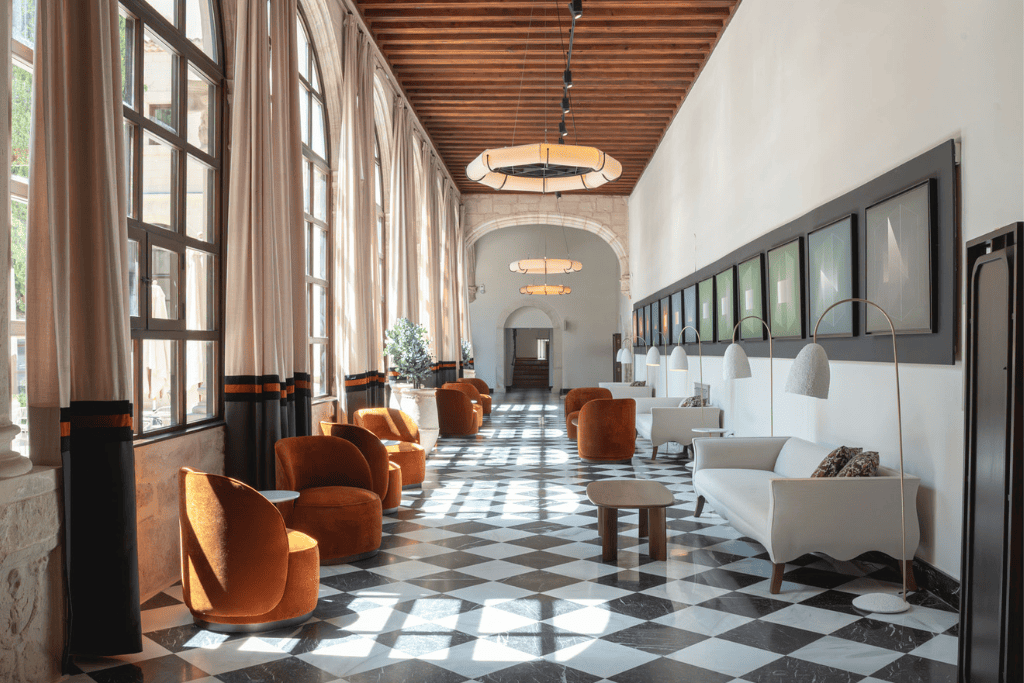
Julián Casado's work on display at the Parador, "Malevich Series. Variations on the Same Structure", is one of the most important pieces in the Parador's artistic renovation. Comprising 42 canvases painted between 1978 and 1982, this series pays tribute to Kazimir Malevich, the pioneer of Suprematism and geometric abstraction. The piece explores how light interacts with geometric shapes, creating variations in colour and structure that invite deep reflection on visual perception and abstraction.
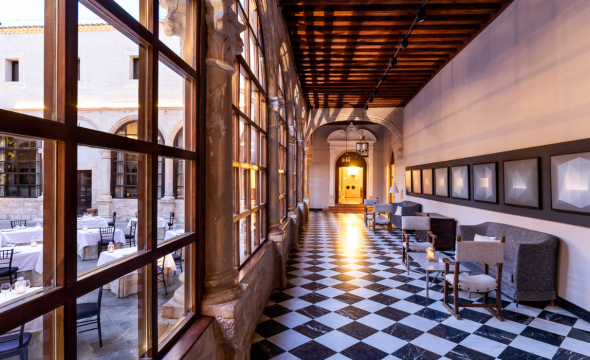
Casado is an artist who has worked intensively with light, an element that appears repeatedly in his works. His series of canvases at the Parador reflects his quest to understand visual laws and his ability to create new forms through geometry and colour. The installation of this work in the glass-enclosed cloister of the Parador transforms this space into a place of meditation and reflection, where art and architecture merge into a unique sensory experience.
The integration of contemporary art at the Parador
The art collection at the Parador de Cuenca is not limited to the work of Casado, Torner and Zóbel, but also includes pieces by other artists linked to the Cuenca Group and the tradition of geometric abstraction. With this renovation, the Parador reaffirms itself as a living space for culture, where contemporary art is naturally integrated with the history and architecture of the convent.
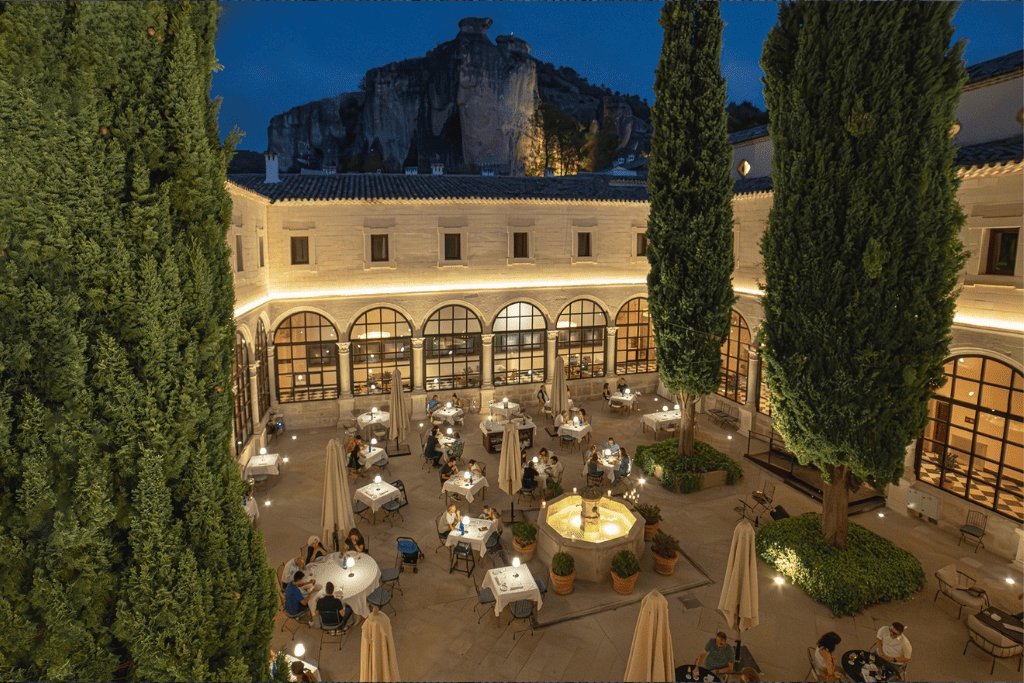
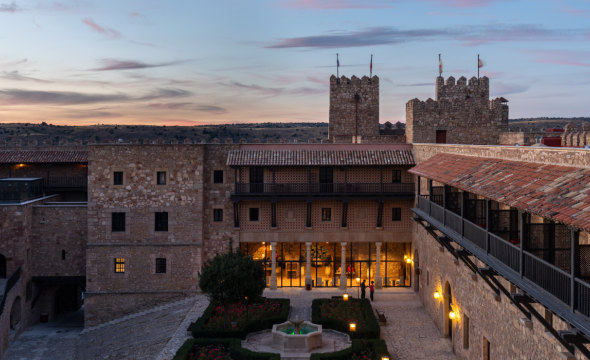
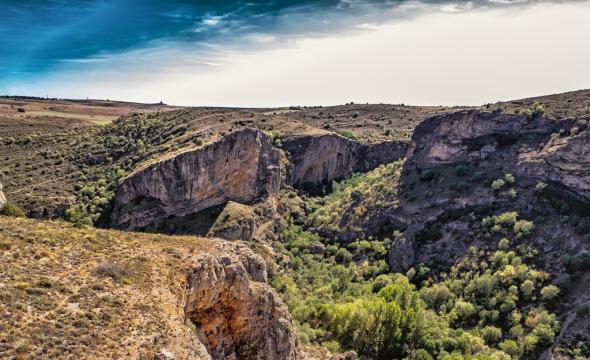
The artistic intervention at the Parador not only pays tribute to the tradition of abstract art, but also reinforces the cultural and tourist character of Cuenca, consolidating its leading role in the Spanish art scene. At the same time, the modernisation of the facilities and the improvement of its common areas, such as the glass-enclosed cloister, the former chapel converted into a café, and the outdoor swimming pool overlooking the Huécar Canyon, allow visitors to enjoy a unique environment where they can experience both art and history at their finest.