Paradores occupy some of the country’s most privileged locations. Castles that have watched over the horizon for centuries, convents transformed into tranquil retreats, Renaissance palaces, seaside fortresses or contemporary buildings set amidst breathtaking landscapes. We often think of them in terms of their history, architecture, culinary heritage or the remarkable natural and monumental settings that surround them. And yet, there is an essential part of the experience that often remains quietly in the background: the rooms.
It is there that the most intimate part of the journey truly unfolds. The place where the traveller rests after exploring a city, where dawn slowly filters through the window, or where one can simply contemplate the surrounding landscape. Paradores’ rooms are designed precisely for this: to make time stand still through comfort, spaciousness, tranquillity and meticulous attention to detail. Sometimes all it takes is a window facing the right direction to discover something extraordinary.
Rooms opening onto the timeless landscape of the Tagus
Ronda has always stood on the edge of the abyss. Perched on a plateau split by the River Guadalevín, the town seems suspended between two worlds, linked since the 18th century by the imposing Puente Nuevo, one of Andalusia’s great historical engineering feats.
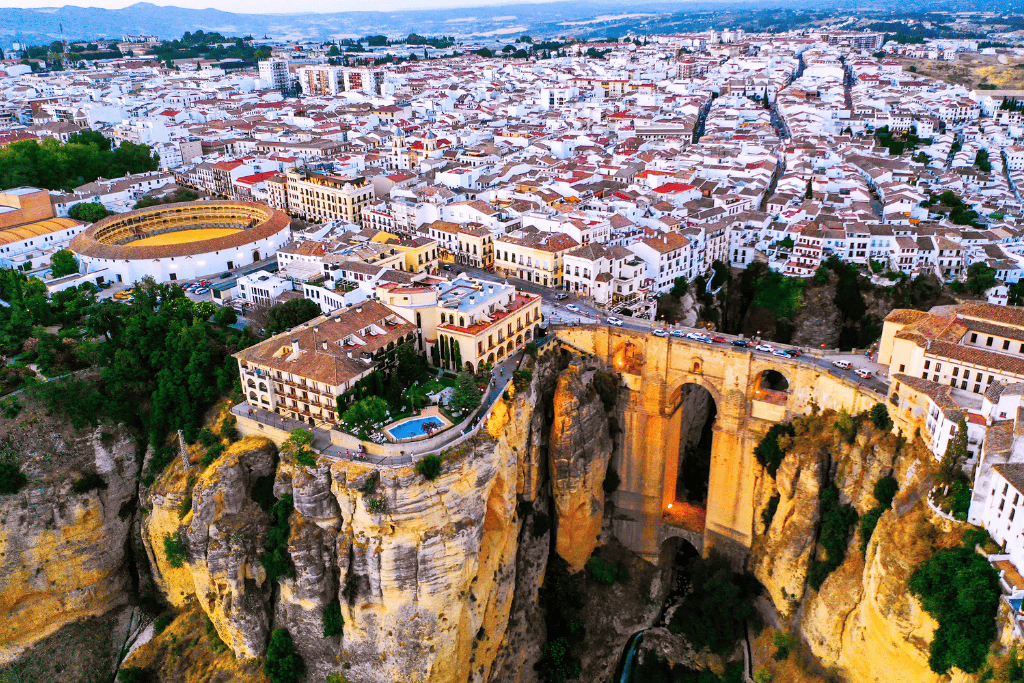
From the rooms of Parador de Ronda, the Tajo Gorge unfolds as a breathtaking natural spectacle. The gorge, carved out over millions of years by the patient force of water, reaches a depth of more than one hundred metres and cuts right through the very heart of the town. The landscape is remarkable both for its geological scale and for the way in which people have learned to live alongside it, building bridges, paths and viewpoints into the rock face.
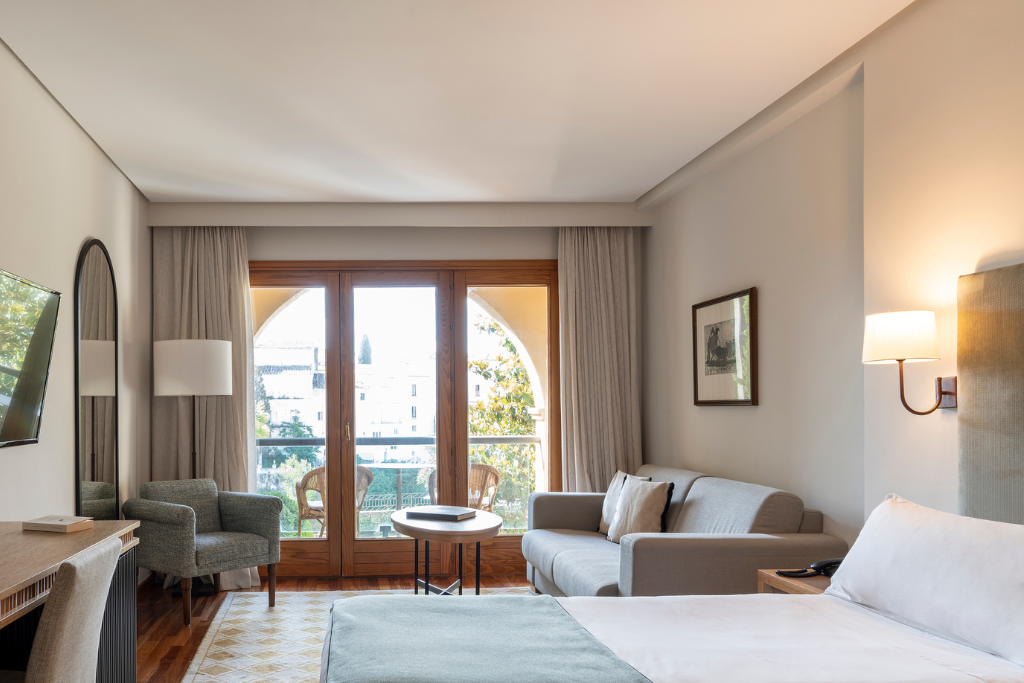
At any time of day, the view from the room takes on a different character. In the morning, the light highlights the limestone tones of the gorge; at sunset, the bridge is silhouetted in shades of gold and red; and at night, the town acquires an almost theatrical stillness. Ronda invites visitors to explore its historic narrow streets, discover its bullring, sample the local mountain cuisine or venture through its wine cellars and nature trails, yet the eye always returns to the Tajo, the town’s true focal point.
Rooms with views of the Mediterranean
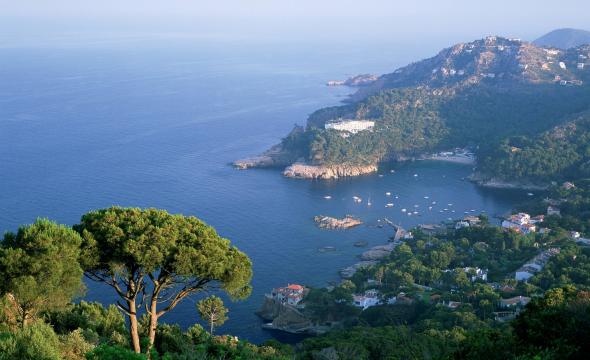
In Ibiza, the sea is not just a landscape; it is memory, culture and light. For centuries, its waters have connected civilisations, carried stories and turned the island into a refuge for artists, travellers and dreamers. To gaze upon it from Parador de Ibiza is to observe a changing Mediterranean, capable of shifting from deep blue to the golden reflections of sunset in a matter of minutes.
Located within the historic quarter of Dalt Vila, a UNESCO World Heritage Site, the Parador stands alongside Phoenician, Carthaginian, medieval and Renaissance ruins that reveal the island’s extraordinary cultural richness. Each room offers a different perspective on this exceptional setting.
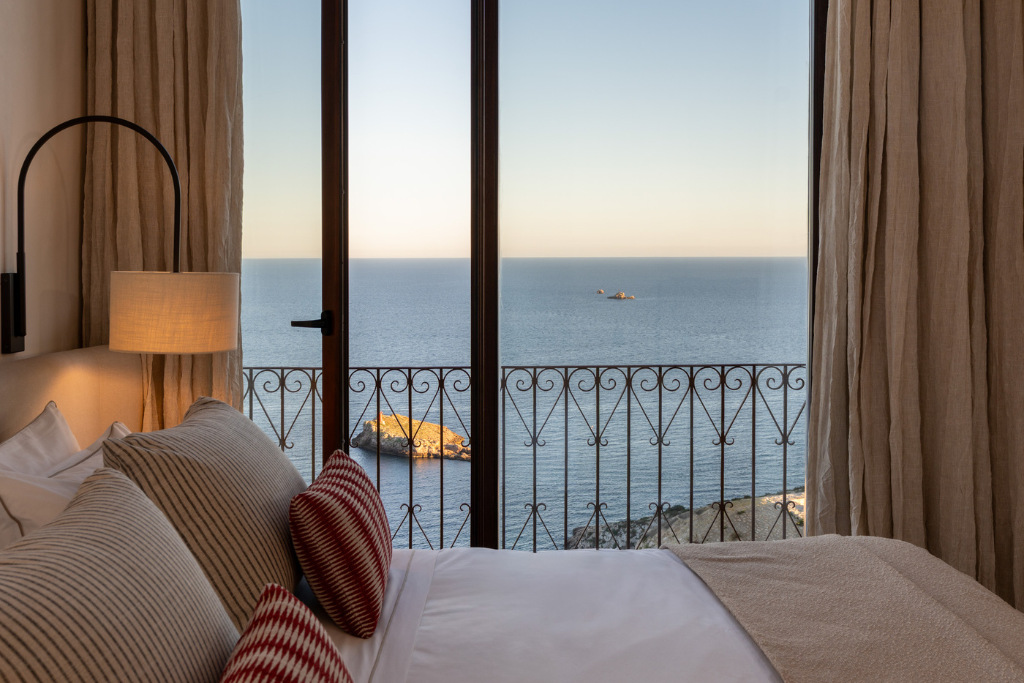
Some of the rooms open out onto the harbour and the sea, with Formentera visible on the horizon on clear days. Others look out towards the bastions and Renaissance walls, becoming part of the monumental skyline of the upper town. There are also rooms facing the Patio de Armas, a serene space where the oldest Phoenician remains found in Ibiza are housed.
From any of them, you can sense the essence of the island, a blend of history, Mediterranean calm and creativity that transforms your stay into something more than just a seaside holiday.
Rooms with views of a city of golden stone
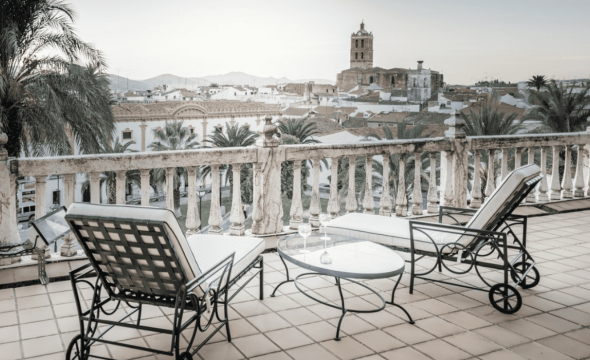
Few Spanish cities have a skyline as recognisable as Salamanca’s. From the left bank of the River Tormes, where Parador de Salamanca, stands, the panoramic view of the cathedrals and the historic centre offers one of the most beautiful vistas in this UNESCO World Heritage city.
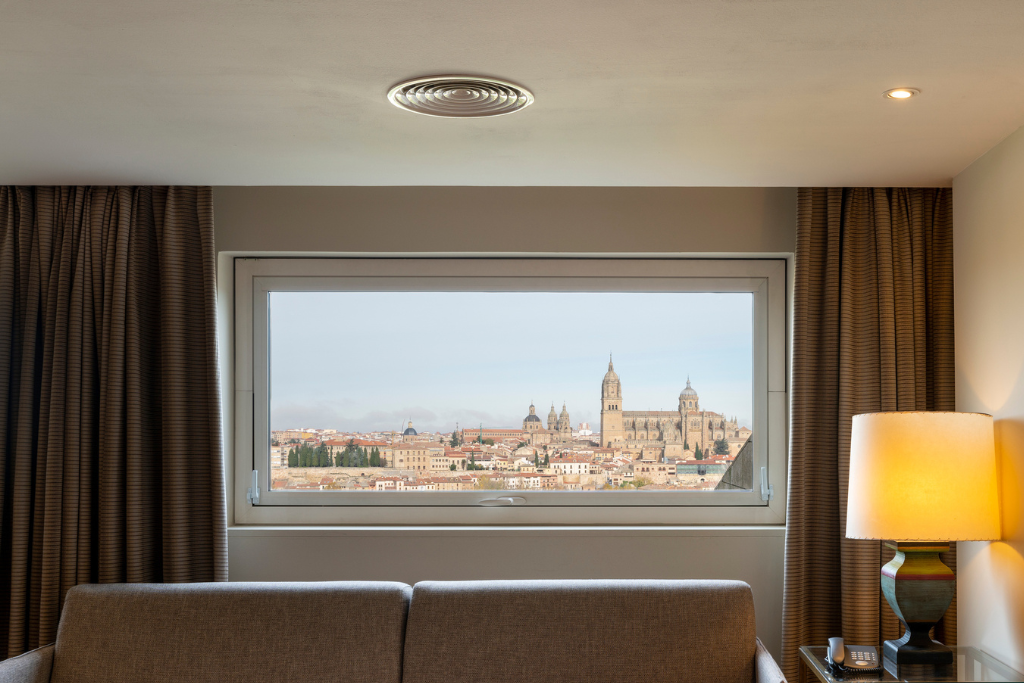
Here, some rooms serve as a privileged balcony overlooking centuries of university, religious and architectural history. The Torre del Gallo, the cathedral domes and the city skyline are reflected in the river whilst the limestone shifts colour with the changing light of day. The most magical moment comes at sunset, when Salamanca takes on the golden hue for which it is renowned throughout the world.
Unlike other historic buildings in the network, the Parador embraces a contemporary architectural style, bright and open to the landscape, creating an elegant contrast with the Baroque and Plateresque architecture of the old town. From here, it is easy to explore the city and discover everything Salamanca has to offer.
Rooms overlooking the square of a town frozen in time
There are towns that seem to have found a way to preserve the beauty of a bygone era intact. Santillana del Mar is one of them. Its cobbled streets, stately homes bearing coats of arms and stone façades make up one of the best-preserved medieval towns in northern Spain.
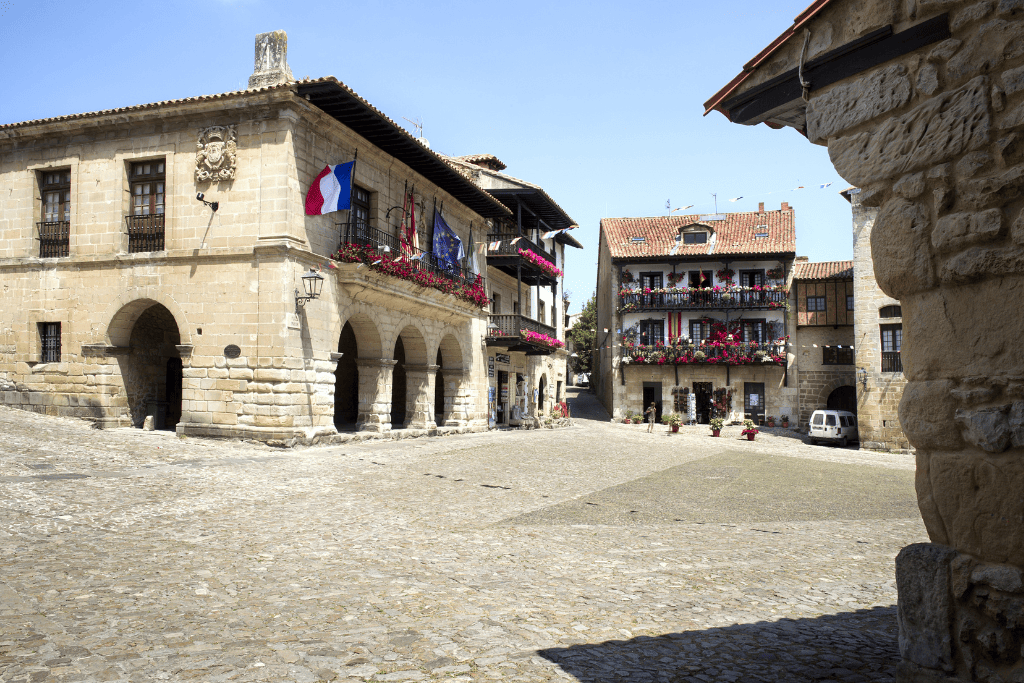
Right in the heart of the historic centre stands the Parador de Santillana Gil Blas, housed in a former 17th-century Baroque mansion that once belonged to the Barreda-Bracho family. From some of its rooms, the view opens out onto the town’s main square, where life unfolds with a serenity almost untouched by time. Opposite the building stand the Torre del Merino and the Town Hall, surrounded by the traditional mountain architecture that defines the character of Santillana.
The surroundings add even more charm to the experience. Nearby lie the Cantabrian coast and the Altamira Cave, whose discovery made Santillana one of Spain’s first major cultural tourism destinations. However, you need only sit on the Parador’s terrace to realise that the true luxury of the place lies in its peaceful and authentic atmosphere.
Rooms with views of the grandeur of the Pyrenees
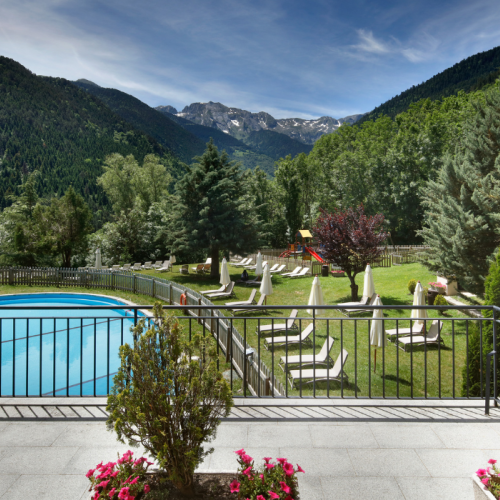
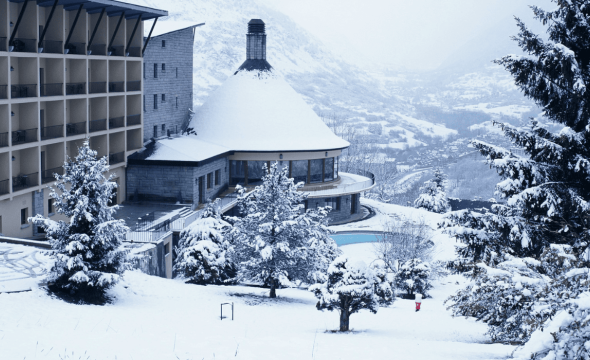
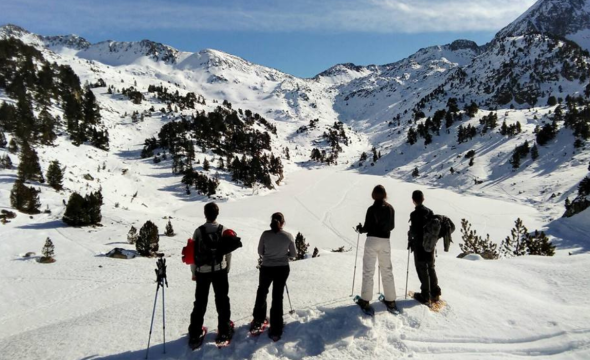
In the Pineta Valley, at the foot of Monte Perdido, the landscape commands silence. Parador de Bielsa is surrounded by forests, meadows and mountains that transform completely with each season: deep greens in spring, coppery hues in autumn and a blanket of snow in winter.
The rooms open out onto one of the most spectacular natural settings in the Aragonese Pyrenees. From them, you can gaze upon the peaks, the course of the River Cinca and the immense glacial walls that enclose the valley. It is a monumental, unspoilt and deeply evocative natural landscape.
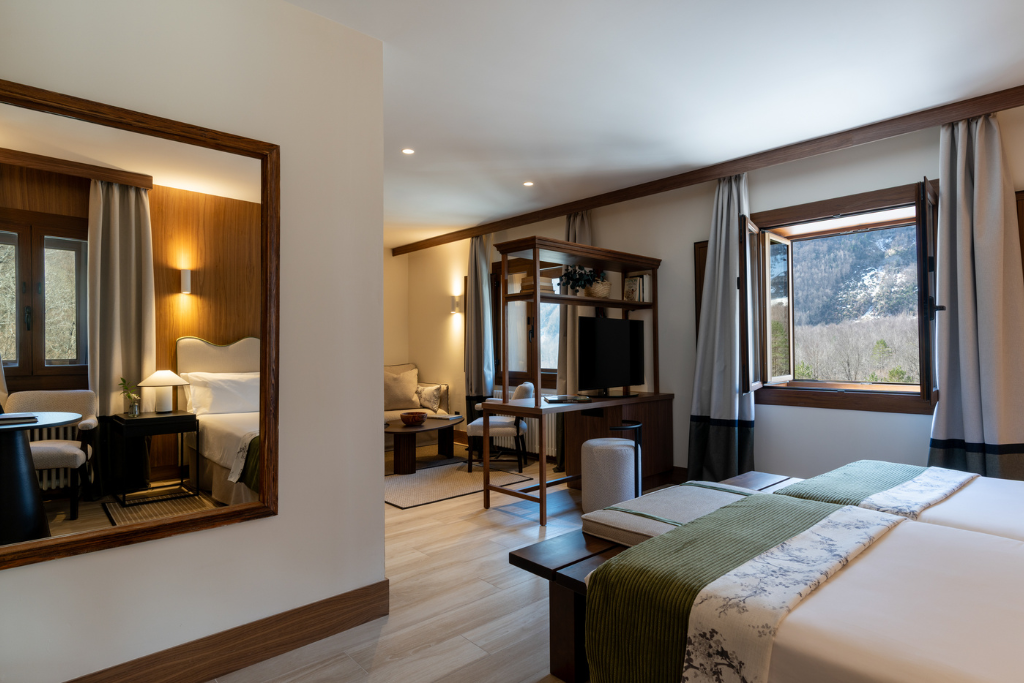
The Pineta Valley forms part of the Ordesa y Monte Perdido National Park and is one of the best places from which to discover the biodiversity of the Pyrenees. Beech, fir and black pine trees cover the slopes, whilst the trails and high-altitude pastures are home to chamois, marmots, deer and bearded vultures, the emblem of these mountains.
Here, the journey feels like both a retreat and an adventure. You can set off along trails leading to the Balcón de Pineta or the Lake Marboré, or simply allow the landscape to slowly drift in through your room’s window.
Rooms with views of a medieval castle
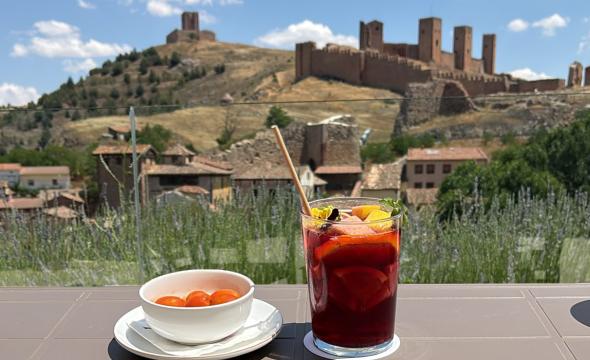
There are fortresses that dominate the landscape even before you reach them. The castle of Molina de Aragón, one of the largest in Spain, stands on a hill watching over the Castilian town.
The new Parador de Molina de Aragón, which opened in 2025, has been designed precisely to engage with that image. Its vast windows make the medieval castle part of the room itself, allowing guests to enjoy an exceptional panoramic view both by day and by night, when the architectural lighting transforms the fortress into an almost cinematic silhouette.
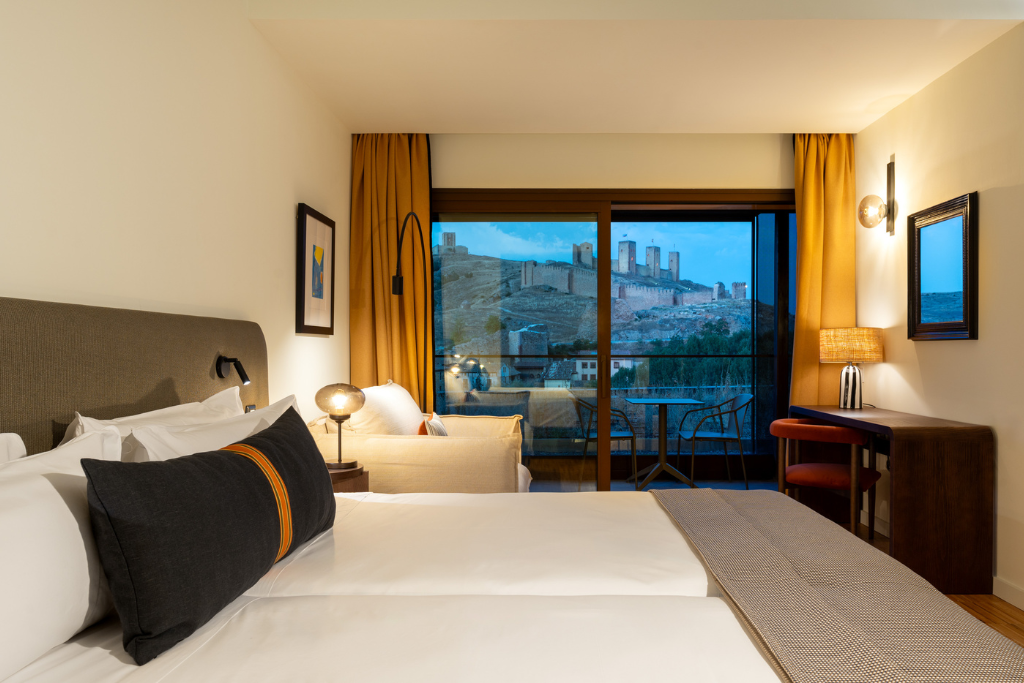
The building’s contemporary architecture, crafted from stone and glass, blends discreetly into the landscape of the Upper Tagus, a region designated a UNESCO Global Geopark for its extraordinary natural wealth. From the rooms, one can appreciate both the historical grandeur and the serene expanse of the surrounding countryside.
Molina de Aragón also preserves a valuable architectural and cultural heritage, with Romanesque churches, medieval alleyways, former Jewish quarters and monasteries that speak of centuries of cultural coexistence. All this makes a stay here a complete immersion in the most historic yet least-known areas of Castile.
Rooms with views of the heart of the Andalusian Renaissance
Few squares in Spain possess the monumental beauty of Plaza Vázquez de Molina. Here stands Parador de Úbeda, housed in the historic Palacio del Deán Ortega, considered the first palace to be converted into a Parador de Turismo.
Staying here means sleeping right in the very heart of the Andalusian Renaissance. Some rooms offer direct views over the square and its historic buildings, creating the sensation of staying within a perfectly preserved monumental setting.
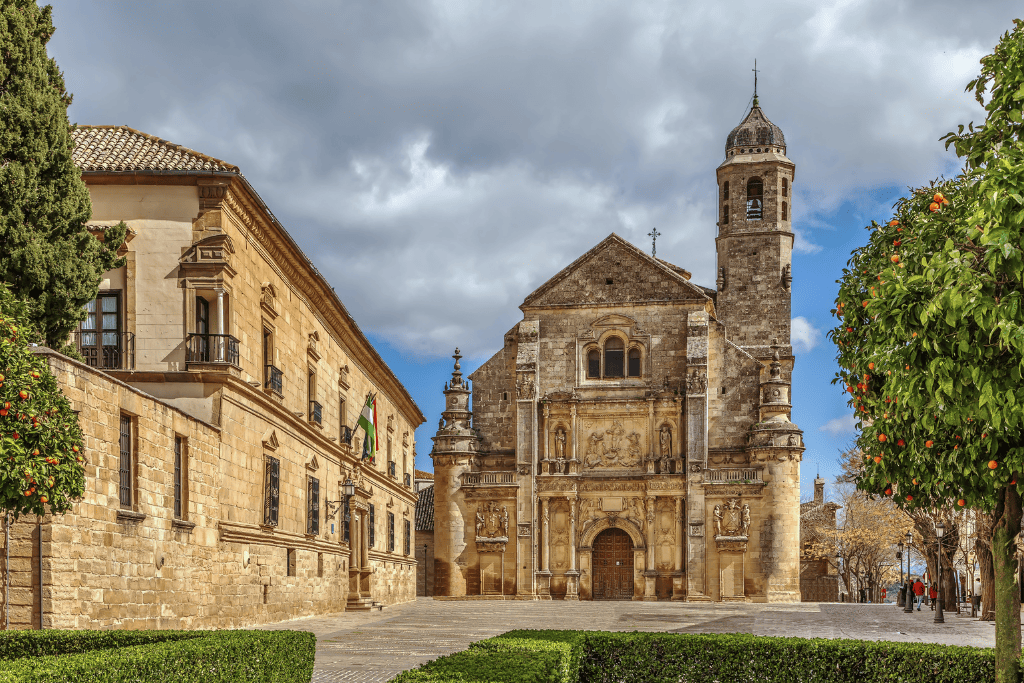
Opposite the Parador stand some of Úbeda’s great architectural icons, such as the Sacra Capilla del Salvador, a masterpiece by Andrés de Vandelvira, the Palacio Vázquez de Molina (now the Town Hall), and the Palacio del Marqués de Mancera, with its distinctive Renaissance tower.
The interior of the building combines historic elegance and Andalusian heritage around a beautiful courtyard. Outside, the city exudes a bright and serene atmosphere where local crafts, the cuisine of Jaén and the leisurely rhythm of Andalusia’s historic towns coexist.
As evening falls, when the stone takes on honey-coloured hues and the square slowly empties, Úbeda demonstrates why it remains one of the most extraordinary Renaissance ensembles in Europe.