The story of this trip begins the moment you step through a heavy wooden doorway, weathered by centuries of history. In that instant, something changes. And simply telling the little ones that their next room is inside a castle is enough for their imagination to do the rest.
Sleeping in a castle completely transforms the way you travel as a family. It’s not just the place, but what it awakens in people.
Children need no explanation because they understand the space instinctively. They run through the courtyard as if it had always been theirs, gaze up at a tower waiting for something to happen, as if every corner hid a story waiting to be discovered. And the adults, almost without realising it, stop being spectators and become part of that very game.
And that is precisely where the journey is complete. Whilst the children explore, imagine and play, the adults rediscover something just as valuable: the pleasure of travelling, surrounded by history, heritage and local cuisine.
A legendary fortress
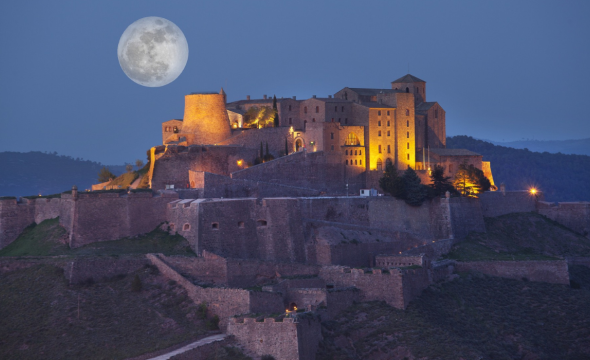
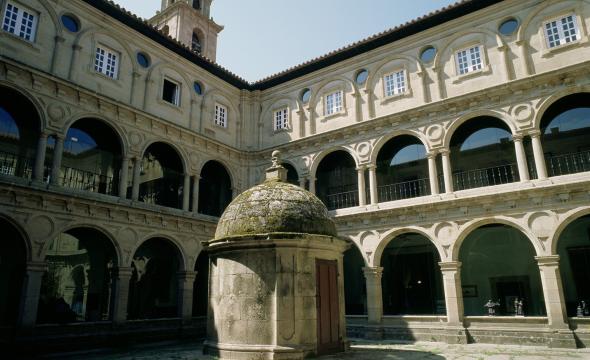
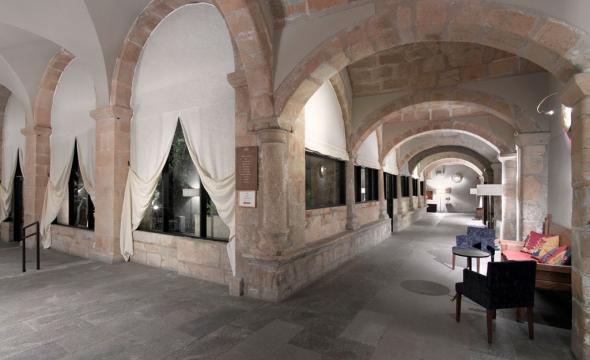
The Parador de Cardona has it all. Even before you step inside, it commands respect and you know you have arrived at a special place. The hill, the walls, the solid outline of a fortress that has watched over the landscape for centuries. And when you walk through the door, that distinct feeling of being in another time. The echo of footsteps, the height of the walls, the light filtering into the cloister. Everything carries weight. Everything suggests that much has happened here.
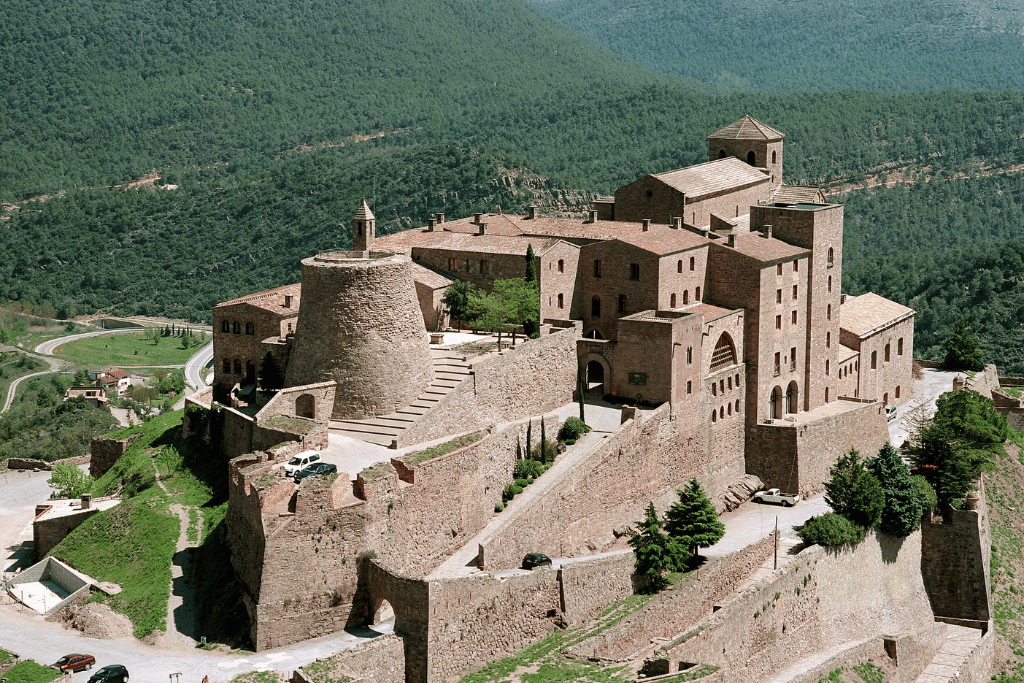
And that is where this Parador becomes a particularly powerful place for families. Because you don’t need to imagine much; the history is already there. The Minyona Tower, with its legend, becomes the starting point. The 13th-century Romanesque church adds depth. And the corridors do the rest. But the experience doesn’t stop within the walls. Outside, the destination invites you to continue playing with history.
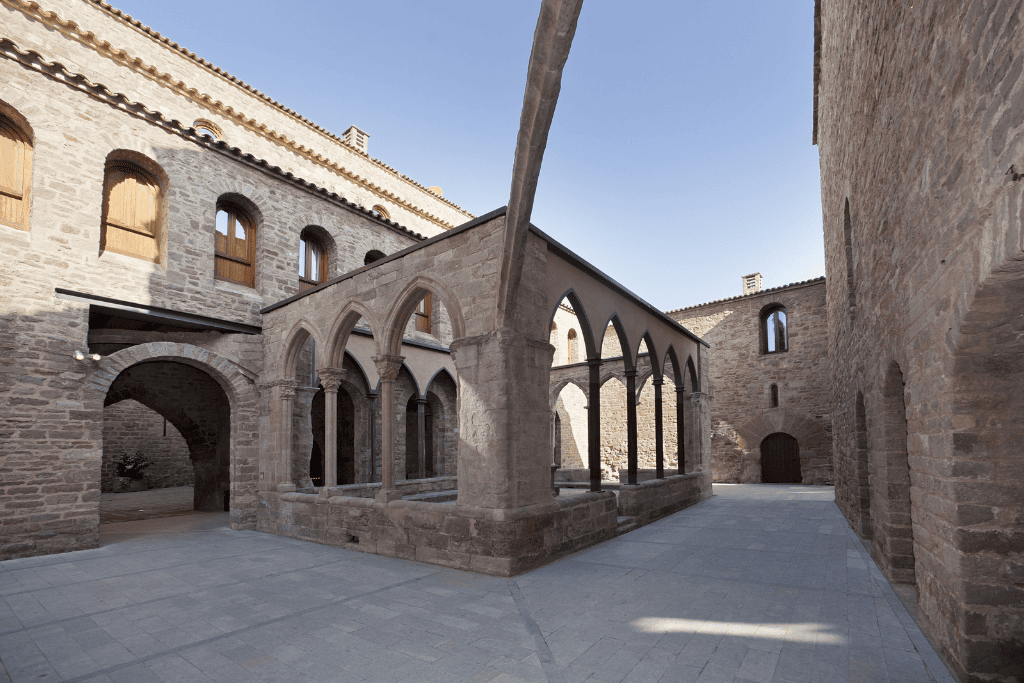
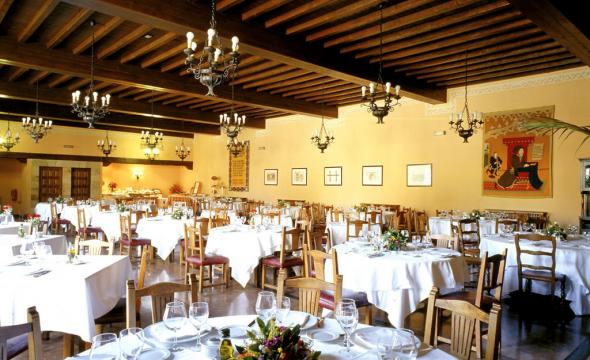
The dramatised tours of the castle or the experiences on the Salt Mountain turn the surroundings into a natural extension of the Parador, with characters, stories and little plots that effortlessly captivate the children. And at the end of the day, when all is quiet, the views of the Pyrenees remind us that this fortress not only looks to the past, but is also part of a setting that is as impressive as its own history. All this is accompanied by a culinary offering with nods to medieval tradition, which completes the experience through another language: flavour.
The castle of medieval dreams
If there is one image that defines the classic Spanish castle, it is that of the Parador de Ciudad Rodrigo. Situated on the border with Portugal, this 14th-century castle retains its historical essence intact.
It is, in a way, the castle one would instinctively sketch with battlements, a tower, golden stone and a strategic position commanding the landscape. And perhaps that is why it works so well for families, because it is instantly recognisable, almost intuitively.
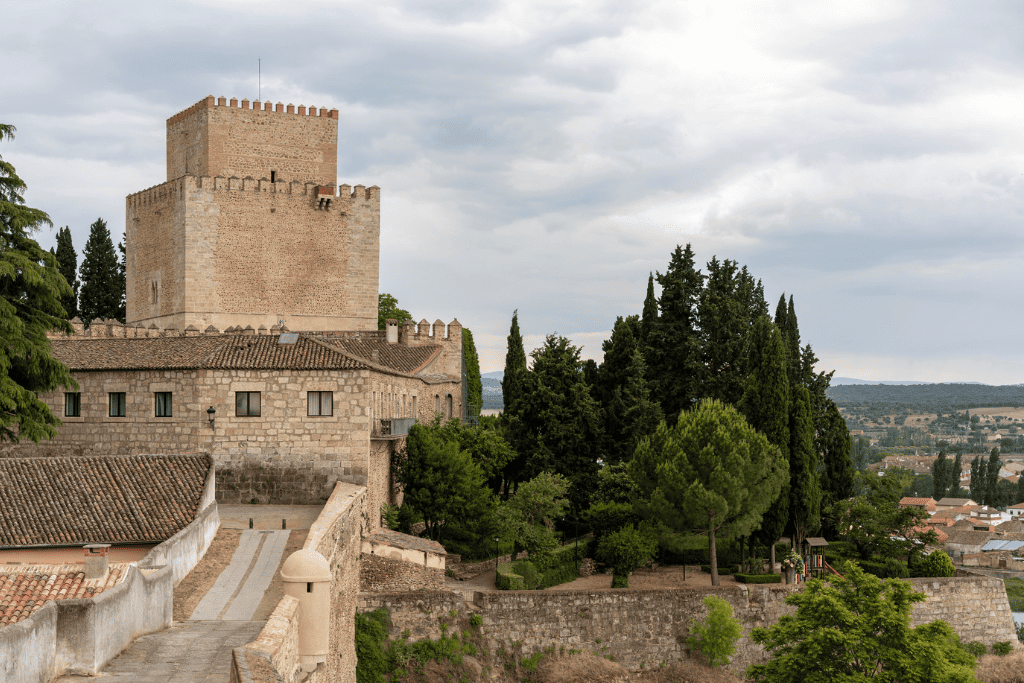
But upon crossing the threshold, the experience changes. It is no longer just an exterior image, but a living history. A history linked to lineages, to the border, to centuries of tension and power that still seem to echo within its walls.
The Parador’s balance lies precisely there, in the strength of its outline and, at the same time, in an interior that surprises the visitor with tapestries, carvings and historical pieces that enrich the space without detracting from its accessible and light-hearted character.
And when you leave the Parador, the journey continues naturally. Because Ciudad Rodrigo is not merely a setting; it is an essential part of the experience. Strolling through its walled enclosure, pausing at its viewpoints or wandering in its streets is to extend the history beyond the castle.
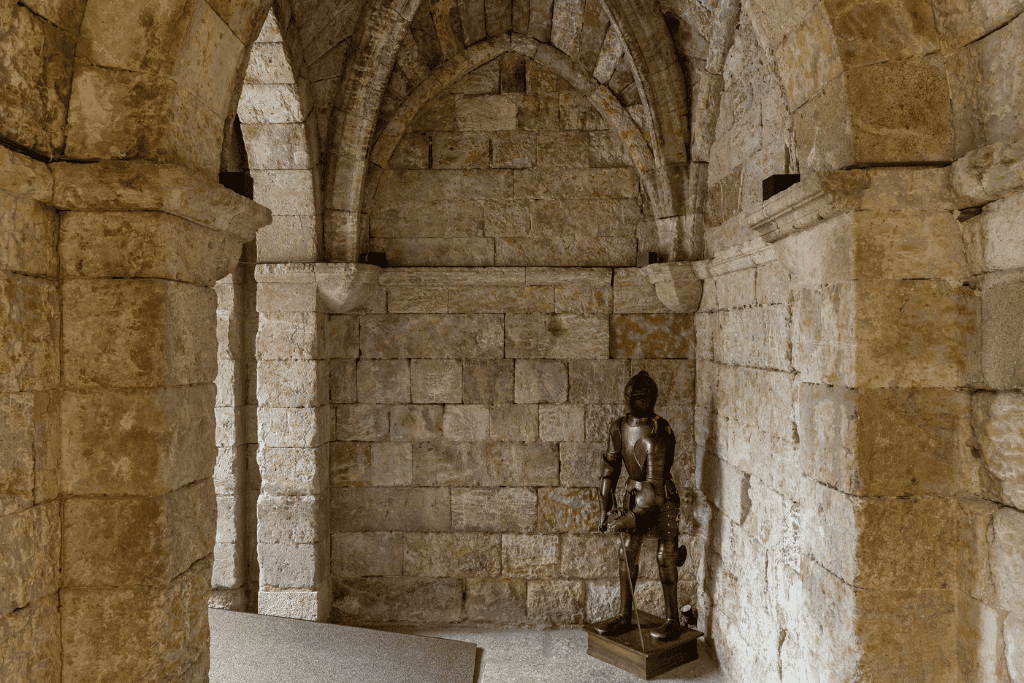
Its heritage offers new perspectives on the place, with tours and cultural activities that help you understand episodes such as the War of Independence and the city’s strategic role over the centuries.
History across cultures
The Parador de Alcañiz does not reveal itself all at once. Unlike other castles, it does not seek to impress from afar. It works differently, allowing itself to be discovered little by little.
The Parador combines the strength of a castle with the tranquillity of a convent, creating a unique atmosphere. Because here there is not just one story, but several coexisting side by side. The Arab, Jewish and Christian legacies. A castle that was also a convent, a space where each room shifts the tone slightly.
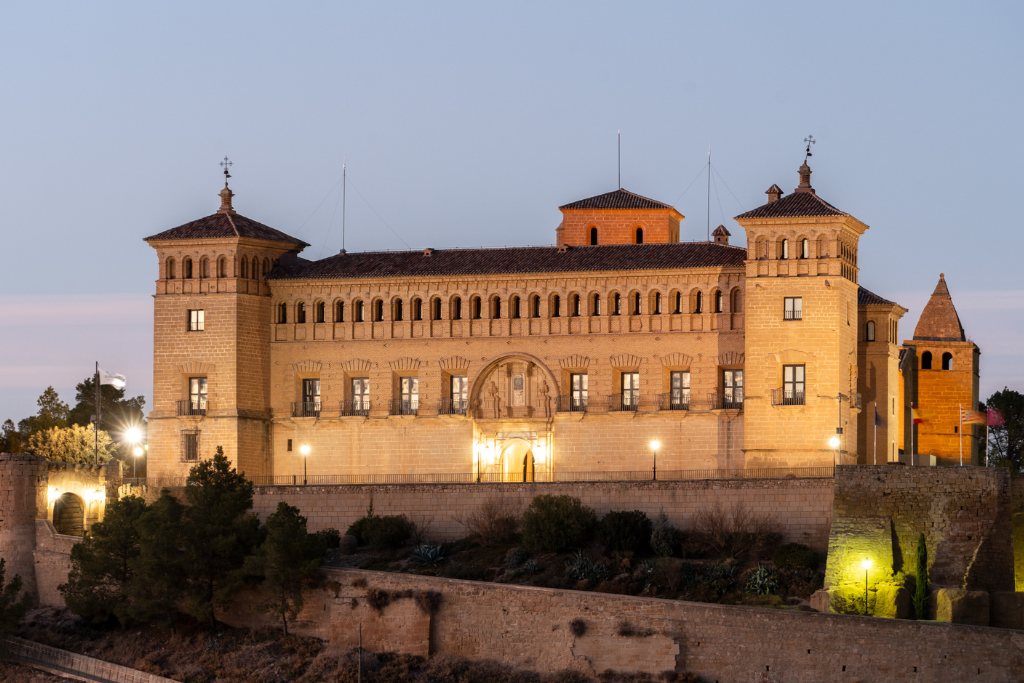
For a family, that changes everything. It is not a place you simply walk through; it is a place that sparks questions, curiosity and conversation.
The 14th-century Gothic murals make you pause, the cloister invites you to linger and observe, and the vaulted rooms alter the acoustics and light found elsewhere in the building. Without realising it, your journey has become more mindful.
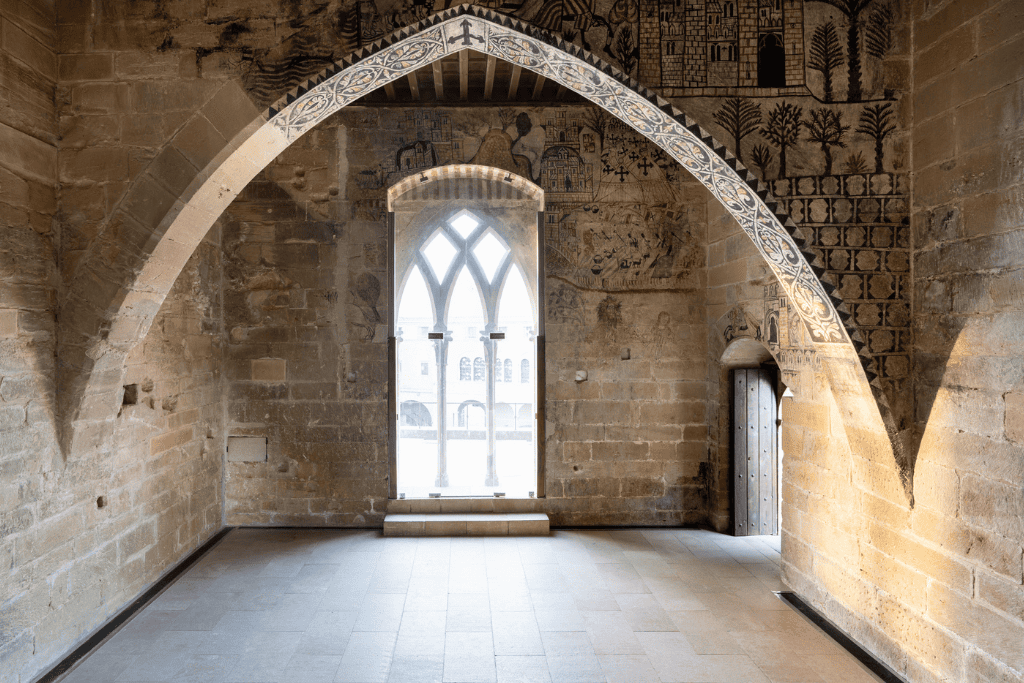
The surroundings reinforce that same feeling. Strolling through Alcañiz or venturing into Lower Aragon enhances the experience without disrupting it, like a natural extension of what you’ve experienced inside the Parador.
And in the end, what remains is not just the image of a castle, but the feeling of having explored a place that cannot be fully grasped at a single glance, but which is revealed little by little, even after you have left it.
Endless views and the essence of Andalusia
In the south, surrounded by mountains and a vast sea of olive trees, the Parador de Jaén is situated next to Santa Catalina Castle, offering one of the most spectacular panoramic views in Andalusia.
Arriving at the Parador means a change of perspective, quite literally. Not only because of the height, but because of the way the landscape takes centre stage from the very first moment.
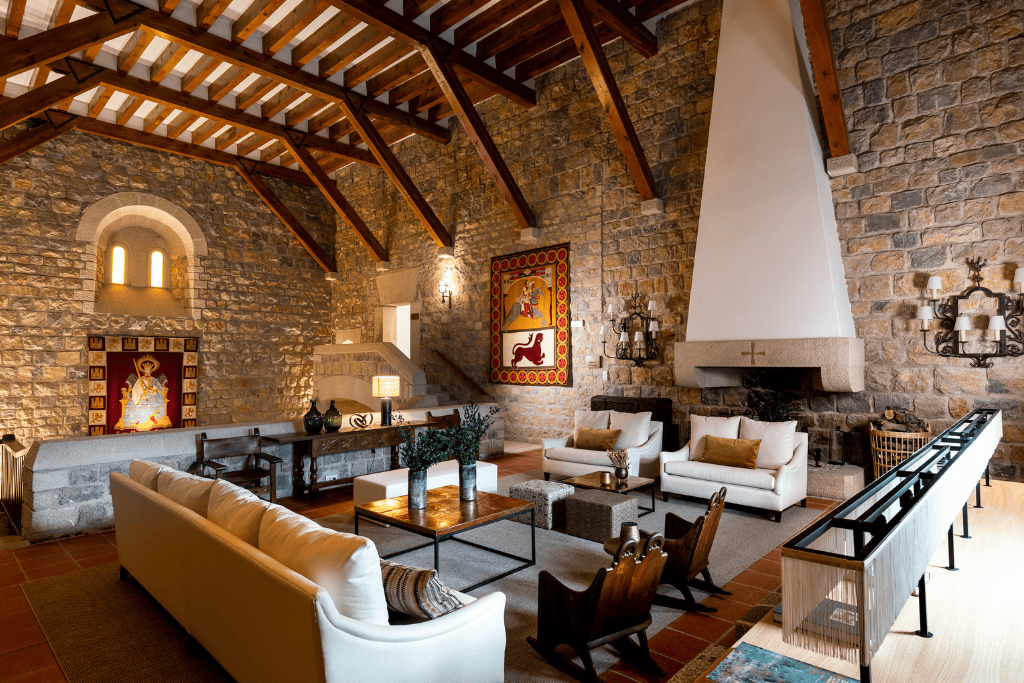
The Parador combines history, nature and gastronomy in a single setting. From its walls, you can gaze out over the city of Jaén, known as the world capital of olive oil, whilst in its dining rooms you can enjoy the rich culinary tradition of Andalusia.
For a family, this means variety. It means being able to combine the experience of staying in a fortress with more open-ended, dynamic plans.
What’s more, its location makes it the perfect base for exploring nearby towns such as Úbeda and Baeza, brimming with heritage and charm.
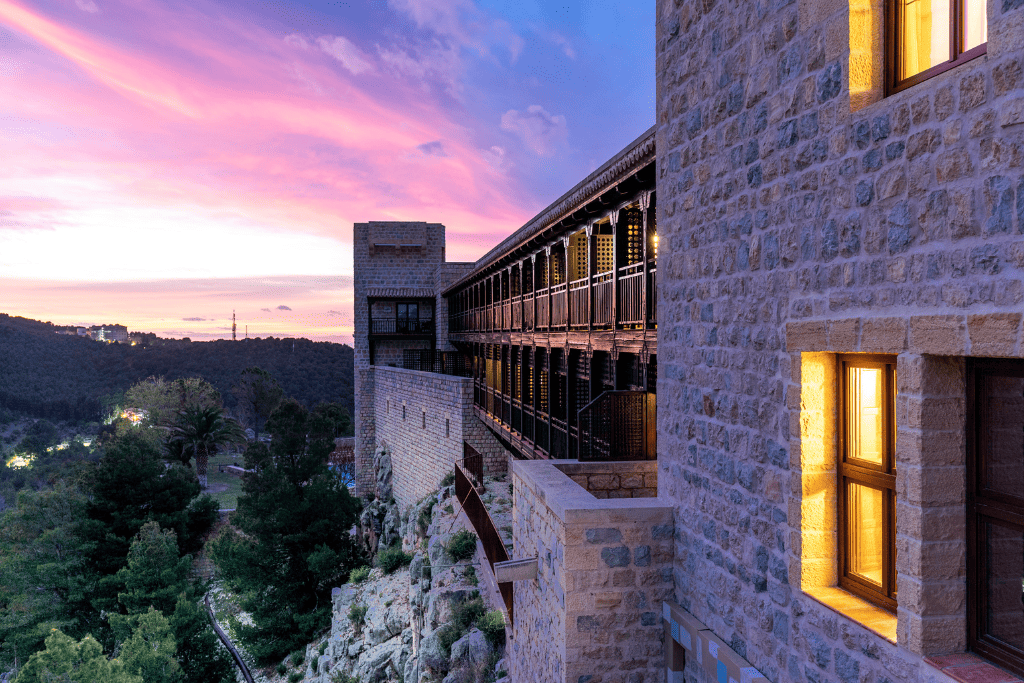
Until that moment arrives: sunset, the light falling over the olive groves, the silence, and that feeling of being in a place that has it all.
You won’t find a sunset quite like it.