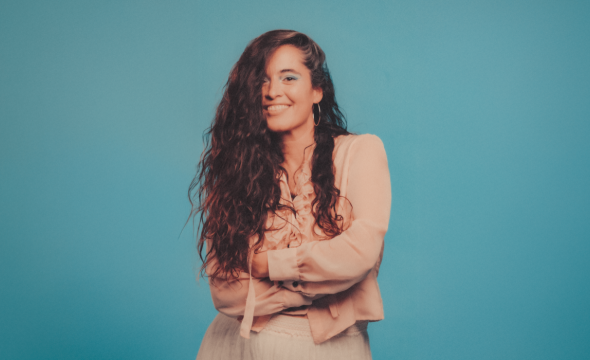
As a successful writer, she has not lost the reflexes she honed during her years in journalism. That explains her particular gaze on the world, which crystallises into stories like El niño que perdió la guerra (The Boy Who Lost the War), her latest novel. Julia Navarro has written a moving tale about identity and the overwhelming power of culture. Even in the darkest moments of history, hope finds a way through.
It’s been just over twenty years since your first novel, La hermandad de la Sábana Santa (The Brotherhood of the Holy Shroud). Does time pass just as quickly for successful writers as it does for the rest of us??
It's exactly the same, although, although every now and then you look back and realise everything you’ve lived through. As you get older, time seems to go by even faster..
You turned to fiction after a solid career in journalism. What has that profession given you as a novelist?
I can’t explain who I am without having worked as a journalist. It gave me the tools I needed to write my novels. A journalist lives many lives. This job allowed me to be in places I’d never have reached otherwise. I’ve been backstage and seen what goes on beyond the view of a mere traveller. I’ve witnessed wars, political crises, and presidential elections in various parts of the world. I’ve met all kinds of people and listened to their stories. These experiences accumulate in your memory, and when you sit down to write, they’re indispensable.
Your latest novel, El niño que perdió la guerra (The Boy Who Lost the War), hurts because it is so current, despite beginning at the end of the Civil War.
Authoritarian regimes are still very much alive today. If we count the number of democracies in the world, the result is rather alarming—there aren’t as many as we might think. Totalitarian regimes, on the other hand, are everywhere.
Seeing the rise of these regimes, it feels like history is repeating itself - will it do so as tragedy or as farce?
Fortunately, history doesn’t repeat itself exactly, because the circumstances and the players are different. We may no longer see men in harnesses, but these authoritarian governments present themselves in other guises. That’s the danger—that we fail to see what lies behind certain political leaders and parties that are, in essence, authoritarian constructs. Autocracies are not far off. Right now, there are countries where people vote, but the elections are a farce. Voting alone doesn’t make a regime democratic—other elements are essential.
Are we more forgiving of autocrats who resemble us?
The problem is that autocracies often disguise themselves as democracies. But democracy is a complex system that requires much more than elections. It depends on the separation of powers and the protection of fundamental freedoms.
In every conflict there’s a great divide between those who lead it and those who suffer it—especially children.
Children always lose their parents’ wars. They don’t choose the conflict, but they’re the first to suffer its effects. If their parents are on the losing side, they pay the price too. What scandalises me most today is that, although there are many wars going on, it feels as if only two of them exist. We have a highly selective view of armed conflict—our gaze extends only as far as European or Western interests. There are many other wars where children are dying and terror is a daily reality, but they don’t make the news. I’m outraged by this distinction between first-class and second-class wars. No one seems to care that some people are forced to live in refugee camp.
How can we protect ourselves against these tragedies?
If only there were a vaccine. But the history of humanity is a history of unrelenting violence. We should learn from the past, but despite centuries of civilisation, we haven’t. Sadly, knowing history isn’t enough to avoid repeating it. The evidence is plain to see.
Why do we find it so hard to empathise with those fleeing poverty or war?
This xenophobic attitude that has taken root in Europe aims to stop outsiders from coming in. But no one leaves their home and family unless they have a compelling reason. People migrate to escape violence and hunger. What’s worrying is the rise of political parties that thrive on the suffering of other human beings who are simply searching for a better life. No wall can keep them out, because the history of humanity is a history of migration. The only difference is that now we watch it unfold live on television. Anyone who believes their ancestors always lived in the same place is quite frankly an idiot.
You’ve said that journalism allowed you to listen to people’s stories...
Yes, I’ve had the chance to hear the stories of people I’ve met along the way, and that’s been immensely enriching. That’s why I say a journalist lives many lives. You don’t go to a place as a tourist—you go to get a feel for reality.
What do you look for in a trip? I can't imagine you in an all-inclusive Caribbean resort with a wristband…
Please don’t picture me there! (laughs). I went to one of those with my husband. We were supposed to stay ten days—by day four, we’d left. We looked at each other and said, “What are we doing here?” For me, travelling is one of the guiding themes of my life. I like to travel by paying attention to what’s around me. One thing that really irritates me is that people now travel just to say, “I’ve been there.” In St. Mark’s Square in Venice, you see people taking selfies but not actually looking at the basilica. It’s the same all over the world, and I find it deeply irritating. To me, that’s not travelling. Travelling means spending hours in a square, listening to what people have to say, wanting to get lost in a city. Travelling is discovering..
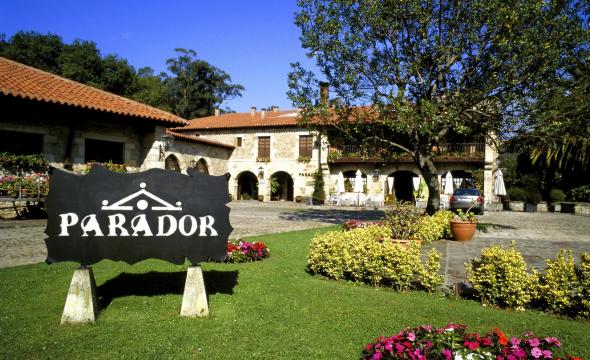
So you must be a fan of Paradores...
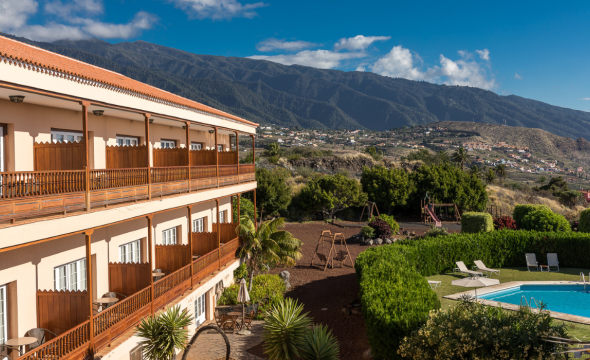
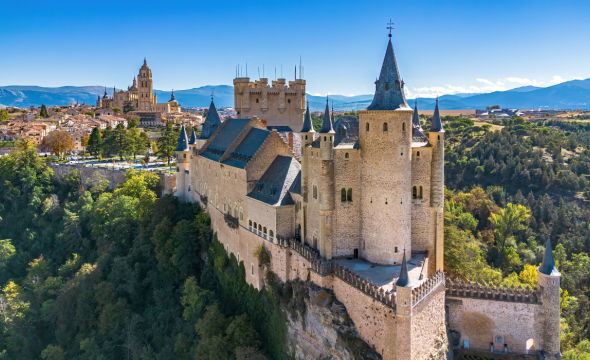
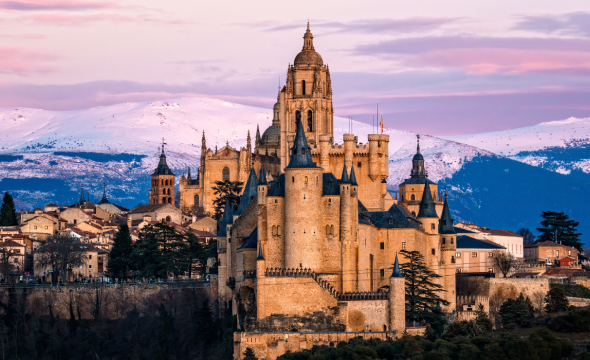
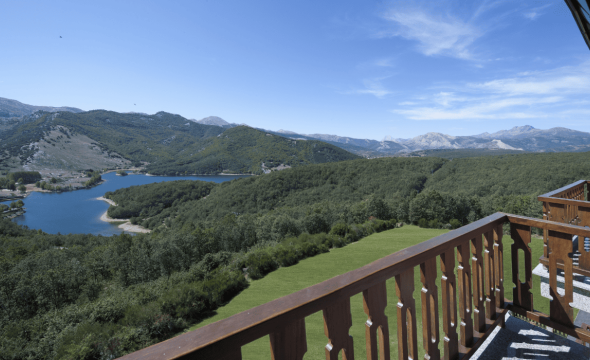
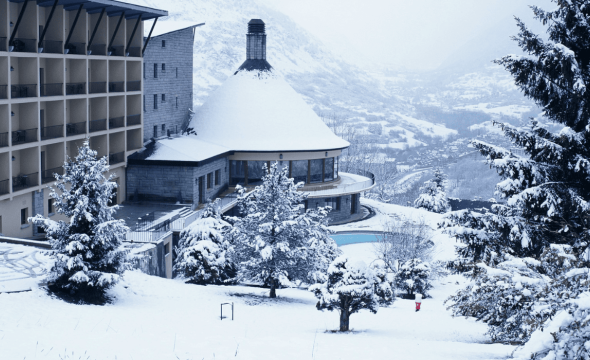
I love staying at Paradores! When I travel around Spain, they’re my first choice. When I go to Santiago, for instance, I always stay at the Parador. It’s one of my favourites, along with the ones in Chinchón and Zamora. I especially enjoy those that have been built upon a place steeped in history.