Sleeping in a medieval castle is always something special. But staying at the Parador de Sigüenza also means staying in a place full of stories, secrets and surprising episodes that many travellers are unaware of.
Would you like to discover them? These are some of the curiosities you may not have known about this historic castle.
It conceals a mysterious Romanesque chapel inside one of its towers
One of the unique spaces in the Parador is hidden inside one of its towers, a small Romanesque chapel that could be the oldest architectural element preserved in the castle.
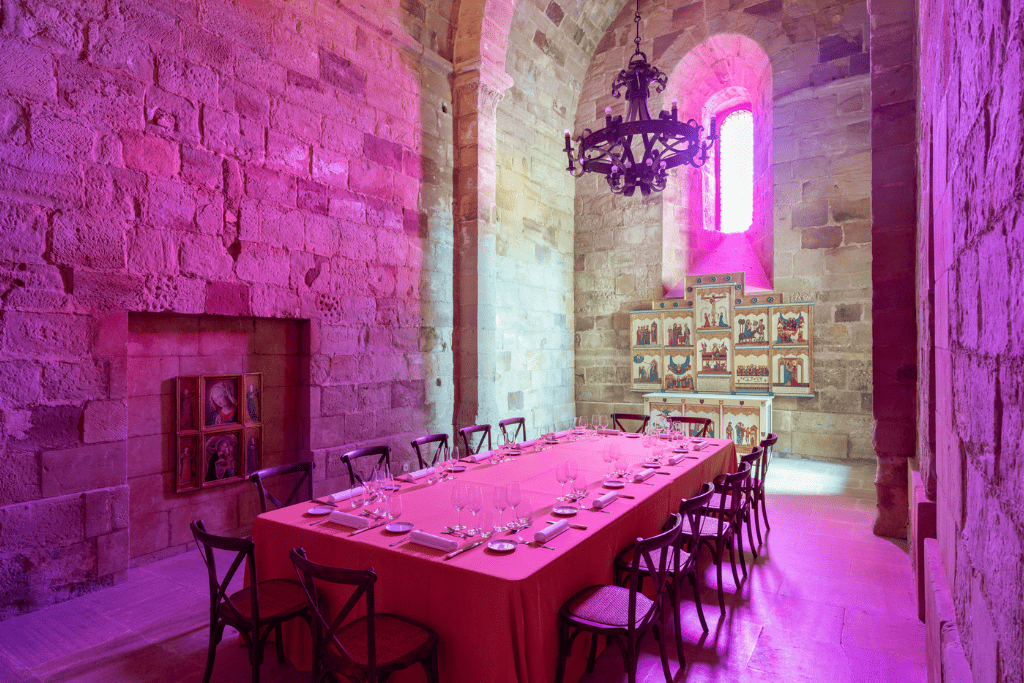
It is a sober, single-nave, vaulted space whose origin continues to raise questions among historians. Some studies suggest that it may be related to the ancient church of the Holy Cross, while other theories suggest that it was the first church to be built in the city after the Christian reconquest.
Documents from the time of the ecclesiastic and military leader Bernard of Agen mention a fortified church with walls and towers that could well refer to this space.
Whatever its exact origin, today it is still a place full of charm, and is sometimes transformed into a setting for very special celebrations, such as weddings or banquets.
It has been the setting for several international films
The castle has also fascinated the world of cinema. Its medieval walls and courtyards have been used as a backdrop for several film productions.
One of the most famous shoots was the film Christopher Columbus: The Discovery (1992), directed by John Glen. During the filming, Marlon Brando played the inquisitor Torquemada and very discreetly visited the castle. The cast also included Tom Selleck, Benicio del Toro, Catherine Zeta-Jones and George Corraface.
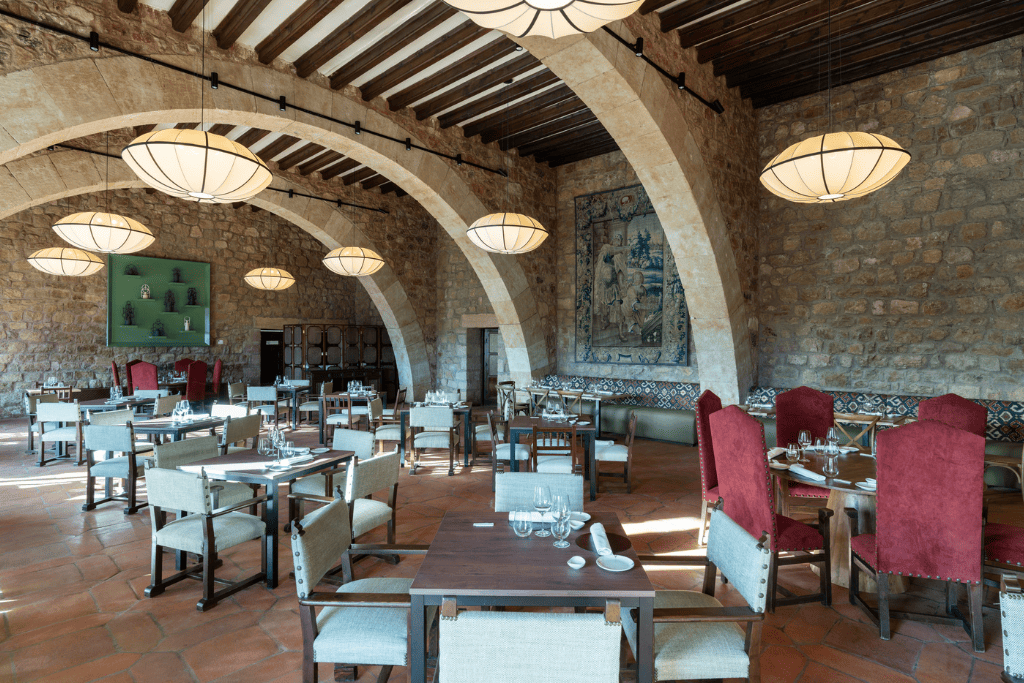
The former Throne Room, today converted into a restaurant at the Parador, was one of the main locations for the filming. The exteriors in front of the castle barbican and the inner courtyard, which in the film was transformed into the stables of the King of Portugal, were also used.
It has also recreated historic moments in Spanish cinema
The castle was again used as a set for several subsequent productions. In La pasión turca (The Turkish Passion ) (1994), directed by Vicente Aranda and starring Ana Belén, the imposing entrance to the castle features prominently in a scene in which the protagonist arrives by car at the parade ground.
The Parador also appears in El florido pensil (2002), which used some of the castle's exteriors.
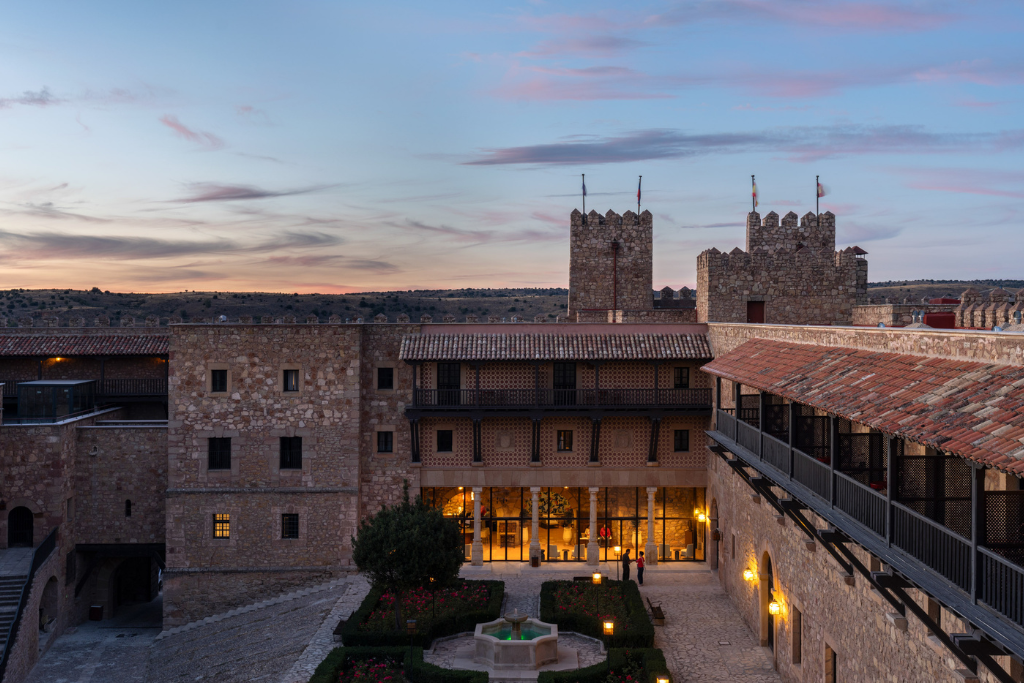
But perhaps one of its most memorable film moments was its appearance in Juana la Loca (Mad Love) (2001), again directed by Vicente Aranda. In this film, the castle recreates a key event in history: the death of Philip the Handsome, played by Daniele Liotti. In one scene, the king enters the parade ground on horseback before receiving the infamous glass of water that triggers the illness that will end his life. Pilar López de Ayala's performance in the film won her the Goya Award for Best Actress.
A castle turned into a Parador
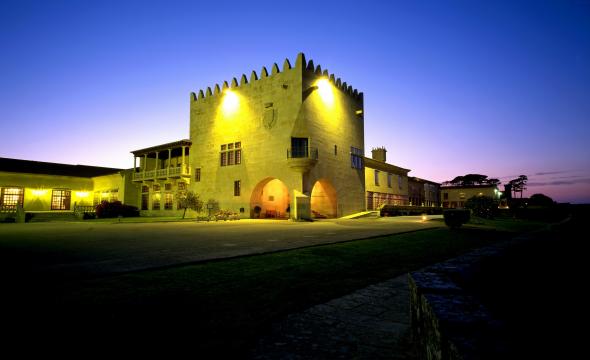
At the top of the city stands the imposing castle that today houses the Parador de Sigüenza, a medieval fortress that for centuries was the residence of kings, cardinals and bishops. Built in the 12th century on the site of an old Arab citadel, its outline dominates the landscape of Sigüenza and has become one of the most recognisable symbols of the city.
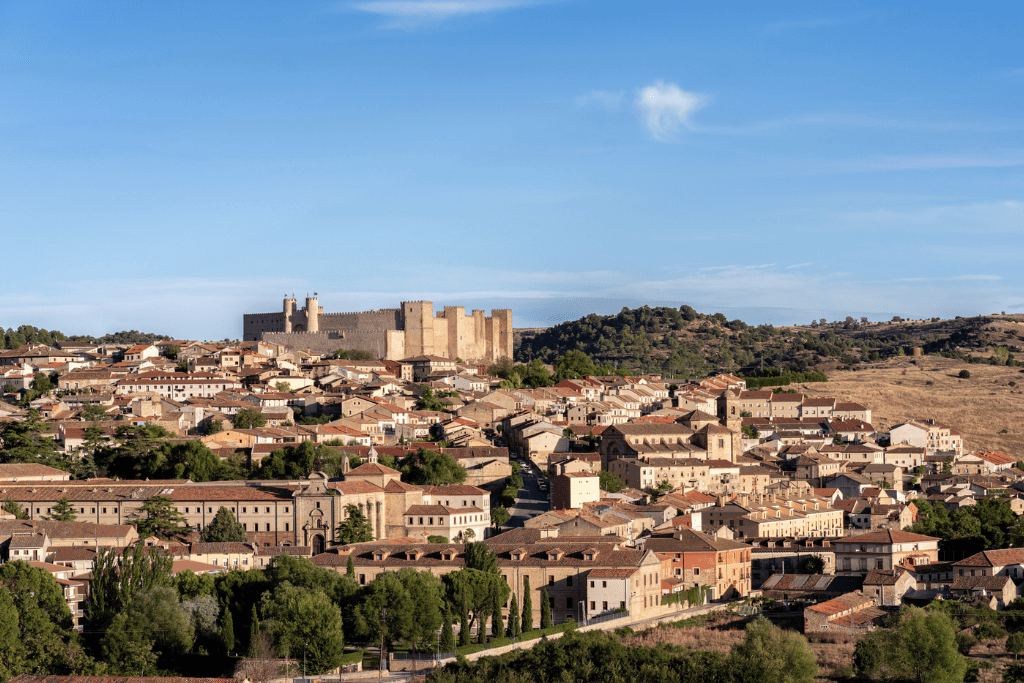
Behind its thick stone walls are hidden spaces that preserve the character of the old fortress: cobbled courtyards, vaulted corridors and rooms that evoke life in the Middle Ages. The former Throne Room, today transformed into a restaurant, and its Romanesque chapel are just some of the spaces that allow us to imagine what life was like in this castle centuries ago.
Staying here is, in a way, like travelling back in time. Each room combines the historic charm of the building with modern comfort, allowing visitors to enjoy a unique experience in a place where history is still very much alive.