Few regions in Europe can boast such an intact medieval landscape as Castile and Leon. In this community there are more than 300 castles that can be visited, a figure that makes it the region with the highest concentration of fortresses on the continent. On cliffs, overlooking rivers or integrated into historic centres, these buildings narrate centuries of battles, noble lineages and shifting frontiers.
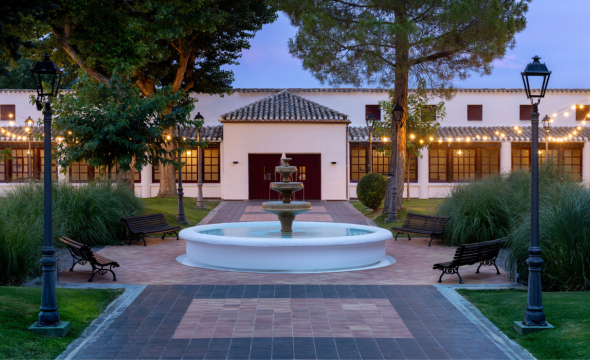
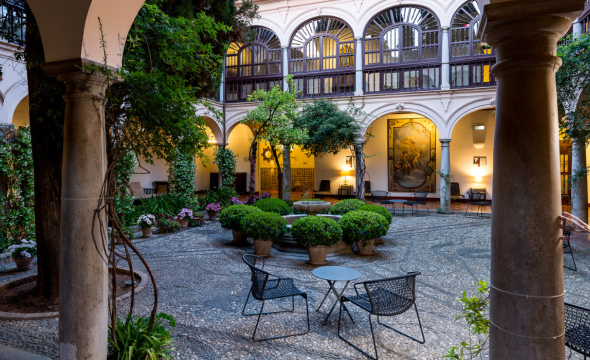
But there is an even more special way to complete this route through fortresses and that is to stay overnight in them. At Paradores, we know how to do this well, as many of our hotels are housed in ancient palaces, monasteries, monumental buildings and even castles, and many others are located just a few kilometres from some of these fortifications. Thus, the journey becomes a real immersion in history.
From north to south and from east to west, these are some of the must-see castles of Castile and Leon and the perfect Parador to explore them at your leisure.
Simancas Castle
A few kilometres from Valladolid, the castle of Simancas dominates the confluence of the Duero and Pisuerga rivers, a strategic location that for centuries marked the borderline between Christian and Muslim territories. The famous battle of Simancas took place here in 939, in which the troops of King Ramiro II managed to stop the advance of the Caliph Abderramán III.
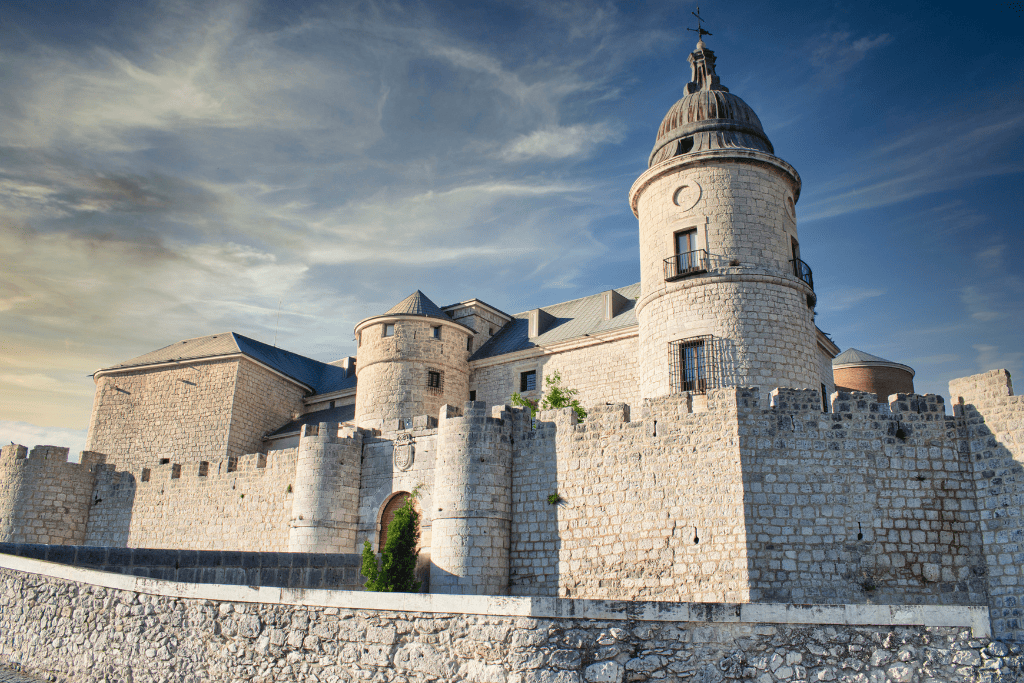
The building of the fortress we see today was begun in the 15th century by the powerful Enriquez family, admirals of Castile. Shortly afterwards, the Catholic Monarchs incorporated the castle into the Crown and, in the times of Charles V and Philip II, it was transformed into the General Archive of the Kingdom, a function that it still retains today.
Its walls, moat and towers surrounding the central courtyard are reminders of its defensive past, while inside there are Gothic and Renaissance elements resulting from alterations carried out to house historical documents.
To discover it at your leisure, we suggest you stay at the nearby Parador de Tordesillas, a perfect place to explore the area’s historical heritage.
Cornatel Castle
In the heart of the Bierzo region, perched on a rocky promontory overlooking the Sil valley, stands the castle of Cornatel. This medieval fortress blends in with the terrain with an irregular profile that accentuates its defensive character.
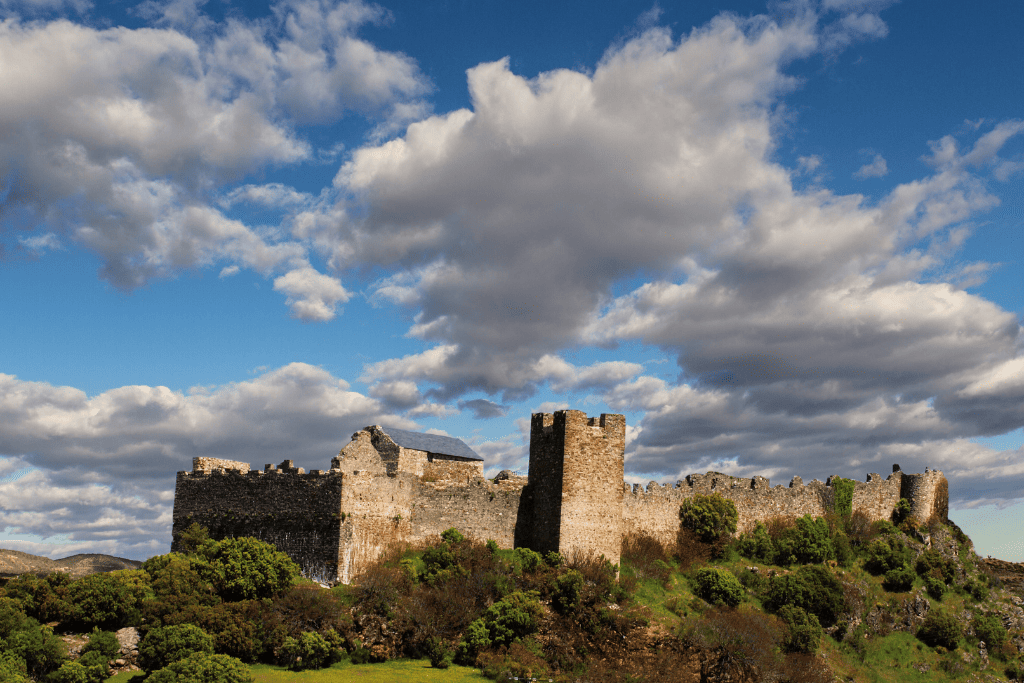
For centuries it was linked to the Order of the Temple, as was the nearby castle of Ponferrada. After the disappearance of the Knights Templar, it passed into the hands of the Count of Lemos, and over time became one of the most unique fortresses in the region.
The access, skirting the wall as the cliff opens up beneath your feet, is part of the experience. Today the castle hosts exhibitions and cultural activities that allow visitors to learn more about its history.
To explore this area of El Bierzo at your own pace, our recommendation is to stay at the Parador de Villafranca del Bierzo just 30 km away.
Alcázar of Segovia
Standing on a hill between the rivers Eresma and Clamores, its pointed outline and spire-topped towers make it one of the most recognisable landmarks in Spain.
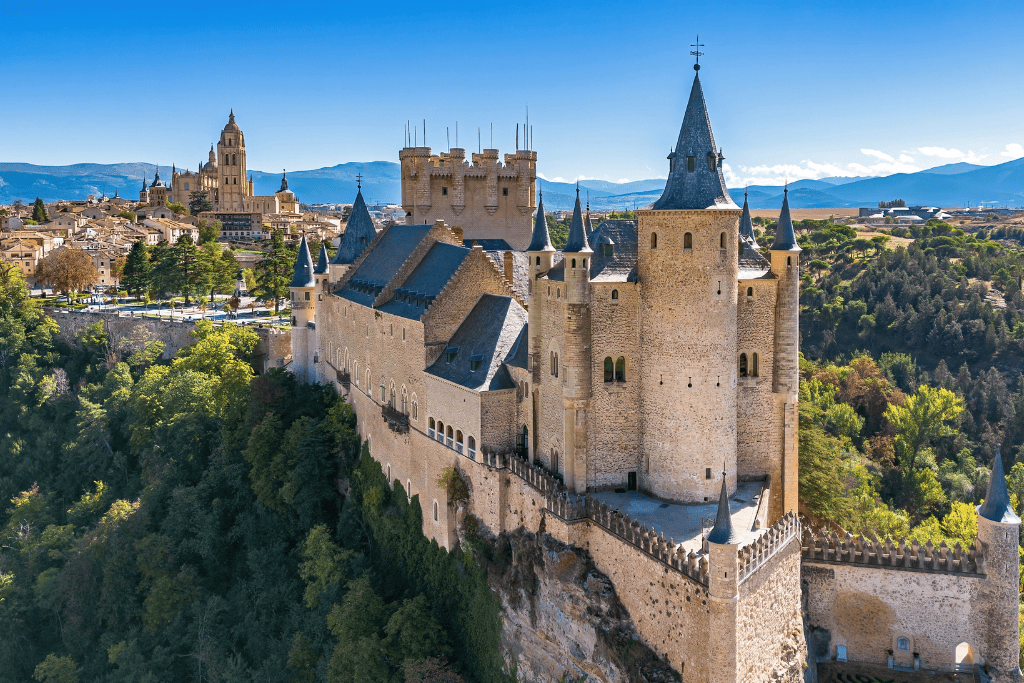
Its origins date back to the 12th century, although over the centuries it was extended and transformed until it acquired its current appearance. Kings, courtiers and soldiers have passed through its halls, and it was here that Isabella the Catholic was proclaimed queen in 1474.
The Alcázar is a mixture of Romanesque, Gothic, Mudejar and Renaissance styles, reflecting its long history as a royal residence, fortress and military academy.
To see it from one of the most beautiful panoramic viewpoints of the city, we have the Parador de Segovia, located in a superb position in front of the historic centre.
Coca Castle
The castle of Coca, one of the great jewels of Spanish military architecture, stands amidst the pine forests and countryside of Segovia. Built at the end of the 15th century by Archbishop Alonso de Fonseca, it is surprising for its main material: brick.
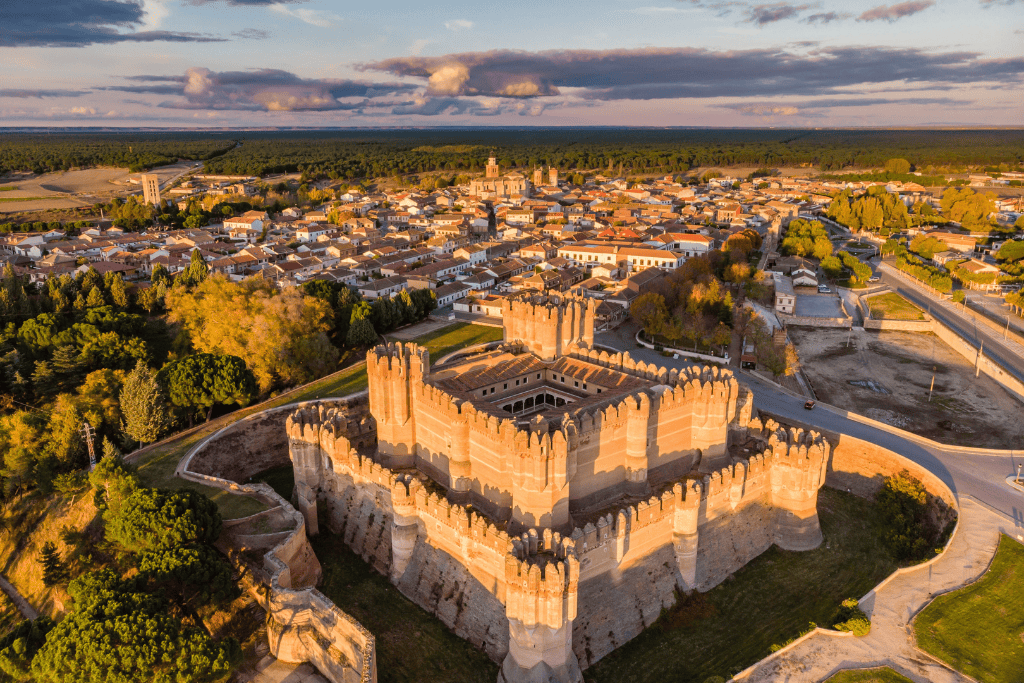
This Mudejar castle combines defensive and decorative elements with great elegance. Its walls, deep moat and polygonal towers create an imposing image that has made it one of the most spectacular castles in Castile and Leon.
From the Parador de Segovia you can easily visit it and follow a trail around some of the most iconic castles in the province.
Burgos Castle and its viewpoint
Although the original fortress of Burgos suffered serious damage during the War of Independence, the site where it stood remains one of the most special spots in the city.
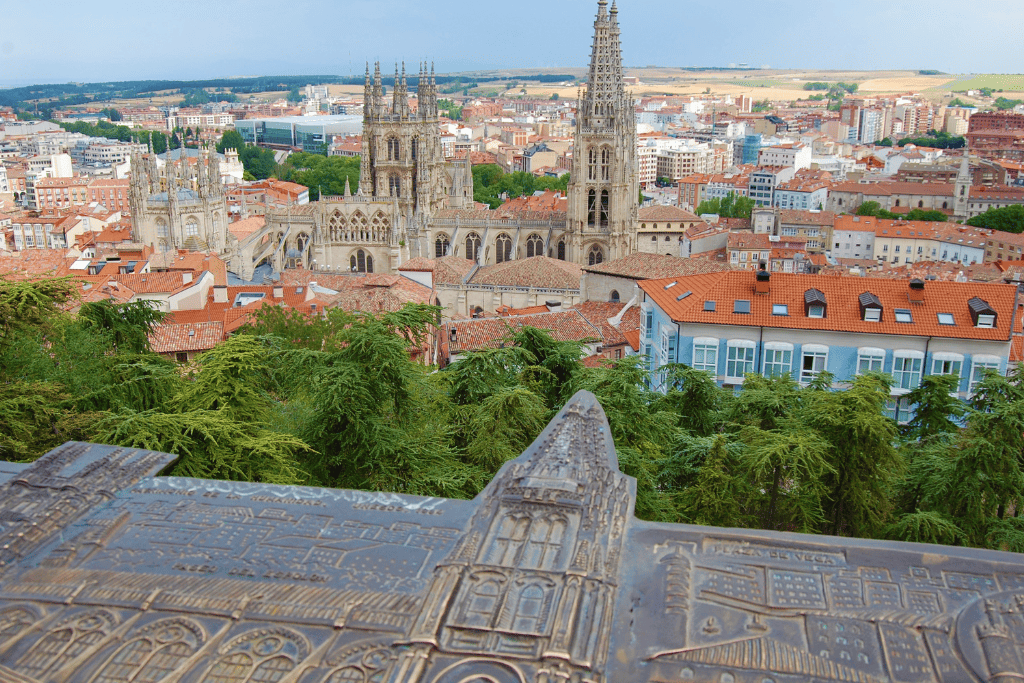
The castle's current lookout point offers one of the most impressive views of the historic centre and, especially, of the Gothic cathedral of Burgos. At dusk, when the light falls on the stone spires, the landscape resembles a panoramic shot in a feature film. To discover Burgos and its historic surroundings, you can stay at the nearby Parador de Lerma, housed in the former ducal palace.
Frías Castle
On top of a crag overlooking the Ebro valley stands the castle of Frías, one of the most spectacular medieval sights in Castile-Leon. The fortress seems to rise directly from the rock, guarding for centuries the roads that cross this area in the north of Burgos.
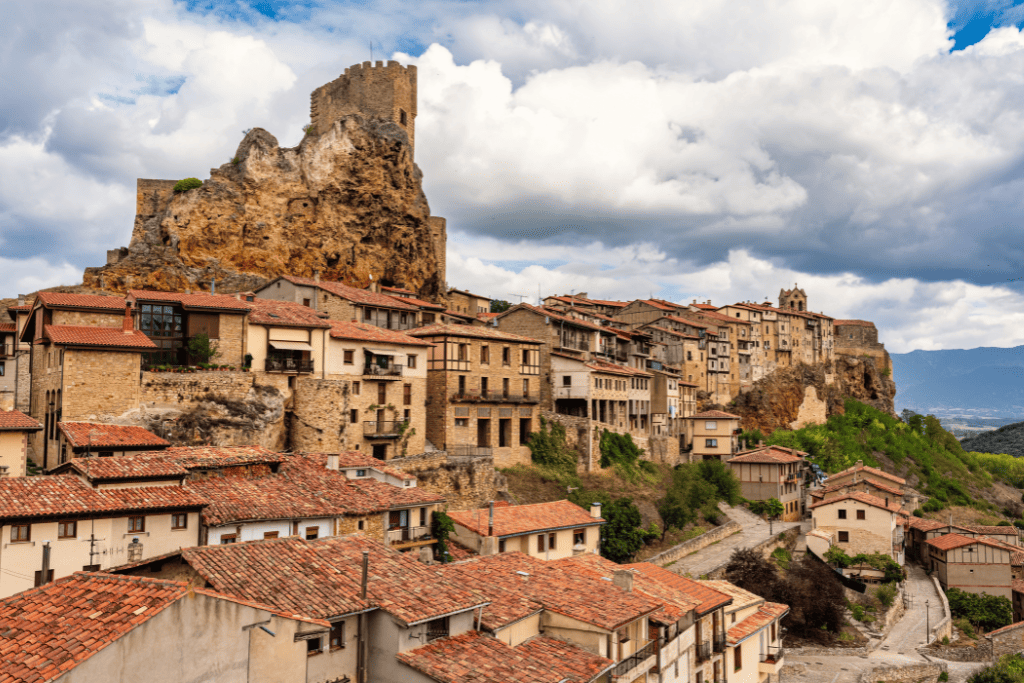
Its towers, walls and medieval windows recall the power of the Fernández de Velasco family, one of the most influential families in medieval Castile. The Parador de Lerma can serve as a base camp to explore different castles in the area.
Episcopal Palace of Astorga
Not all castle-like buildings are medieval. The Episcopal Palace of Astorga is a good example. Designed by Antonio Gaudí at the end of the 19th century, it combines neo-Gothic elements with the unique personality of the Catalan architect.
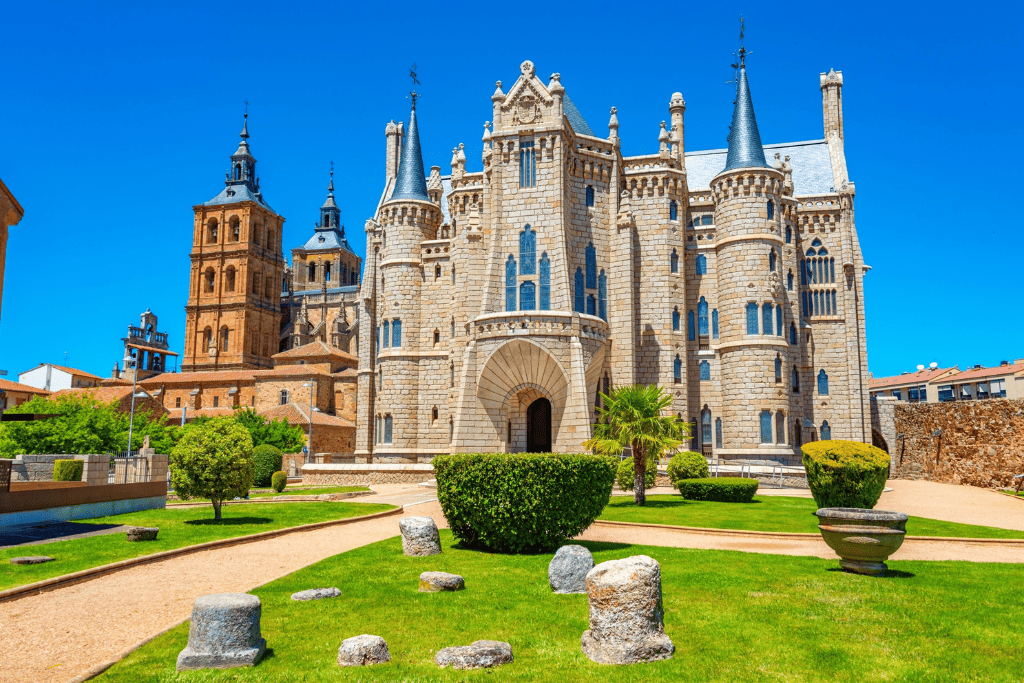
The result is a building reminiscent of a fantastic fortress, with towers, arches and stone walls that contrast with the nearby cathedral of Astorga. From the historic Parador de León you can easily reach this city on the Camino de Santiago.
Peñafiel Castle
On a long rocky ridge overlooking the vineyards of the Ribera del Duero stands the castle of Peñafiel, one of the most unique landmarks in Castile. Its narrow, elongated silhouette is reminiscent of a stone ship sailing over the hill.
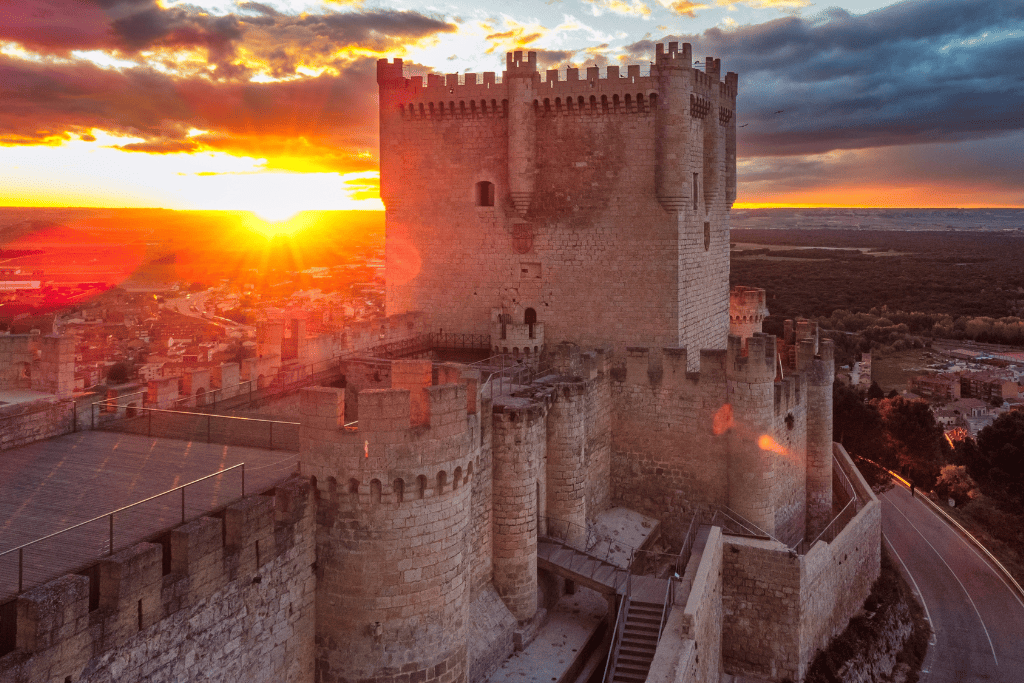
Built in the 15th century, it was a key element in the defence of the Duero line. Today it houses the Provincial Wine Museum, an essential visit to understand the region's winemaking tradition. To explore the area, from Paradores we suggest you stay at the Parador de Tordesillas, located approximately 90 km away.
Villafranca del Bierzo Castle
This 16th century castle reflects the evolution of fortresses into noble residences. Its square plan, circular corner towers and inner courtyard make it more like a fortified palace than a military fortress.
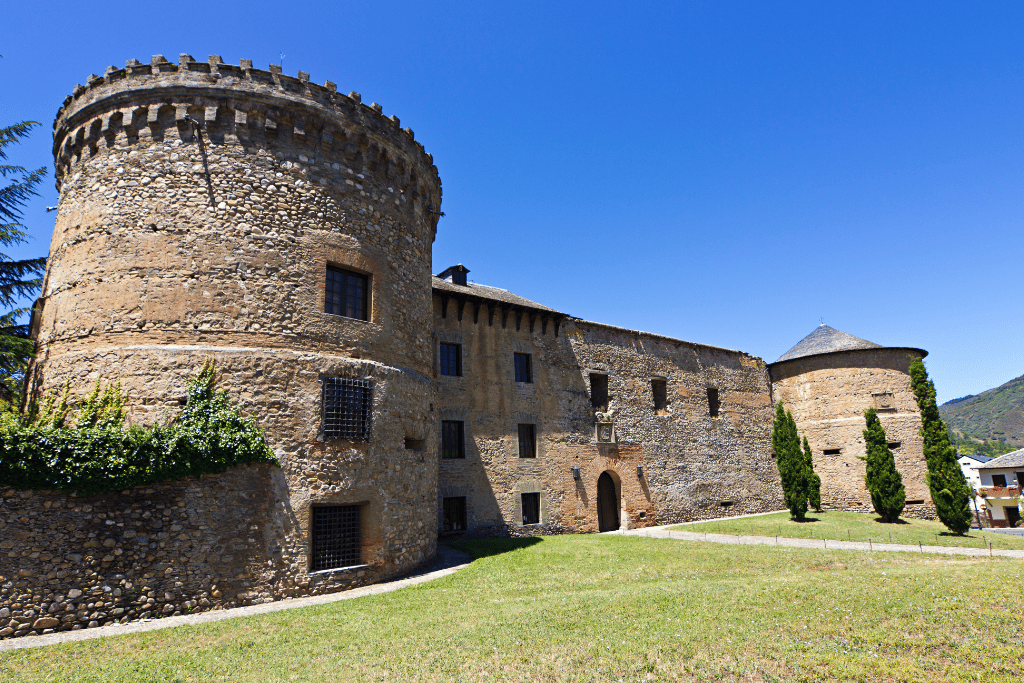
Villafranca del Bierzo was for centuries a key stop on the Way of St. James, which explains its rich history and monuments. The best way to discover it is by staying at the Parador de Villafranca del Bierzo itself.
Ampudia Castle
In the province of Palencia, the castle of Ampudia is one of the best examples of a 15th-century stately fortress. Its trapezoidal ground plan and square corner towers give it an unmistakable outline.
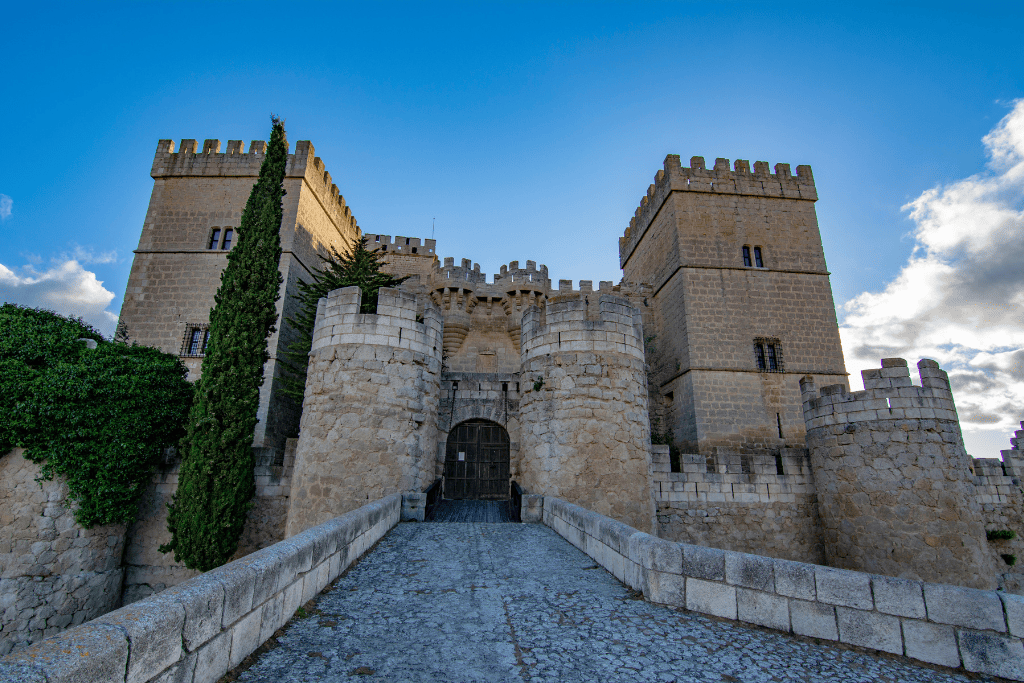
After a careful restoration process, it now houses an interesting collection of art and antiques that allows you to tour its historic rooms. To visit it, we suggest staying at the Parador de Tordesillas 49 minutes away by car.
Templar Castle of Ponferrada
In the middle of the Camino de Santiago stands one of the most impressive fortresses in northern Spain: the Templar castle of Ponferrada. Its origins date back to the 12th century, when King Ferdinand II gave this stronghold to the Order of the Temple to protect pilgrims.
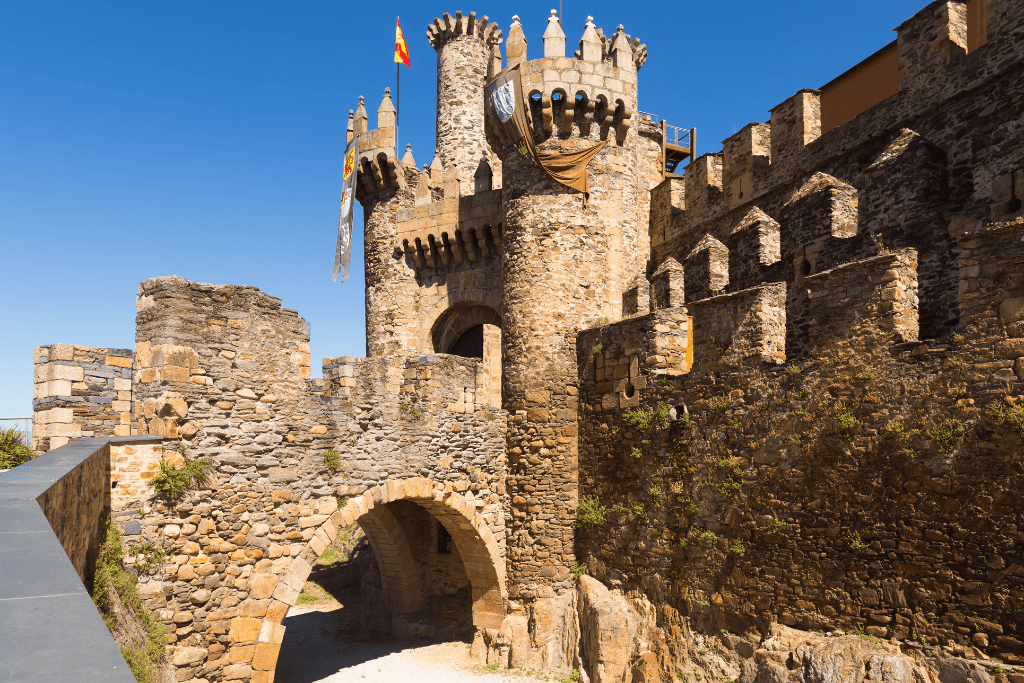
Over the centuries it was extended and transformed into a palace by various noble lineages. Today it occupies more than 8,000 square metres and has become the great historical symbol of the city. To explore the Templar Bierzo, the ideal base is the Parador de Villafranca del Bierzo, very close to the area.
Zamora Castle
Built in the 11th century by order of Ferdinand I, the castle of Zamora was originally intended as a fortress to protect the city and control the passage of the Duero River.
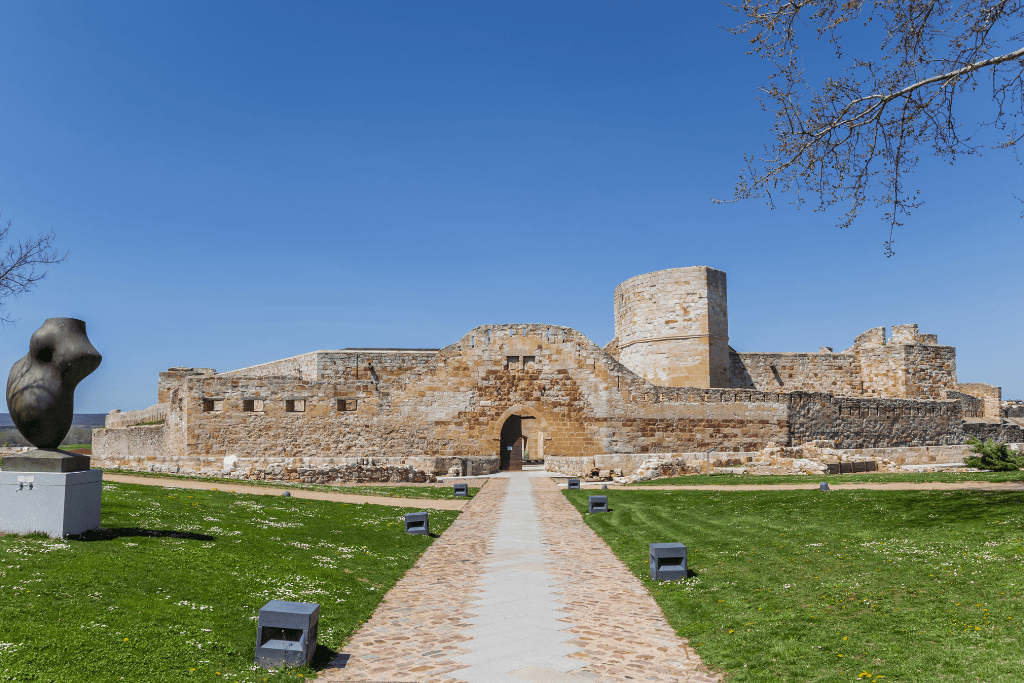
Its rhomboidal layout, surrounded by concentric defensive structures, reflects its military character. After several phases of restoration, today you can walk around the enclosure and the surrounding gardens, enjoying magnificent views over the river.
To complete the historical experience, we have the Parador de Zamora, located in a Renaissance palace in the heart of the old town, which will reopen its doors on 31 October.