Because the journey begins long before you sleep within medieval walls, right there in its towers.
An entrance designed to impress (and defend)
Arriving in Alarcón is not simply a matter of entering a town. It is stepping into a carefully designed military strategy which, in the Middle Ages, turned this town into a virtually impregnable fortress.
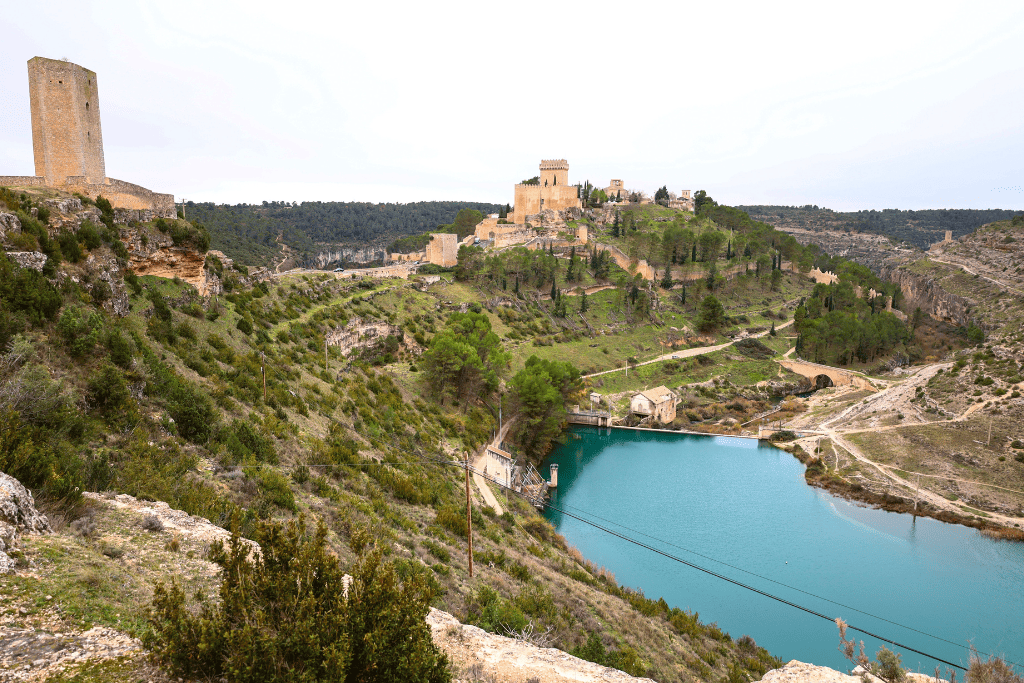
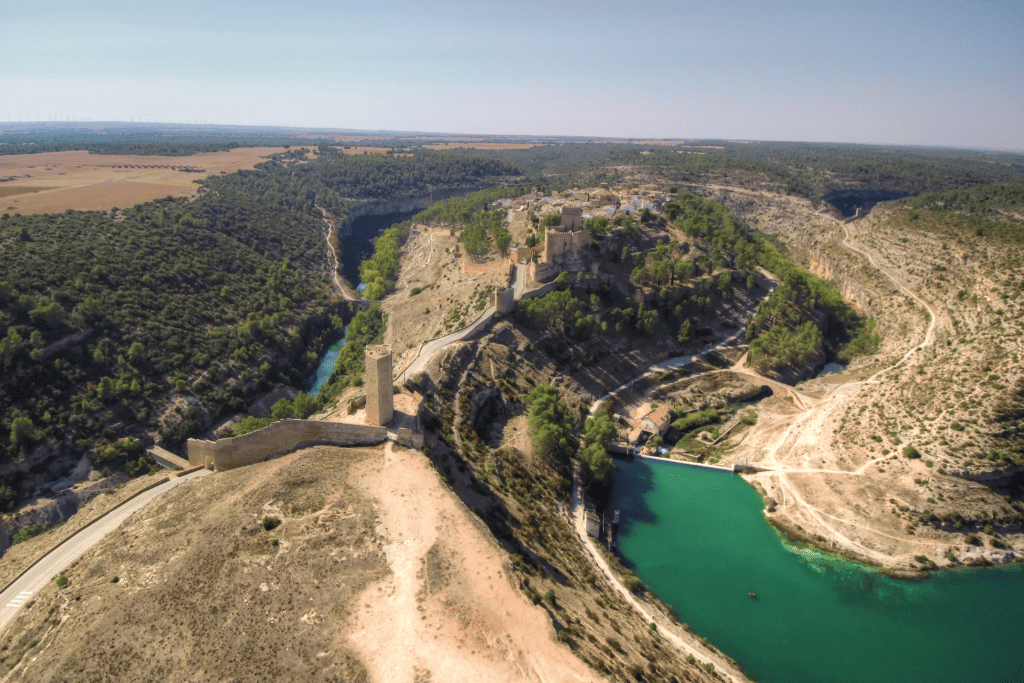
The route begins with the imposing presence of the Torre de Armas, also known as the Torre del Campo, standing isolated and watchful. It served as the first warning; from that point onwards, everything was under surveillance.
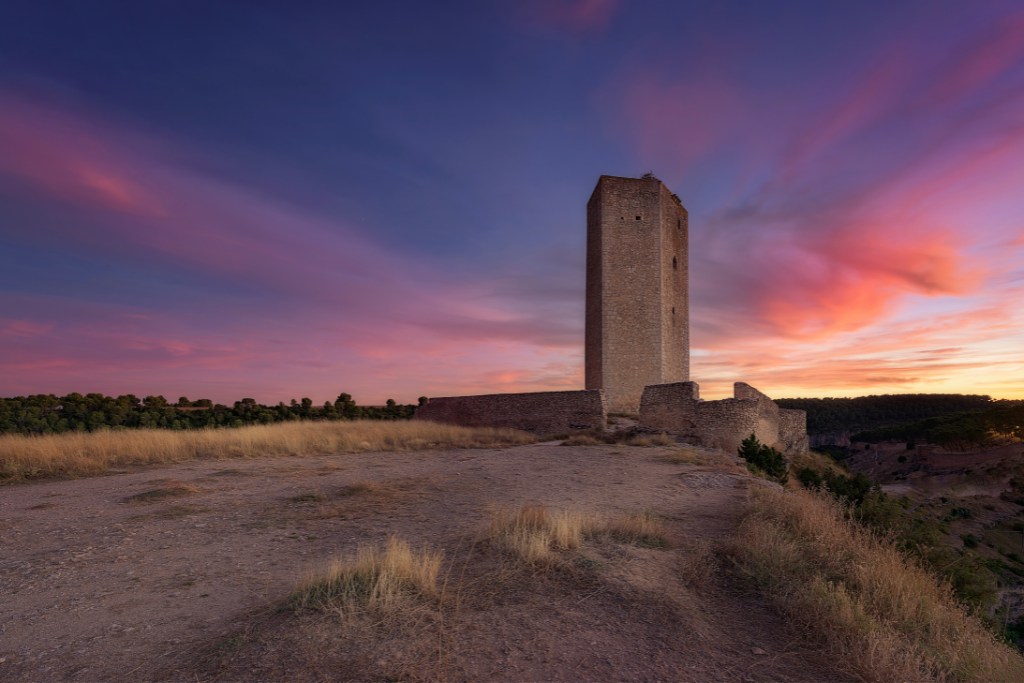
A little further on, at the narrow pass connecting the town to the outside world, stands the Torre de Enmedio or Torre del Calabozo. Here, the access becomes narrower, more controlled, more strategic.
Nothing is left to chance. Each tower forced visitors to stop, turn, and expose themselves. In the event of an attack, the enemy’s advance was slowed whilst the defence gained the upper hand. It was pure military intelligence set in stone.
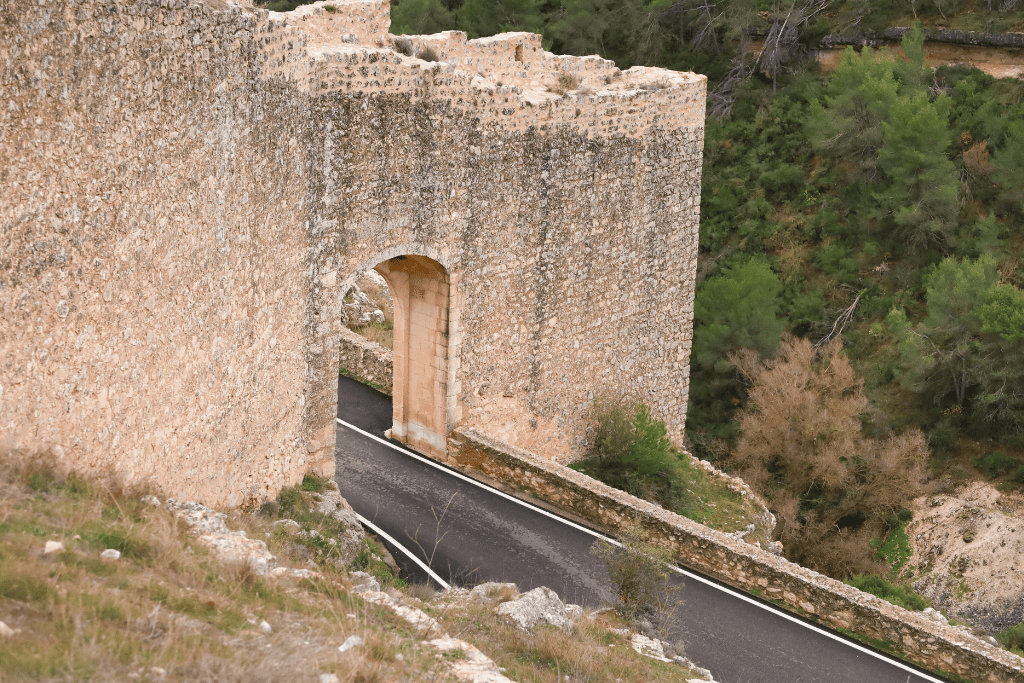
Although this is the main way in, Alarcón had other key entrances that completed its sophisticated defensive system.
To the south, the Puerta de Chinchilla controlled land routes. To the north, the Puerta del Río, also known as the Puerta del Pilar, guarded the passage by the water. And next to the castle, the evocative Puerta de la Traición offered a discreet exit in times of siege.
Each entrance had its function. Each element formed part of a perfectly coordinated mechanism.
Three walls… and a castle watching over it all
But the most surprising thing comes next: Alarcón did not have a single wall, but three successive walled enclosures, reinforced with towers and adapted to the rocky terrain that follows the river’s meandering course.
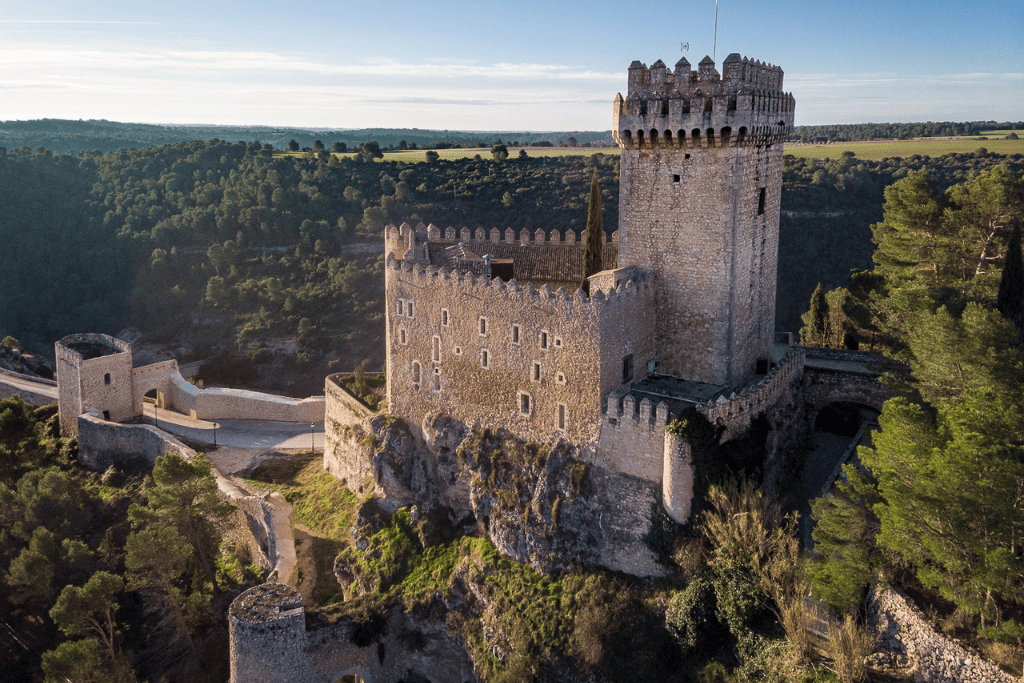
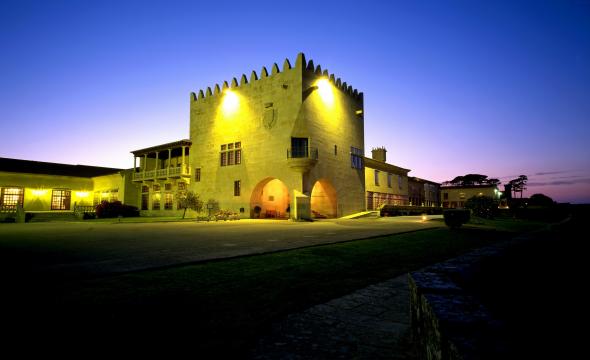
The result: one of the most complete defensive systems in medieval Spain. And crowning it all, the castle. Now converted into a Parador. This building holds more than thirteen centuries of history. From a pre-Roman fortress to an Arab citadel, and later a Christian stronghold following the conquest of 1184, its walls have witnessed centuries of history.
Its imposing keep, visible from afar, not only symbolised power but was also the last refuge in the event of a siege.
Sleeping inside a royal fortress
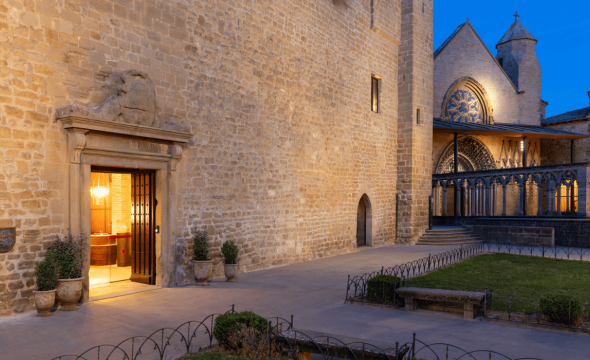
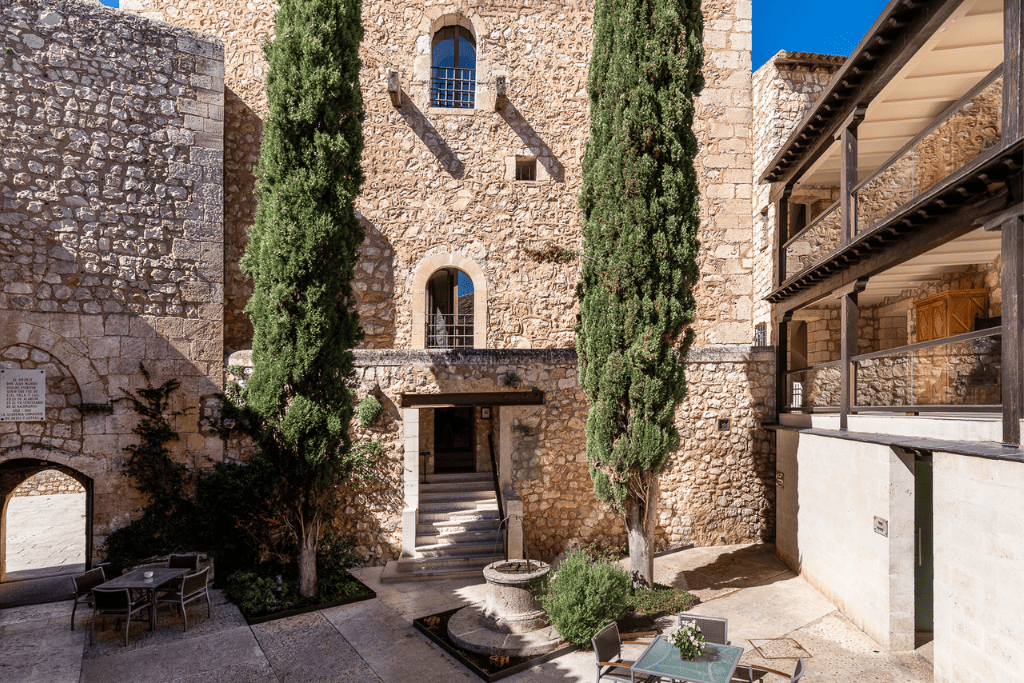
The fascinating thing is that this entire system is still alive today. When you arrive at the Parador de Alarcón, you are actually passing through the final piece of that defensive mechanism, the heart of the castle. Its inner courtyard, its stone walls and its dominating position overlooking the River Júcar place you right where the defences ended. Sleeping here means becoming part of history and enjoying an experience that is hard to beat.
A fortress designed with the landscape in mind
And there’s more. Alarcón wasn’t built just with stone, but also with nature. The River Júcar encircles the town, forming a peninsula, so that by controlling a single land access point, the entire enclave was protected.
A castle, three walls, several towers… and a river turned into a natural moat. It wasn’t just architecture. It was strategy, it was ingenuity, it was a way of understanding the terrain.
The next time you pass through its gates, pause for a moment. Look at the towers, the walls, the landscape. Because you are not simply entering a village. You are walking the same path that, centuries ago, armies, knights and kings followed. And tower by tower, step by step, you will understand why Alarcón still seems impregnable.