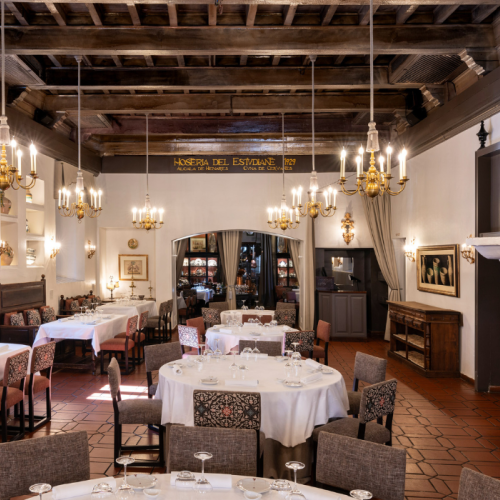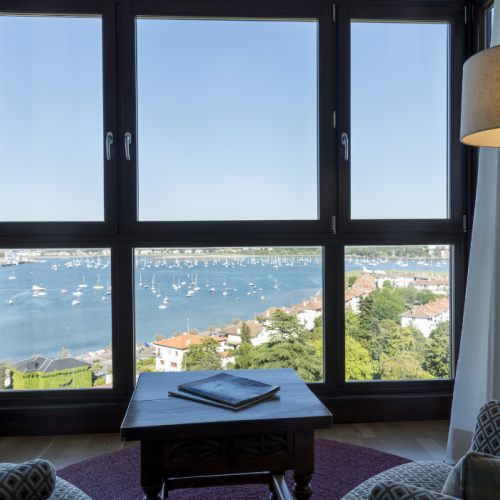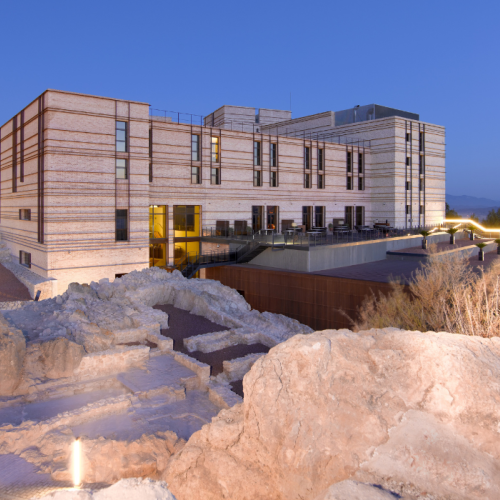
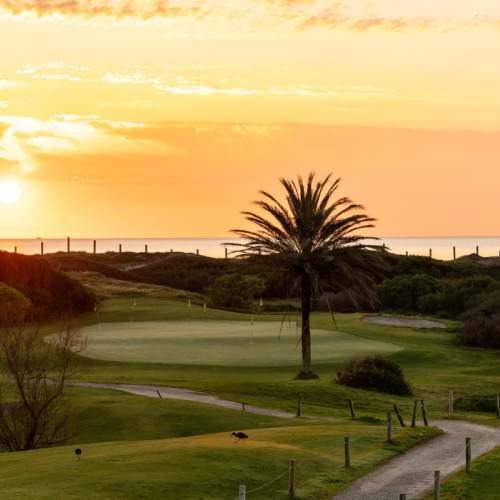
St Patrick may not have been born in Spain, but if there's one thing we know how to do here, it's to take good traditions and improve them with sunshine, gastronomy and unforgettable terraces. On 17 March, the world turns green. In Dublin they celebrate with parades and music; we celebrate as we know best, outdoors, with a good beer or a great wine, something delicious on the table and a spectacular setting. Because if there's one thing that goes perfectly with St Patrick's Day, it's terrace culture. And in that regard, Paradores are in a league of their own.
In a world that pushes us towards immediacy, stopping has become a revolutionary act. Finding time, and ensuring that time is quality time, is now a profound necessity. Yoga, more than a physical discipline, offers just that: a return to the body, to breathing and to the present moment.

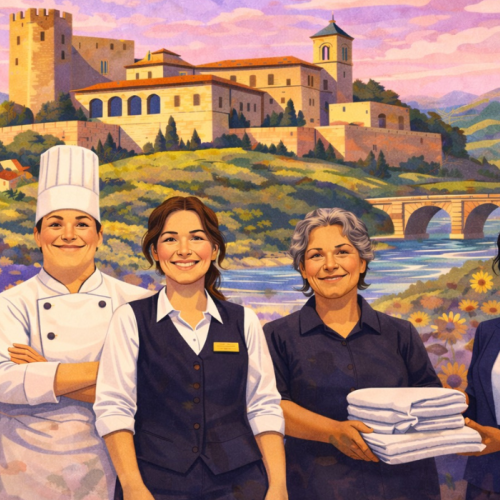
Leadership is not about gender, but rather about opportunities, vocation and trust. At Paradores, we are aware of the road ahead towards full equality, but we also want to celebrate the progress already made: today, a third of our establishments are run by women. Some manage a single Parador, others are responsible for two. Some started at reception, others as interns, others arrived by chance and stayed out of conviction. But they all share something essential: commitment, a sense of belonging and a management style that combines firmness, sensitivity and strategic vision.

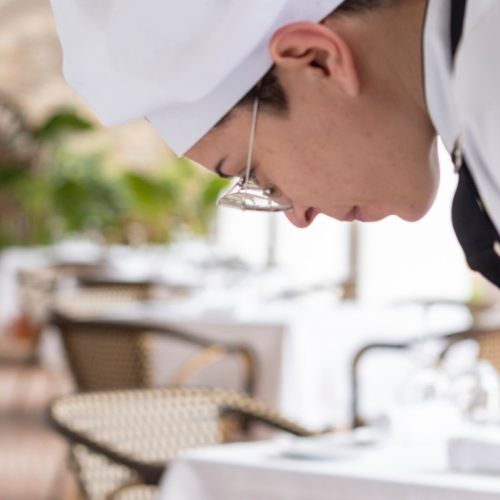
Every 8 March, we celebrate the talent, dedication and passion of the women who, through their daily work, transform gastronomy into a memorable experience. At Paradores, cuisine is much more than just a culinary offering. Behind many of the dishes that delight diners are women who lead, create and take care of every detail. This mission is also inspired by the gastronomic management team, led by a woman: Rosa Díaz.

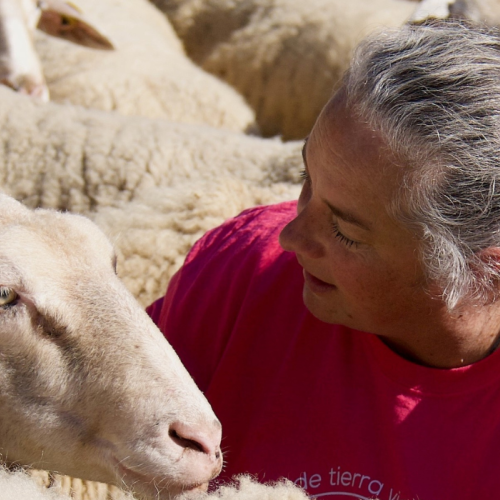
There are gestures that span generations. Hands that cultivate, care for, spin, herd flocks or collect honey, following rhythms that know no hurry. For centuries, many of these activities essential to rural life have been linked to women, silent guardians of knowledge passed down from mothers to daughters.

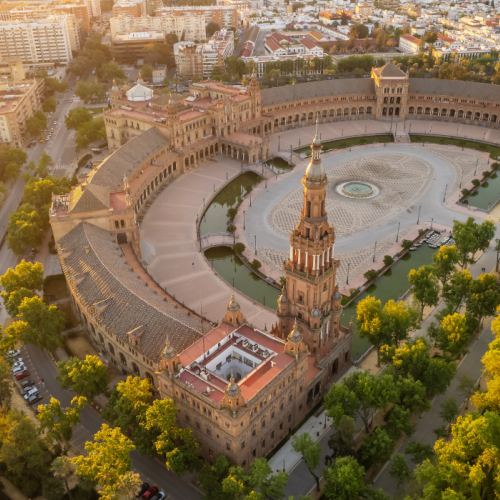
In Spain, you only have to follow the sound of bells, the murmur of water or the bustle of a pavement terrace to find yourself in a town square, almost without meaning to. Because in our country, squares are the setting for history, encounters, celebrations and everyday life. There are medieval and baroque squares, Renaissance squares, solemn squares and bohemian squares. And all of them, absolutely all of them, have something that makes each of them special.

If you ask what to do in Santiago de Compostela, beyond visiting its cathedral, many will agree on the same thing: walk slowly, listen and feel it. Because this is a city made of arrivals, of pilgrims after hundreds of miles, of travellers seeking history and of those who need, even if only for a weekend, to stop time.

The Spanish series Cuéntame cómo pasó is part of the memory of several generations and, 25 years after its premiere, it continues to inspire emotion, nostalgia and recognition. To mark this anniversary, Alcalá de Henares, a World Heritage City, has presented the Cuéntame Alcalá Route, a new tourist and cultural itinerary that invites visitors to explore the real settings where the legendary RTVE series came to life.

Viajar no es solo desplazarse, hay quienes planifican una escapada alrededor de una mesa bien servida, quienes necesitan perderse por calles históricas, quienes buscan silencio absoluto o quienes no conciben un viaje sin un amplio reportaje de fotos. Porque no todos viajamos igual, en Paradores hay un destino pensado para cada tipo de viajero. Aquí va una selección de Paradores para acertar… sea cual sea tu forma de viajar.


Lovers of cities with soul


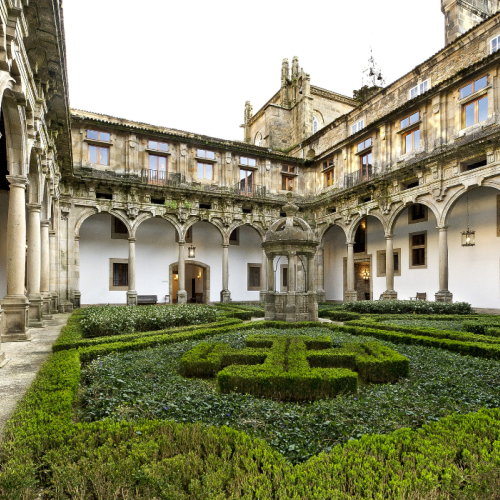
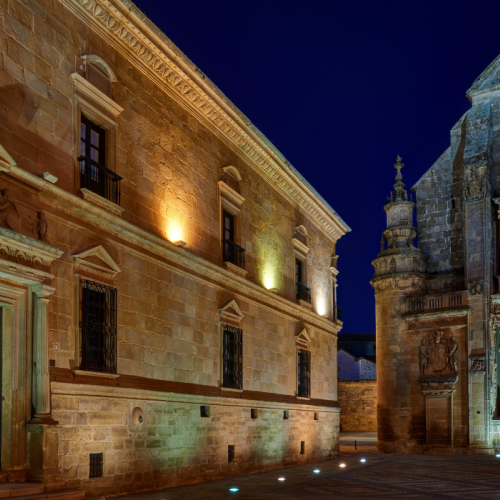
Books and places sometimes come together naturally, as if they shared the same history. Captain Alatriste and the Parador de Úbeda are one such pairing. Pérez-Reverte's novel, deeply linked to the imagery of the Golden Age, finds the perfect setting in this Renaissance palace (the actual location of the film adaptation). And it is easy to imagine that if Don Diego Alatriste had been looking for a place to take a break between duels, it would have been here, in the courtyard of the Parador de Úbeda, with its elegant silence and air of another era.