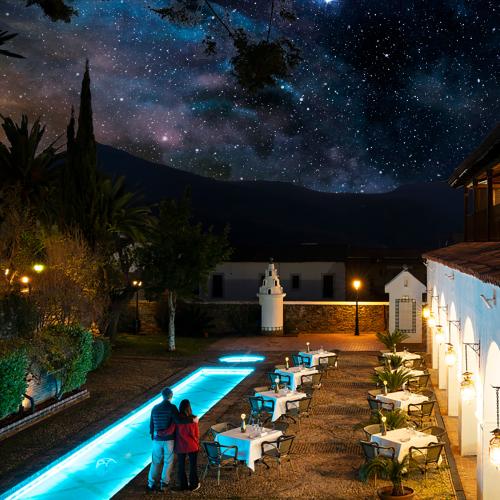
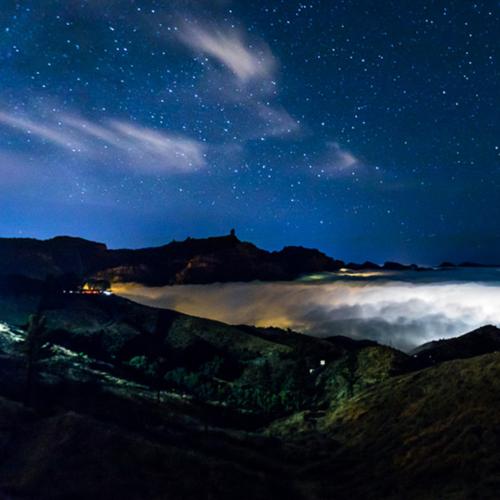
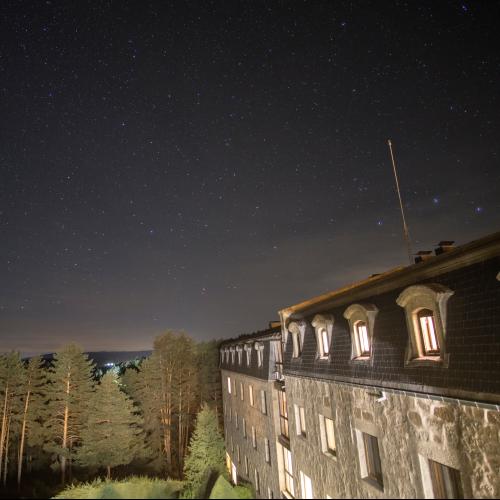
Let yourself be captivated by the magic of the Parador de Cruz de Tejeda. Wonderful refuge perched on one of the highest points of Gran Canaria, perfect to contemplate the celestial spectacle and enjoy the rugged volcanic landscapes of the island.
Activity information
|
WHERE
At the Parador facilities or in the surrounding area
DURATION
1,30 hours
GROUPS
Minimum 6 participants for the activity
|
EPOQUE
During the year 2026 according to the calendar established by the Parador
DATES
Every Thursdays
HOUR
23:00
|
Activity only
Clients may book the activity on their own, subject to availability Tlf. 928 012 500. [email protected]
Price for adults: 25€. Children from 7 to 12 years old: 10€. Children from 0 to 6 years old: free.
ASTRONOMICAL CALENDAR
02/04/2026
100% Full Moon
Tonight there will be a full moon, so we’ll be able to see its craters through telescopes. We’ll also be able to see Jupiter with its bright moons and the constellation Orion, which contains some very bright stars.
June 4, 2026
Tonight we will see how the summer sky is already beginning to dominate the skies over Gran Canaria. Scorpio will appear majestically in the south, with Antares shining brightly in reddish hues, whilst Sagittarius will begin to reveal the densest and brightest regions of the Milky Way. We will also be able to make out Ophiuchus on the southern horizon and Libra towards the south-west. The waning Moon will appear late in the night, leaving enough darkness to enjoy the galactic band. Towards the north-east, Vega, Deneb and Altair will begin to rise, gradually forming the Summer Triangle.
June 11, 2026
Today we will enjoy one of the darkest and most spectacular nights of the month thanks to the proximity of the new moon. The Milky Way will stretch across the sky from Sagittarius and Scorpius towards the northeast with striking contrast, allowing us to distinguish dark patches and star clusters. We will clearly see the constellations of Scorpius, Sagittarius, Ophiuchus and Aquila, whilst Vega will shine brightly in the north-east within the constellation of Lyra. Cygnus and Cepheus will also begin to be visible, rising gradually.
June 18, 2026
Tonight, the crescent Moon will cast a soft glow over the west, though we will continue to enjoy a magnificent summer sky. Scorpio and Sagittarius will continue to dominate the southern sky, whilst the Summer Triangle will appear clearly defined, with Vega in Lyra, Deneb in Cygnus and Altair in Aquila. We will also be able to spot the small constellation of Delphinus near Altair and Hercules quite high in the north-east. The Milky Way will remain clearly visible over the darker parts of the island.
June 25, 2026
Today, the nearly full Moon will illuminate much of the sky, reducing the contrast of the Milky Way, although we will still enjoy a rich astronomical landscape. Antares will stand out brightly within Scorpius, and Sagittarius will remain clearly recognisable towards the south. High above us, we will see the Summer Triangle, accompanied by Cygnus spreading its wings over the whitish band of the galaxy. We will also be able to make out Corona Borealis and Hercules towards the north.
July 2, 2026
Tonight we shall enjoy a fully summery sky, although the still fairly bright Moon will reduce the darkness somewhat. Scorpio will remain high in the south with Antares shining brightly, and Sagittarius will display the richest part of the Milky Way. Vega will dominate the northeast and the Summer Triangle will appear fully formed. We will also be able to spot Ophiuchus, Aquila, Cygnus and the small constellation Sagitta near Altair.
July 16, 2026
Tonight’s new moon will be one of the best nights of the summer for stargazing. The Milky Way will appear bright and detailed from Sagittarius to Cygnus, stretching across almost the entire sky. We will be able to see Scorpio, Ophiuchus, Sagittarius, Aquila and Cygnus perfectly, whilst Saturn will begin to rise in the east within Aquarius. We will also be able to spot Capricorn towards the south-east and Cepheus towards the north.
July 23, 2026
Today we will once again enjoy a sky rich in stars, although the crescent Moon will partially illuminate the landscape. The Summer Triangle will completely dominate the upper sky and Saturn will become increasingly visible towards the east. Scorpio will slowly begin to dip towards the west whilst Capricorn and Aquarius gain height. We will also be able to make out Pegasus beginning to appear in the northeast.
July 30, 2026
Tonight, the nearly full Moon will brighten the sky considerably, though we will still be able to see the main summer constellations perfectly. Vega will shine brightly overhead and Saturn will stand out clearly towards the east. Sagittarius and Scorpio will remain visible, though less distinct due to the moonlight, whilst Pegasus and Andromeda will begin to appear in the northeast.
August 06, 2026
Today we will see one of the most beautiful summer skies. Saturn will dominate the south-east, and the Milky Way will continue to stretch across the sky from Sagittarius to Cygnus. Vega, Deneb and Altair will form a huge, bright triangle overhead. We will also be able to spot Capricorn, Aquarius and Delphinus, whilst Pegasus will continue to rise slowly in the east.
August 13, 2026
Tonight we will enjoy the peak of the Perseids, one of the most famous meteor showers of the year. Looking towards the north-east, we will see meteors streaking across different parts of the sky as Perseus begins to rise gradually. Saturn will shine brightly towards the south-east and the Summer Triangle will completely dominate the night sky. We will also see Cassiopeia beginning to rise higher and higher towards the north.
August 20, 2026
Today, the crescent Moon will partially illuminate the sky, although Saturn will remain the star of the show. The Milky Way will begin to tilt slowly towards the west as Pegasus and Andromeda take centre stage in the east. We will also be able to make out Aquarius, Capricorn, Cygnus and Aquila, all perfectly positioned.
August 27, 2026
Tonight, the nearly full Moon will significantly reduce the darkness, although Saturn will still look spectacular. Vega will continue to dominate the high sky alongside Deneb and Altair, whilst Pegasus will rise clearly in the east. Cassiopeia will already be clearly visible towards the north-east, accompanying Perseus.
September 03, 2026
Today, Saturn will clearly dominate the night sky from the constellation of Aquarius. Pegasus will appear higher and higher in the east, and Andromeda will begin to show itself clearly. The Milky Way will still be visible, sloping towards the west, and we will also see Cygnus, Aquila and Capricornus.
September 10, 2026
On this night of the new moon, we will once again enjoy a dark sky, ideal for observing Andromeda, Pegasus and Cassiopeia. Saturn will shine brightly towards the south and we will begin to notice the transition to the autumnal sky. We will also be able to spot Perseus and the Summer Triangle, still high in the sky.
September 17, 2026
Today we will see Jupiter begin to appear before midnight, whilst Saturn continues to dominate the southern sky. Pegasus will now be very easy to recognise, and Andromeda will rise significantly higher. Cassiopeia will stand out towards the north, and Perseus will begin to rise more comfortably.
September 24, 2026
Tonight, the nearly full Moon will illuminate the sky quite brightly, although Saturn will remain very bright. Taurus will begin to appear late in the night accompanied by the Pleiades, whilst Andromeda and Pegasus will dominate the eastern sky.
October 1, 2026
Today we will enjoy a magnificent autumn sky, with Jupiter beginning to take centre stage in the east. Saturn will remain high in the southern sky, and Pegasus will occupy a large part of the eastern sky. We will also be able to see Andromeda, Cassiopeia and Perseus clearly.
October 8, 2026
Tonight, the waning Moon will allow for darker viewing conditions, and Taurus and the Pleiades will appear in the east. Jupiter will shine brightly, and Saturn will continue to dominate much of the night. Cassiopeia will appear very high, and Perseus will continue to rise higher.
October 15, 2026
Today, the new Moon will provide excellent conditions for observing Orion as it begins to rise before midnight. We will clearly see Taurus, Auriga and the Pleiades, whilst Jupiter will shine brightly, accompanied by Saturn further to the south.
October 22, 2026
Tonight we will enjoy the Orionids whilst Orion will already be clearly visible above the eastern horizon. Jupiter will dominate the east and the Pleiades will offer a spectacular sight alongside Taurus and Perseus. We will also see Gemini beginning to appear.
October 29, 2026
Today Orion will appear in full before midnight and Sirius will begin to rise in the southeast. Saturn and Jupiter will share the limelight whilst Taurus, Gemini, Auriga and the Pleiades fill the eastern sky.
November 05, 2026
Tonight we will already be treated to a distinctly wintry sky. Orion will begin to dominate the eastern horizon, with Betelgeuse glowing in reddish hues and Rigel standing out in a whitish blue. Jupiter will appear intensely bright, rising higher and higher, and Taurus will clearly reveal the star Aldebaran alongside the Pleiades. We will also see Gemini beginning to rise higher and Auriga appearing towards the north-east with the very bright Capella.
November 12, 2026
Today we will have one of the best dark nights of the autumn thanks to the proximity of the new moon. Orion will already be well above the horizon before midnight, and we will be able to clearly see the belt formed by the Three Marys. Taurus and the Pleiades will stand out with great beauty towards the east, whilst Jupiter will dominate the eastern sky. We will also clearly see Perseus, Cassiopeia, Auriga and Gemini, forming one of the regions richest in stars visible to the naked eye.
November 19, 2026
Tonight the crescent Moon will partially illuminate the sky, though we will still enjoy a magnificent astronomical landscape. Orion will appear higher and higher, and Sirius will begin to peek out from the south-east, already heralding the great winter sky. Jupiter will be the brightest object in the sky after the Moon, and Taurus will stand out with a very bright Aldebaran. We will also be able to easily recognise Gemini, Auriga, Perseus and Cassiopeia.
November 26, 2026
Today, the nearly full Moon will illuminate much of the sky, but Orion will still be spectacular, dominating the eastern sky. Sirius will already be shining brightly above the south-eastern horizon and Jupiter will appear very high and very bright. The Pleiades will remain clearly visible and Gemini will begin to rise prominently. We will also see Auriga overhead and Cassiopeia very high in the north.
December 3, 2026
Tonight we will fully enjoy the magnificent winter sky. Orion will already be very high before midnight, clearly showing his belt and the sword hanging below it. Jupiter will dominate the eastern sky intensely, and Taurus will occupy a prominent position alongside the Pleiades. Sirius will begin to rise brilliantly in the south-east, whilst Gemini, Auriga and Perseus will complete one of the most spectacular areas of the sky visible from the Canary Islands.
December 10, 2026
Today, the proximity of the new moon will allow us to enjoy excellent conditions for observing the Geminids in the days leading up to their peak. Gemini will be perfectly positioned towards the east, and Orion will clearly dominate much of the sky. Sirius will already be shining brightly, and we will be able to easily recognise the Winter Triangle formed by Sirius, Betelgeuse and Procyon. We will also see Taurus, Auriga, Perseus and the Pleiades in great detail.
December 17, 2026
Tonight we will still be able to see some Geminids streaking across the sky. Orion will already be high in the sky and spectacular, whilst Sirius will dominate the south-east as the brightest star in the night sky. Jupiter will remain intensely bright and Taurus will continue to stand out alongside the Pleiades. Auriga, with Capella, will shine overhead and Gemini will occupy a prime position for observation.