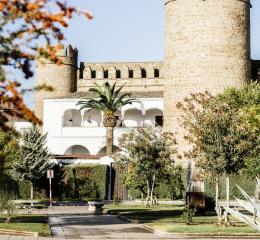
Silver Route 2026
Route of 5 nights
Paradores on the Route
- Parador de Zafra
- Parador de Mérida
- Parador de Trujillo
- Parador de Plasencia
- Parador de Salamanca
Southern section of the ancient corridor linking the Andalusian Atlantic coast with the Cantabrian Sea, boasting a rich cultural and historical legacy.
From 310€ /per person.
Route available from January 2026 to December 2026.
This route starts on Sunday
Day 1
Sunday
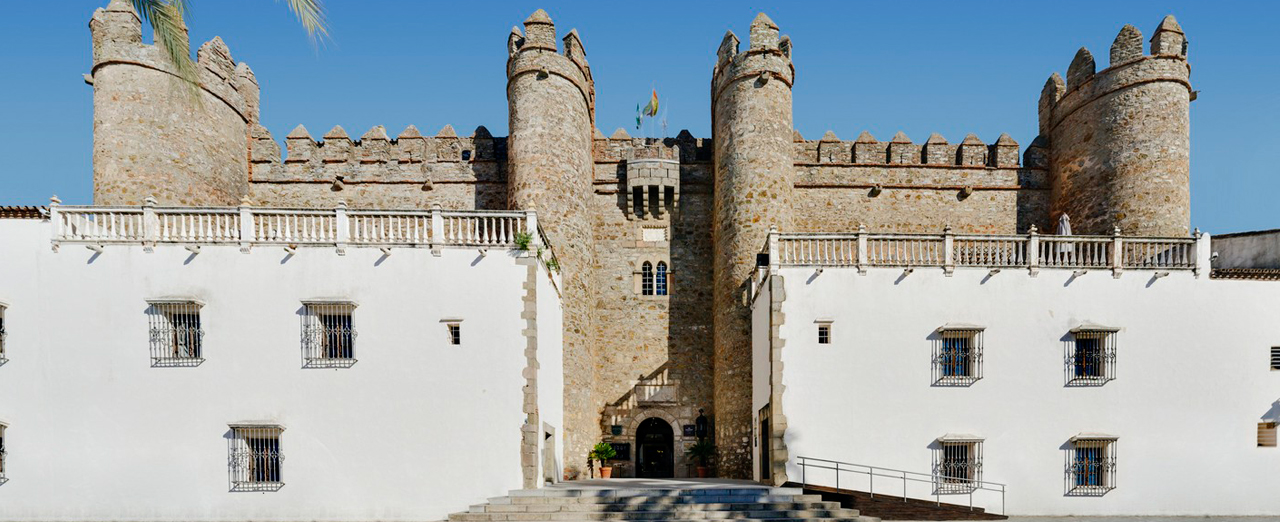
Prepare for endless surprises on this trip to one of the most beautiful and undiscovered areas of Spain. We set sail from Zafra, known as "Little Seville," which offers the opportunity to explore the Church of Our Lady of Candelaria (13th century), the convents of Santa Catalina, Santa Clara, and El Rosario, the Casa Grande, the remains of the Moorish walls and the Puerta de Jerez, or the Palace of the Dukes of Feria, a majestic 15th-century castle that houses the Parador. To get a feel for the city, head to Plaza Chica—home to the famous Vara de Zafra, which merchants used to measure with in the past—and Plaza Grande, two wonderful arcaded squares that form the city's nerve center, with numerous bars and restaurants where you can enjoy the best of Badajoz's cuisine. In the surrounding area, you can visit wineries and olive oil mills, and enjoy unique experiences such as discovering the world of bullfighting with a master guide and getting an adrenaline rush by standing in front of a fighting bull in a capea (a traditional bullfighting event), or embarking on a ham safari through the Extremadura pastures. Just 5 kilometers away awaits "El Capricho de Cotrina," one of Spain's most unusual buildings, reminiscent of Gaudí's work. Treat yourself at the Parador's restaurant, whose menu celebrates Iberian pork while also featuring cheeses and traditional pastoral dishes like migas (a breadcrumb dish) and lamb stew.
Day 2
Monday
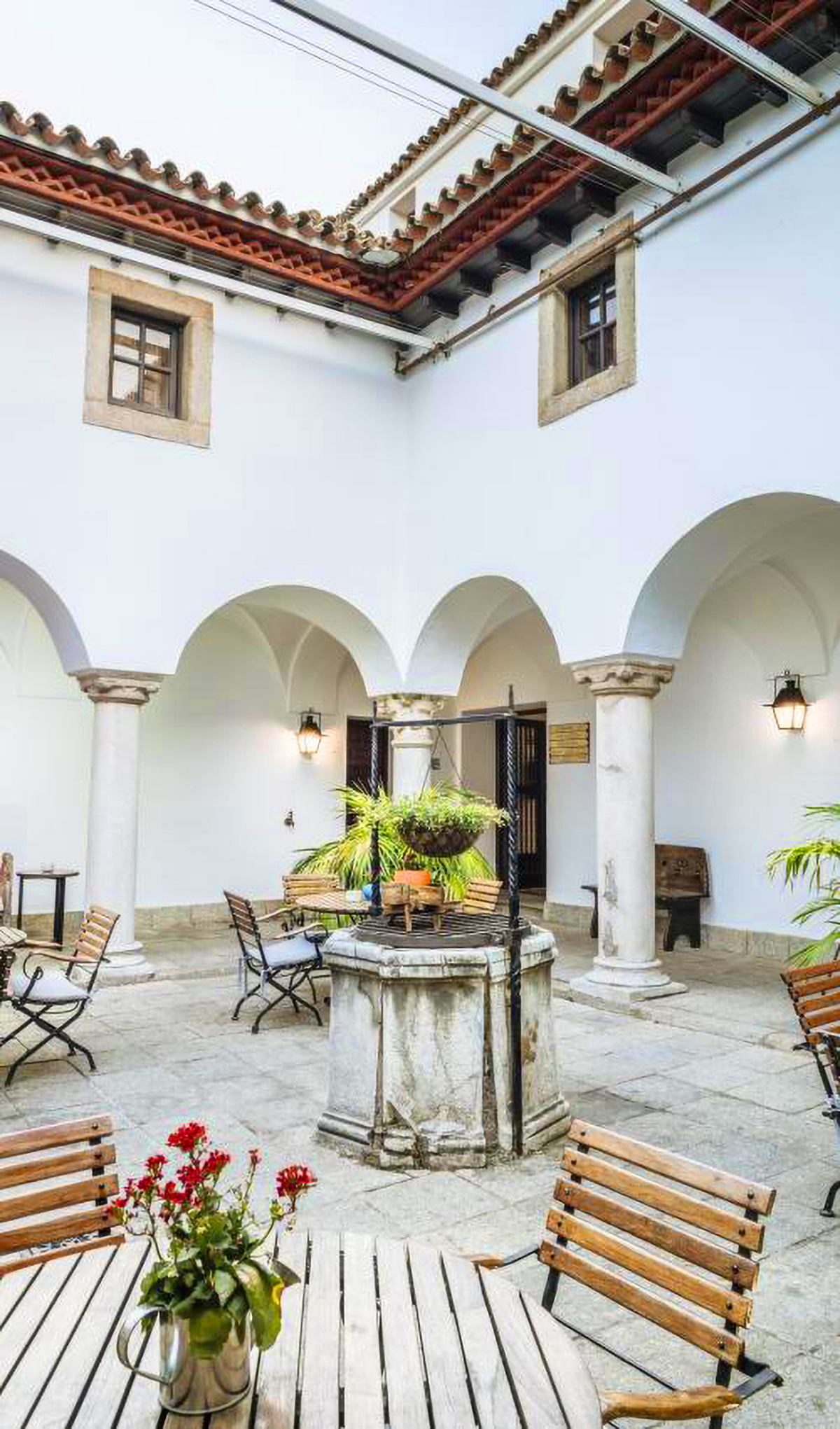
Without leaving the Badajoz region, we reach Emerita Augusta, “the little Rome,” which speaks to us at every turn of its splendid past when it was a flourishing and active colony of the Empire. Faithful reflections of this legacy are the National Museum of Roman Art, the Amphitheater, the Circus—one of the best preserved and grandest of the Empire—and the Theater, the prince of Emerita's monuments, which boasts an incredible stage where performances are still held. Don't forget to visit the Roman House of the Amphitheater, the Roman House of Mithras, the archaeological site of the Church of Santa Eulalia, the Roman Bridge over the Guadiana River, the Temple of Diana, and the Aqueduct of Miracles. The Arabs also left their mark on these lands in their Alcazaba, as did the Visigoths, whose art you can discover in the Museum of Visigothic Art. To feel like a true Roman, there's nothing better than a relaxing soak in the therapeutic waters of the Roman baths, complete with a massage. And to avoid any penance, you can't visit this region without trying Jamón Ibérico de bellota D.O. Dehesa de Extremadura pata negra. It would be a sin!
Day 3
Parador de Trujillo
Santa Beatriz de Silva, 1, 10200, Trujillo (Cáceres)
+34 927321350
[email protected]Tuesday
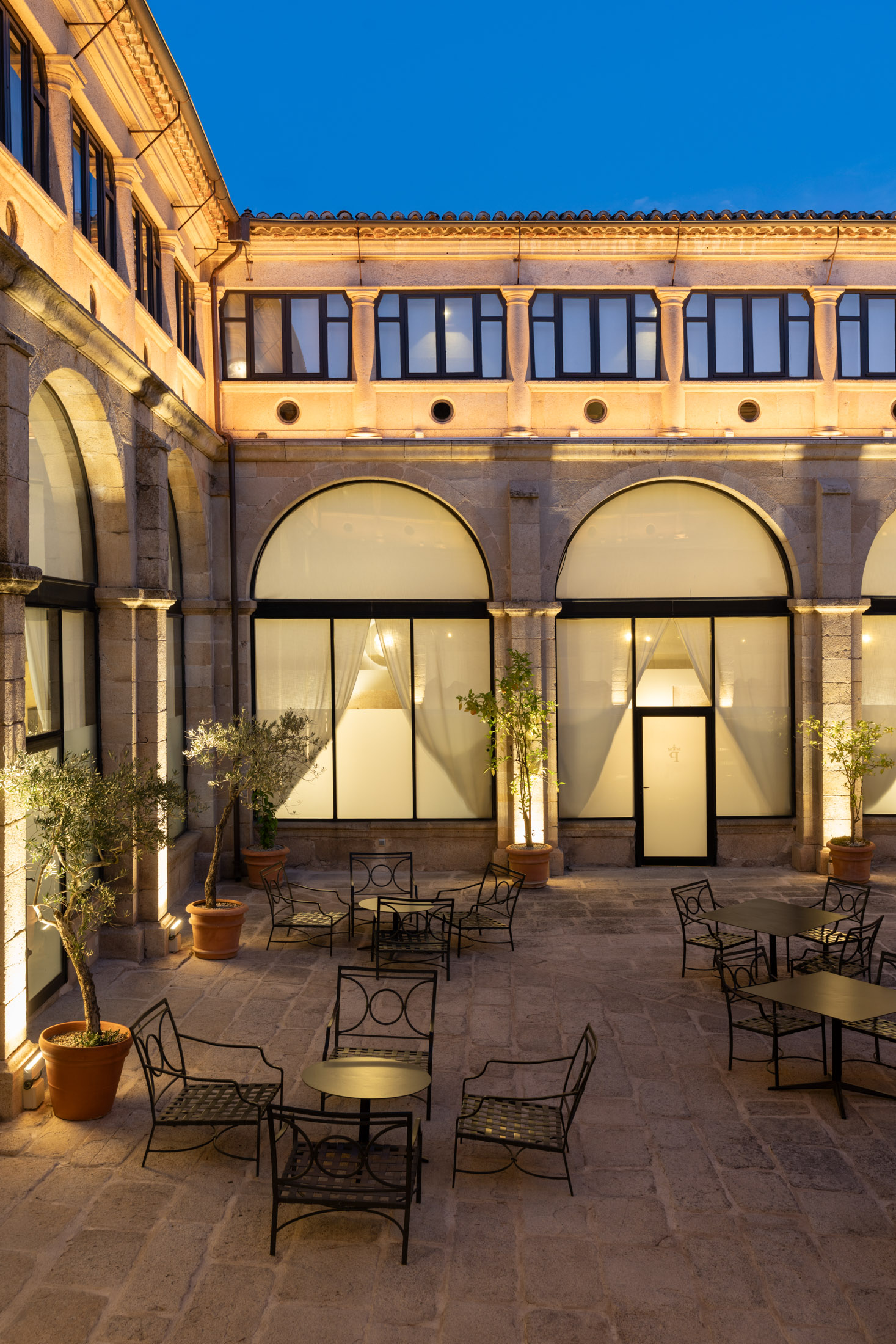
Heading north, we enter the province of Cáceres to reach Trujillo, land of conquerors—or discoverers, as they prefer to be called in those parts. Extremadura expresses itself magically in this monumental town. It welcomes us with its Plaza Mayor, presided over by the equestrian statue of Pizarro and flanked by Renaissance palaces. Wandering its streets, we discover the palaces of the Dukes of San Carlos, the Marquises of the Conquest, and the Marquis of Sufraga. Its old medieval castle of Arab origin, where the final battle of season 7 of Game of Thrones was filmed, speaks of ancient stories, as does the Pizarro House Museum, dedicated to the conqueror of Peru. Religious monuments also hold a prominent place in this town, such as the churches of San Martín and Santa María La Mayor, and the convents of Santa Clara and San Francisco Real. Just a half-hour drive away is Cáceres, a UNESCO World Heritage city renowned for its monumental and historical sites. Food lovers shouldn't leave without trying Torta del Casar, arguably the best cheese in the world.
Day 4
Parador de Plasencia
Plaza San Vicente Ferrer, s/n, 10600, Plasencia (Cáceres)
+34 927425870
[email protected]Wednesday
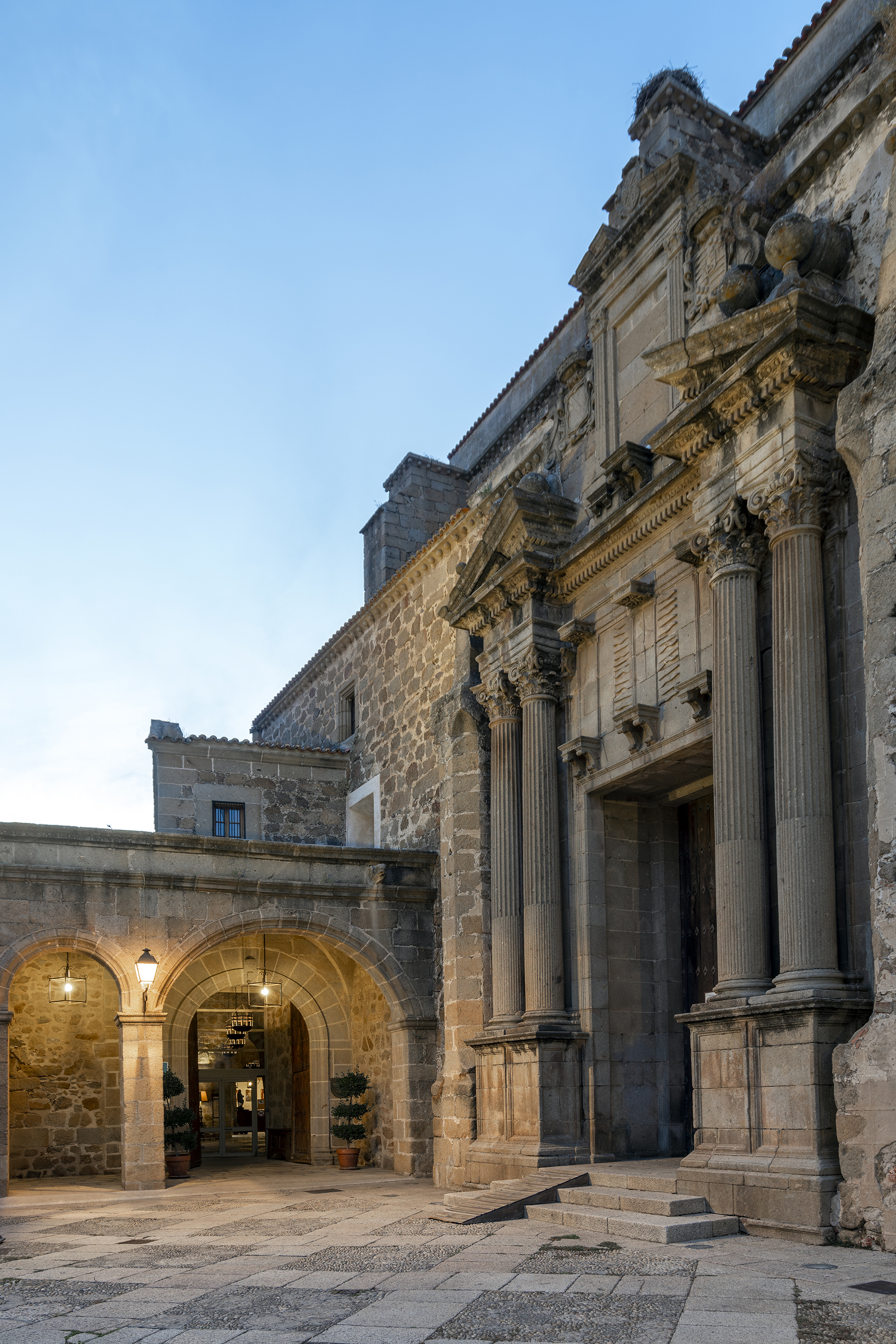
Plasencia, gateway to the fertile Jerte Valley, is our next stop. A strategic enclave on the Silver Route, it's a true gem. You'll discover remnants of the medieval walls, its towers (21 of the original 71 are still standing), and its gates, such as the Puerta del Sol (Gate of the Sun) or the Postigo de Santa María (Santa María Gate). You'll stroll through the Plaza Mayor, the vibrant heart of the city, and in the Town Hall tower, you'll find Abuelo Mayorga (Grandfather Mayorga), an automaton built in the 13th century that is one of the city's symbols. You'll also find one of the most representative monumental complexes in the area, comprised of the Old Cathedral, with its Romanesque design, and the New Cathedral, whose surroundings offer beautiful corners. The medieval San Antón Aqueduct, the Episcopal Palace, the Palaces of the Marquises of Mirabel, Carvajal-Girón, and Las Torres, and the Convent of San Vicente Ferrer are other places of special interest in the city. In the heart of this historic city, within the 15th-century monumental complex built by the Zúñiga and Pimentel families, stands the Convent of San Vicente Ferrer, now the Parador de Plasencia. Inside, you'll be greeted by an impressive building with vaulted ceilings, elegant stone walls, and magnificent coffered ceilings that, along with its exquisite decoration, will transport you to another era. Just over 20 kilometers away, it would be a shame to miss the Monfragüe National Park and its Biosphere Reserve, a true sanctuary for birdwatching, home to Mediterranean forests and some of the most significant species of Spanish fauna. Plasencia is also an excellent starting point for exploring Las Hurdes, the Sierra de Gata, or the Jerte Valley, with its spectacular springtime, when the cherry blossoms paint the valley in a luminous white. Don't miss the irresistible picotas (a type of cherry) and the cherry liqueur! And another recommendation worth noting: the Parador has an exclusive night bar housed in the old convent wine cellar, where you can relax and enjoy the evening in the best atmosphere.
Day 5
Thursday
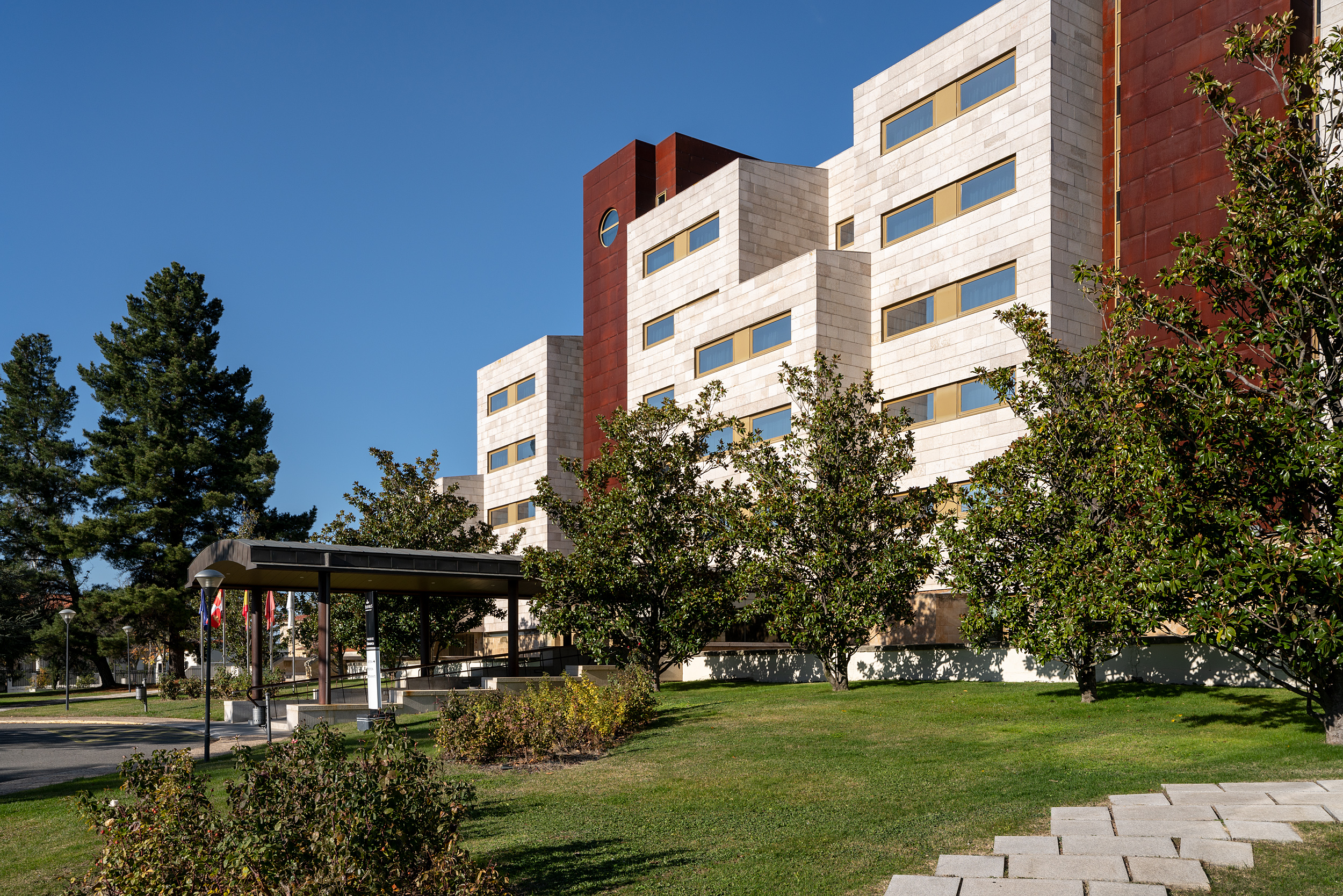
We complete our journey by reaching the capital of Salamanca. A vibrant university city, Salamanca is full of charming corners and historic buildings. It overflows with heritage and beauty. Walk to the heart of the Plaza Mayor, a Baroque square (18th century), open your eyes, let yourself be seduced by its beauty and harmony, and step into its welcoming and charming cafes and taverns, like the long-established Novelty, for a drink. Discover among its many monuments the Casa de las Conchas (15th century), famous for its façade decorated with hundreds of these stone bivalves; the Old Cathedral (13th century) and the New Cathedral (16th to 18th centuries), and climb to their exterior terraces to stroll among gargoyles and bells; or the University (16th century), the oldest in Spain, where you can have fun searching for its iconic frog on the façade for a wish to come true. And, of course, you shouldn't leave without experiencing the magic of the Garden of Calixto and Melibea, or visiting the Casa Lis, a modernist mansion with stained-glass windows. In a city where the vibrant university scene pulsates with constant cultural activity, going out for tapas is a must—it's practically a religion—and don't leave the Parador without trying the Morucha beef, the farinato sausage, or the Iberian ham from Guijuelo.