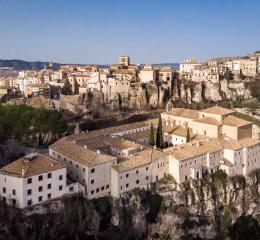
Route Ciudades Patrimonio de la Humanidad 2026
Route of 7 nights
Paradores on the Route
- Parador de Cuenca
- Parador de Alcalá de Henares
- Parador de Segovia
- Parador de Ávila
- Parador de Salamanca
Monumentality, history and culture. Four cities near Madrid with outstanding heritage: Cuenca, Alcalá de Henares, Segovia, Ávila and Salamanca.
From 570€ /person.
Route available from January to December 2026.
This route starts on Sunday
Day 1
Sunday
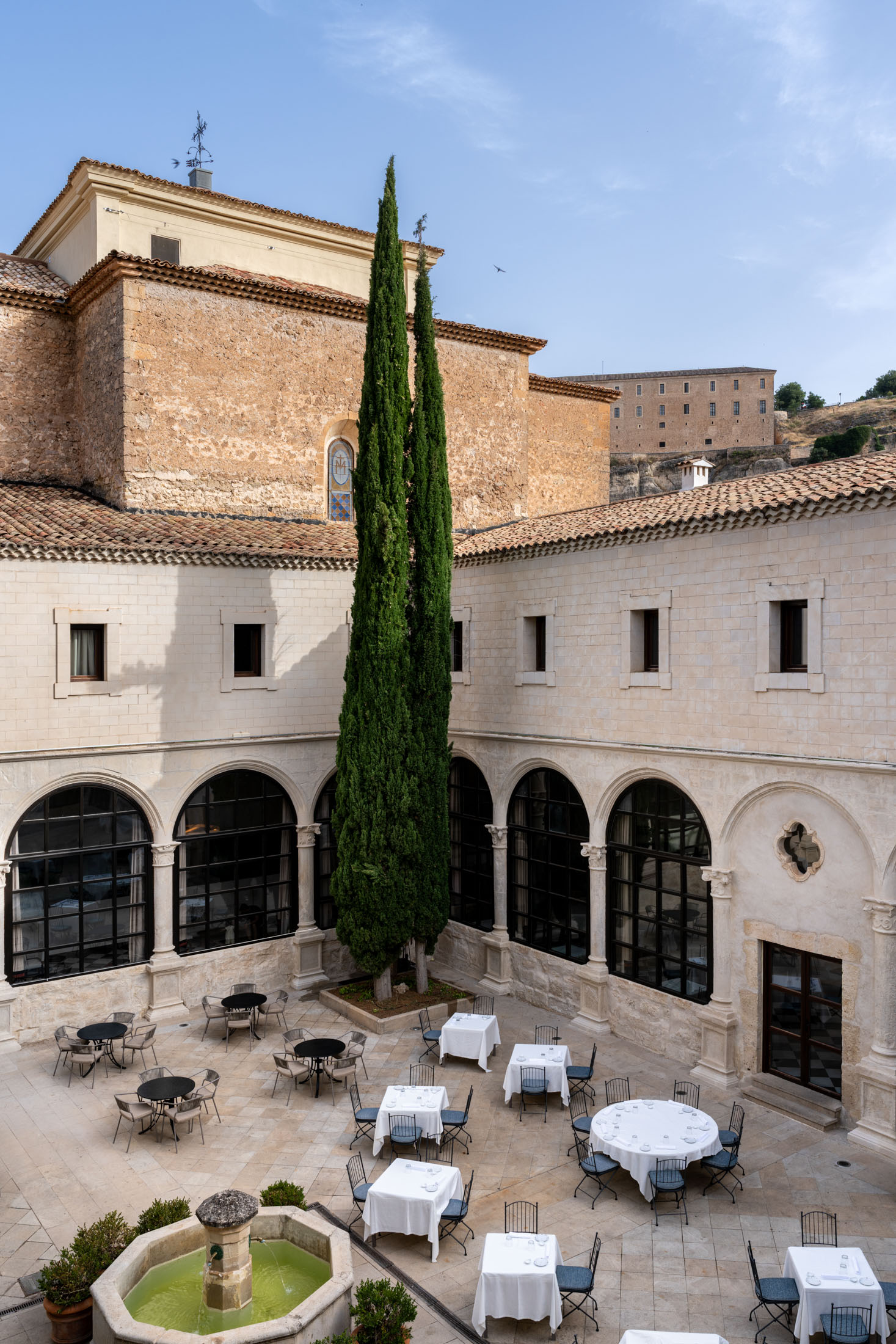
Cuenca, a city of magical beauty and unforgettable corners with its iconic hanging houses and impressive verticality above the Huécar River. The city itself is beautiful. Visit the popular Plaza Mayor, the Cathedral of Santa María and the churches of San Julián and San Pedro, the convent of Las Descalzas and San Nicolás, among other monuments. Just over 30 kilometres away, you will discover a wonderful whim of nature: the Enchanted City, a natural landscape of limestone rock formations where you can enjoy the illusion of walking among streets, squares, tall buildings, groves, animals, Roman bridges and even boats, all watched over by an enormous giant's head. Beyond its historical heritage, Cuenca exudes contemporary art on all sides, with points of special interest such as the Museum of Abstract Art, the Antonio Pérez Foundation and the Torner Space. And you cannot miss the opportunity to see the city from the air, as it is one of the most spectacular places to fly in a hot air balloon. The Parador will provide you with all the information you need to enjoy this unforgettable experience.
Day 2
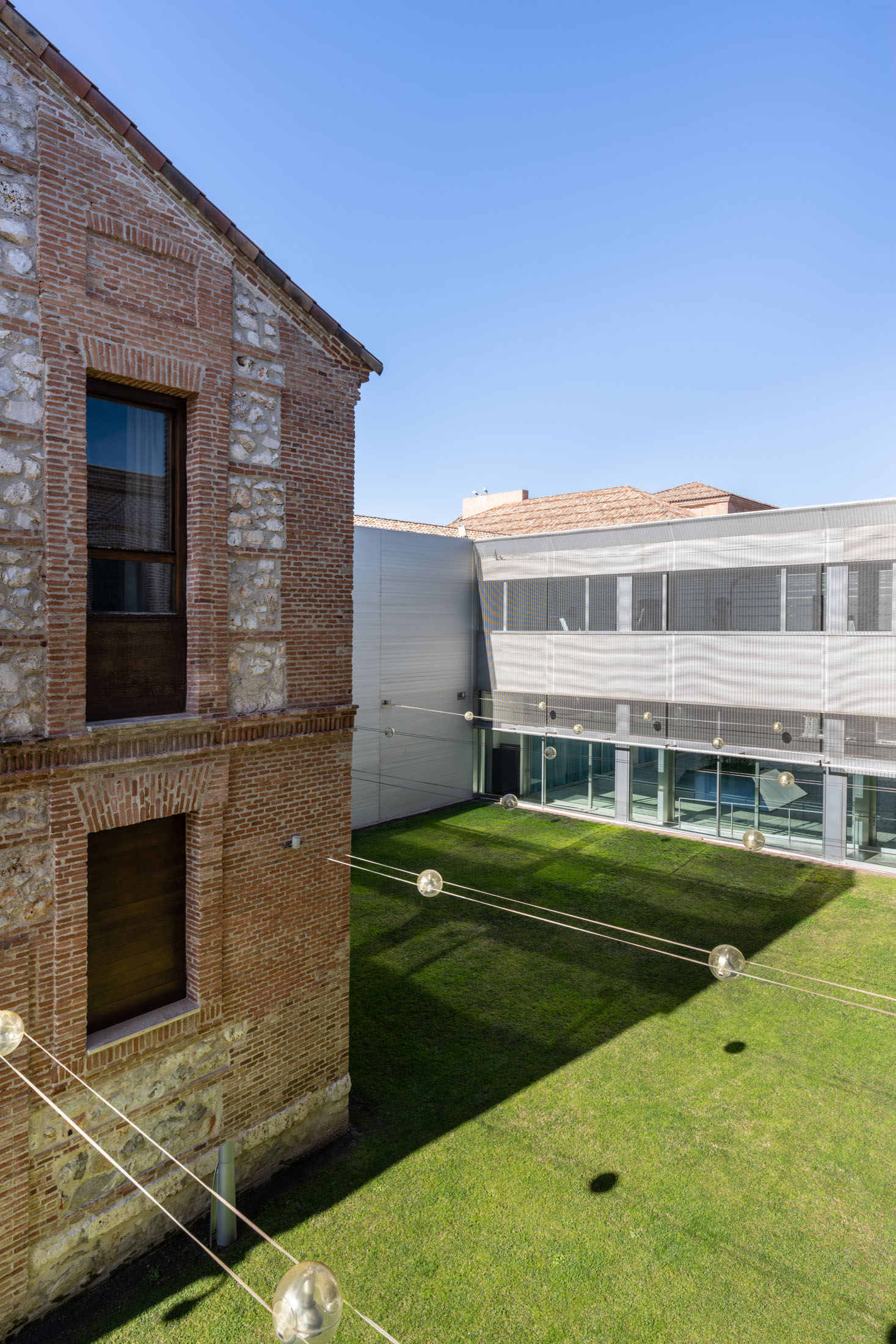
Parador de Alcalá de Henares
Colegios, 8, 28801, Alcalá de Henares (Madrid)
+34 918880330
[email protected] | [email protected]Monday
From Castile-La Mancha, we arrive at Alcalá de Henares, the birthplace of Cervantes. With its beautiful streets, palaces, convents and civil buildings, it always invites visitors to discover its University (in 1499 Cardinal Cisneros founded the world's first university campus ex-novo) and the Colegio Mayor de San Ildefonso, the Plaza de Cervantes, the ruins of Santa María de la Mayor, the collegiate streets of Santa Ursula and Escritorios, the Magistral Cathedral Church of Saints Justo and Pastor, the Roman mosaics in the Regional Archaeological Museum... Don't forget to take a stroll down the bustling Calle Mayor – Spain's longest street with arcades – where you'll find the birthplace of the illustrious author of Don Quixote, and enjoy its shops and tapas bars. Be sure to visit the Corral de Comedias, a unique building that is the oldest in Spain and still retains important original architectural features. Keep an eye on the calendar, because Alcalá, considered the City of Arts and Letters, offers a wide range of quality leisure activities, including a diverse cultural and tourist offering that may coincide with your dates. In Alcalá, you must try typical dishes from the cuisine of Castile-La Mancha with culinary references to Don Quixote at the Hostería del Estudiante, a unique 16th-century setting and one of the oldest Parador establishments, and another of the towns where tapas are worshipped. If you are travelling with children, we recommend a visit to the Parque Europa in Torrejón de Ardoz, with scale replicas of 18 European monuments. And once you've seen everything the city has to offer, we recommend excursions to two charming spots steeped in history: the picturesque village of Chinchón, where Madrid's other Parador is located, and the Royal Site of Aranjuez, declared a World Heritage Cultural Landscape by UNESCO.
Day 3
Tuesday
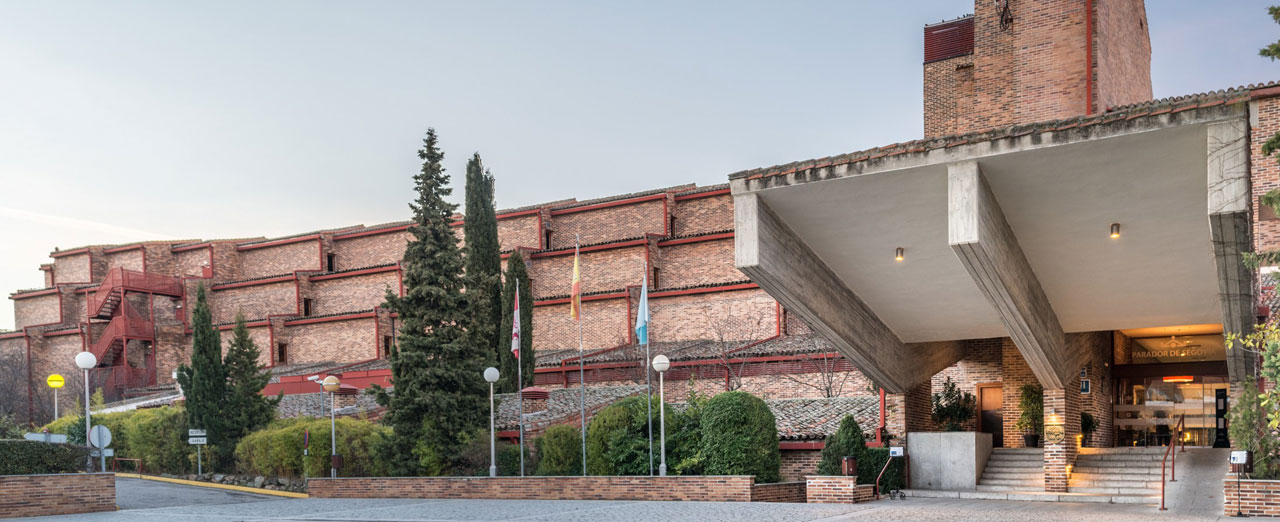
Without stopping in Madrid, we reach Segovia, one of Spain's most monumental cities. It will surprise you at every turn with its unrivalled historical and artistic heritage. Its imposing aqueduct will remind you of the power of Rome; its cathedral, the Alcázar, with its moat and drawbridge entrance, and the medieval walls – the only ones in a city that remain complete, along with those of Lugo and Ávila – will evoke a splendid past. Churches such as San Esteban, San Justo, San Martín and San Millán will transport us back to the Middle Ages, the Renaissance and the Baroque period. To savour the city, you have to wander its streets, enjoy tapas at its bars – which, as in Salamanca, are offered free of charge – and treat yourself to some judiones (large white beans) and crispy suckling pig roasted in the wood-fired oven of the Parador, while enjoying the monumental skyline of the city. In the surrounding area, don't forget to visit the Royal Palace of La Granja de San Ildefonso (18th century), with its splendid Versailles-style gardens and water features in summer, where another spectacular Parador hotel awaits you, and the Palace of Riofrío, which houses the Hunting Museum and paintings by Rubens and Velázquez and is surrounded by a forest with fallow deer and red deer roaming free.
Days 4 and 5
Wednesday and Thursday
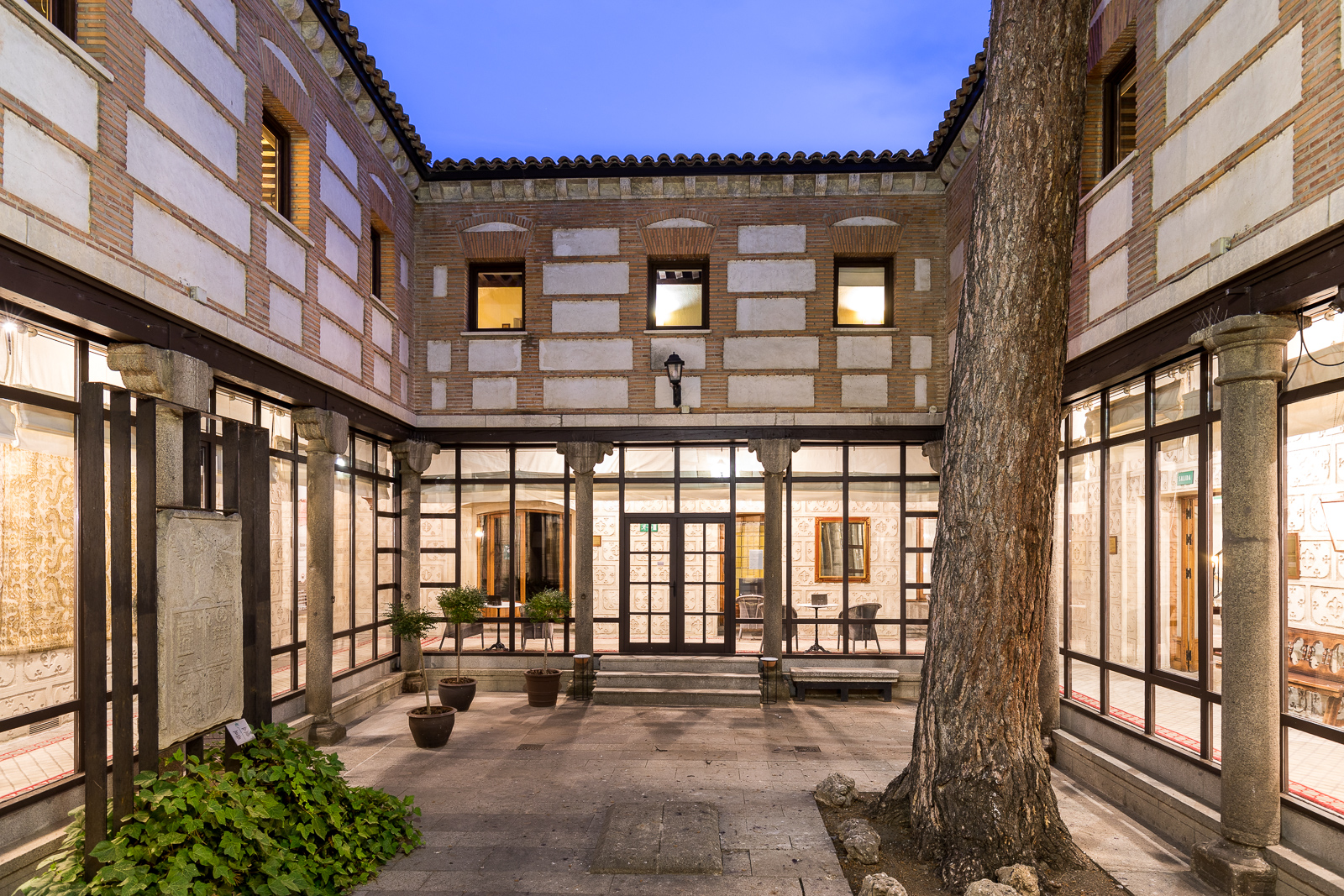
We end our journey in the mystical and monumental city of Ávila, with its perfect city walls featuring 88 towers and nine gates, some as beautiful as those of the Alcázar and San Vicente. It is home to an impressive heritage, including the fortified Cathedral of San Salvador (begun in the 11th century), the Cathedral Museum, the Convent of Santa Teresa (17th century) and a string of Renaissance palaces and Romanesque churches. You will love strolling along the ramparts of the city walls and losing yourself in the streets of its historic quarter, where every square, every street and every corner is full of charm. A World Heritage City where everything reminds us of the saint, who also gave her name to its most famous sweet: Santa Teresa yemas (egg yolk sweets). If you want to enjoy the best panoramic view of the city, take a walk at sunset up to the Cuatro Postes shrine. It's worth the photo! And since man does not live by stones alone, treat yourself to some beans from Barco de Ávila, some patatas revolconas con torreznos (mashed potatoes with fried pork rinds) or dare to try a 100% Avileña black beef steak.
Days 6 and 7
Friday and Saturday
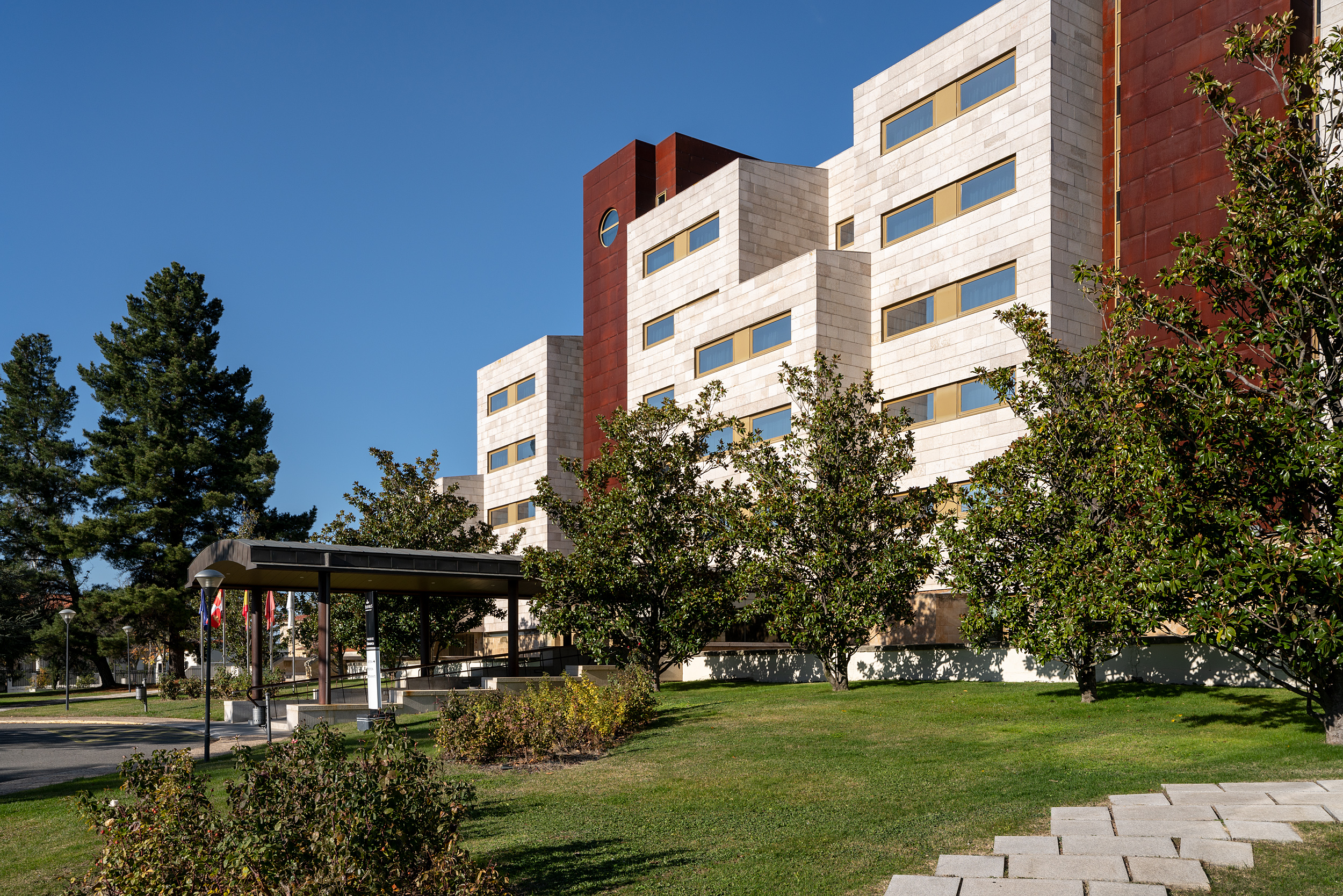
We reach the capital of Salamanca. Salamanca, a lively university city, is full of historic buildings and hidden corners. It exudes heritage and beauty. Walk to the centre of the Baroque-style Plaza Mayor (18th century), open your eyes, let yourself be seduced by its beauty and harmony, and pop into one of its cosy, charming cafés and taverns, such as the veteran Novelty, for a drink. Among its many monuments, discover the Casa de las Conchas (15th century), famous for its façade decorated with hundreds of these bivalves, the Old Cathedral (13th century) and the New Cathedral (16th to 18th centuries) and climb up to their outdoor terraces to stroll among gargoyles and bells; or the University (16th century), the oldest in Spain, where you can entertain yourself by looking for its iconic frog on the façade to make a wish come true. And, of course, you mustn't leave without feeling the magic of the Garden of Calixto and Melibea, or visiting the Casa Lis, a modernist mansion with stained-glass windows. In a city where the hustle and bustle of university life pulsates with incessant cultural activity, it is essential to go out for tapas, a veritable religion, and you cannot leave the Parador without trying the Morucha beef, the farinato sausage or the Iberian ham from Guijuelo.